-
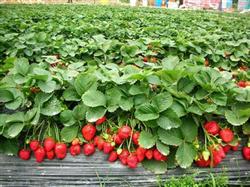
Detailed Guide to Identifying and Controlling Common Strawberry Pests and Diseases
Strawberries are grown under plastic film in greenhouses, where the high temperature and high humidity inside the greenhouse create even more favorable conditions for the occurrence of pests and diseases. The common pests and diseases of strawberry and their control measures are described below: I. Common diseases 1. Leaf spot. It mainly damages leaves, and the typical symptom is gray or grayish-brown round spots centered on the lesion, with purple...
-
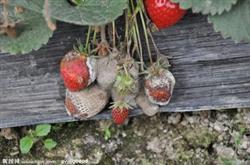
Key Technical Points for Pollution-Free Pest and Disease Control in Strawberries
Symptoms: Strawberry black mold mainly affects nearly ripe fruit. If harvested fruit is not promptly handled and packaged, it is even more susceptible to infection, causing large-scale fruit rot. When the disease first appears, the fruit surface shows light brown water-soaked lesions, which then rapidly soften and rot, producing a gray cotton-like growth, on which granular black mold develops, namely the mycelium and conidia...
-
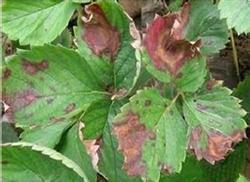
Disease Prevention and Control Measures and Technical Key Points for Greenhouse Strawberries
Strawberry leaf blight mainly affects leaves, petioles, fruit stalks and calyxes. 1. Symptoms. In the early stage of the disease, small dull dark purplish-brown spots appear on the leaves, which then expand into irregular lesions; the color of the lesion edges and centers changes little, and the symptoms of this disease are difficult to distinguish from those of brown spot disease in its early stage. Brown spot disease and leaf blight...
-
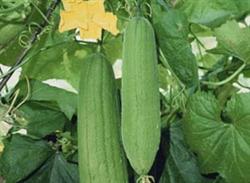
How can loofah be managed in deep winter to increase yield?
In winter, low temperatures causing low yields in various vegetables is what makes vegetable farmers feel most powerless! In Handong Village, Luocheng Subdistrict, Shouguang City, the author visited Master Zhu, an experienced loofah grower in the village. Thanks to proper management, although the loofah yield in Master Zhu's greenhouse was also affected by the low temperatures, it was...
-
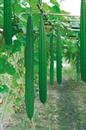
Luffa leaves can treat livestock diseases, and the clever methods must be mastered
I. Sowing and seedling raising Before sowing luffa, treat the seeds with water at 55-60°C for 15 minutes, then soak them in water at 25°C for 4 hours, rinse off the mucus on the seed coat surface, then wrap the seeds in wet gauze and place them in an incubator to sprout. Select well-sprouted seeds and sow 1-2 seeds per pot, generally using about 500 grams of seed per mu. Before emergence...
-
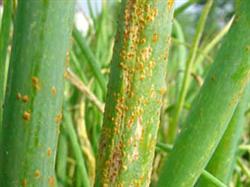
How to prevent and control rust disease in Welsh onions during continuous rainy weather
In summer and autumn, with high temperatures and abundant rain, Welsh onions are prone to rust disease if continuous rainy weather occurs. Farmers should promptly take effective measures and strengthen prevention and control. Apply timely medication for prevention and control. In summer and autumn, especially after 2-3 days of continuous rainy weather, promptly check the occurrence of rust disease in Welsh onions. If brown-green...
-
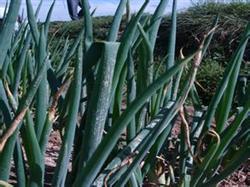
What are the main diseases of Welsh onion? A complete guide to identifying common types
Once the white pseudostem enters its vigorous growth period, the threat of pests and diseases also enters a high-incidence stage. The main pests and diseases are: purple blotch, downy mildew, soft rot, onion maggot, onion thrips, onion leaf miner, and beet armyworm. 1. Purple blotch: in the early stage of the disease, spray 75% chlorothalonil wettable powder at 500-600 times dilution, 58% metalaxyl-mancozeb...
-
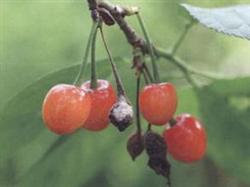
What pesticides are commonly used for cherry pest and disease control?
Cherry trees are often attacked by pests and diseases during cultivation, and correct prevention and control of pests and diseases is very important for planting returns. Below we introduce the pesticides corresponding to cherry pest and disease control, for farmers' reference. 1. Pesticides corresponding to the main cherry diseases: 1.1 Pesticides for bacterial canker...
-
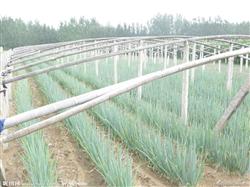
Clever Use of Welsh Onions in Greenhouses to Sterilize and Prevent Vegetable Diseases
Welsh onion (Allium fistulosum) is a biennial vegetable of the Liliaceae family, cold-tolerant and highly adaptable. Its leaves release propyl sulfide with a pungent odor, and its root system secretes bactericidal substances; together they can effectively suppress the spread of various pathogens in the air and soil, prevent infection, or kill pathogens, significantly reducing the disease rate of vegetable plants...
-
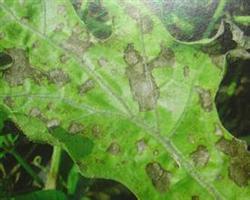
What are the simple techniques for watermelon disease control?
Before sowing, choose a greenhouse that has not grown cucurbit crops, or one that has been subjected to high-temperature sealed treatment during the summer fallow period, to prevent soil-borne diseases such as Fusarium wilt, damping-off, Rhizoctonia rot, and anthracnose from invading during the seedling stage. For seed treatment, soak the seeds in warm water at 55°C for 10 minutes, stirring constantly, then after cooling soak for another 6 hours, then...
条件筛选