What pesticide is good for preventing Tomato spotted wilt virus disease?
After seedlings are infected with this disease, the young leaves curl and turn a copper-purple color, the leaves have many black spots, the veins on the underside of the leaves turn purple and lose their green color, and the stems develop faded streaky spots. The diseased plants grow slowly or become stunted, drop their leaves, wilt, and shrivel, and yield declines. In severe cases, the plants wilt and die directly. This symptom is easily confused with streak virus. When tomato is at the fru...
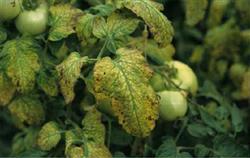
After seedlings are infected with this disease, the young leaves curl and turn a copper-purple color, the leaves have many black spots, the veins on the underside of the leaves turn purple and lose their green color, and the stems develop faded streaky spots. The diseased plants grow slowly or become stunted, drop their leaves, wilt, and shrivel, and yield declines. In severe cases, the plants wilt and die directly. This symptom is easily confused with streak virus. When tomato is infected at the fruiting stage, greenish raised ring spots appear on the fruit surface, the concentric rings are not obvious, or brown necrotic spots with wart-like protrusions form, which can cause diseased fruit to drop. If the fruit is infected when ripening, the concentric rings of the spots are obvious, and the greenish spots are most obvious during the colored stage. In more severe cases, the fruit becomes hardened and shriveled, and the spots turn brown and necrotic. The symptoms at the blossom end are easily confused with blossom-end rot, so care should be taken to distinguish them.
For Tomato spotted wilt virus disease, if the right treatment is not used, it is very difficult to achieve effective control. Therefore, many vegetable growers are troubled by Tomato spotted wilt virus disease. Tomato spotted wilt virus disease spreads naturally between plant hosts, mainly through piercing-sucking pests such as aphids, planthoppers, and thrips. At the same time, high temperature and drought also favor the disease. Poor field management and the mutual rubbing of diseased and healthy plants during farming operations can also cause the disease. At present, there is still no directly effective control measure for this virus, so control can only be carried out through measures such as controlling piercing-sucking pests and strengthening farming practices. For control in greenhouses, fumigate with 15% isoprocarb to kill insects, using 250 grams per mu, and at the same time remove weeds; yellow sticky insect boards can be hung in the greenhouse for control, strong seedlings should be cultivated, and diseased plants should be pulled up. After tomato planting, if piercing-sucking pests are found, promptly control them with 10% imidacloprid wettable powder at 1500 times dilution, or spray with 25% thiamethoxam water-dispersible granules at 1500 times dilution. When spraying, it is best to spray down to the stem base to kill root larvae and pupae. Use 20% moroxydine?copper at 300 times dilution for control, or use lentinan at 300 times dilution for control, which has a certain effect on both Tomato mosaic virus disease and Tomato spotted wilt virus disease.