-
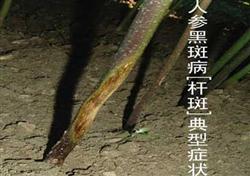
Identification Methods and Control Measures for Ginseng Diseases
Ginseng damping-off disease 1. Symptoms. Caused by infection with Rhizoctonia solani and Fusarium species. It prevents young seedlings from emerging, or after emergence attacks the stem of the seedling at the boundary between dry and moist soil 3-5 cm below the soil surface. The affected part is light yellowish-brown, gradually turning dark yellowish-brown, forming sunken elongated lesions that penetrate deep into the stem and cause rot; after enlargement the diseased...
-
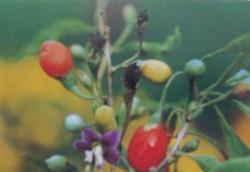
Control Methods and Technical Key Points for Black Fruit Disease of Goji Berry
Black fruit disease is one of the major diseases of goji berry (Lycium barbarum). The pathogen damages the green fruit, flowers and buds of goji berry, and also damages young shoots and leaves. After the green fruit of goji berry is infected, small black spots or black patches or black net-like patterns begin to appear. On cloudy and rainy days, the lesions expand rapidly, turning the fruit black and producing orange-red conidial masses, making it unfit for medicinal use. ...
-
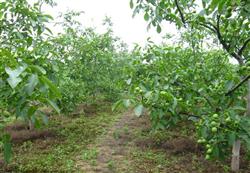
Walnut Management and Pest and Disease Control Techniques for July and August
How should walnuts be managed in July and August? Which pests and diseases need to be controlled? Please give an introduction. For walnuts in July and August, the following methods can be used for management: 1. Water and fertilizer management. For trees that have already set fruit, by July the fruit size has basically become fixed, and they enter the shell-hardening stage. During this period, no artificial watering is needed. Soil moisture that is too...
-
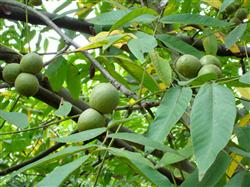
What are the common late-season fruit diseases of walnut trees?
What diseases affect walnut tree fruit in the late season? The following diseases affect walnut tree fruit in the late season: 1. Walnut anthracnose. Disease symptoms: after the fruit is infected, brown to dark brown round or nearly round lesions appear on the rind, with a sunken center and small black dots, sometimes forming concentric rings. When air humidity is high, the lesions bear...
-
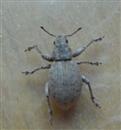
What are the control methods for mango weevil disease?
How to best control mango weevil disease? Please introduce. Mango weevil disease can be controlled by referring to the following methods: 1. The mango leaf-cutting weevil is widely distributed; adults feed on young mango leaves, causing the leaves to dry up; or females lay eggs on young leaves and bite the young leaves off from the base, affecting plant growth. Control methods: (1) During...
-
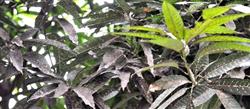
What is mango sooty mold? Get to know this mango disease
What is mango sooty mold? Please note that mango sooty mold is a fungal disease. So far, 6 pathogens causing mango sooty mold have been identified in China. It damages leaves, shoots and fruit, affecting leaf photosynthesis and fruit appearance. Control methods: First, plant at a reasonable density and prune to keep the canopy well ventilated and exposed to light...
-
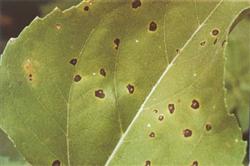
What are the common pests and diseases in sunflower cultivation?
What are the common pests and diseases of sunflowers? Please give an introduction. Sunflowers have the following pests and diseases: Sclerotinia rot ① Crop rotation; ② Seed treatment: for uncoated seeds, mix with 50% carbendazim wettable powder at 3% of the seed weight; ③ Soil treatment: mix 250 g/mu of 50% procymidone wettable powder with fine sandy soil to make medicated soil, and apply it...
-
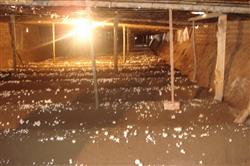
Key Technical Points for Integrated Pest and Disease Control in Button Mushrooms (Agaricus bisporus)
1 Competing fungi, diseases, and insect pests and their control 1.1 Competing fungi and their control methods 1.1.1 Coprinus comatus, commonly known as the wild mushroom, morphological characteristics: the cap is initially bullet-shaped or oval, jade white, grayish white, or yellowish white, mostly with scales on the surface, and the stalk is slender and hollow. When mature, the cap expands, and the gills gradually turn from white to black, finally autolyzing together with the cap into an ink-like liquid.
-
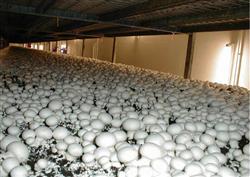
Eight precautions for the prevention and control of pests and diseases in button mushrooms
Strengthening the comprehensive management of button mushroom cultivation and creating an environment conducive to the growth of button mushrooms while unfavorable to the reproduction of pests and diseases is the key to growing organic button mushrooms. 1. Do a good job of environmental sanitation. Spawn production and operating personnel must establish a normal cleaning and sanitation management system, continuously remove contaminants and disinfect them with chemicals,...
-
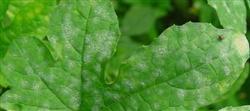
How to Control Powdery Mildew and Viral Disease in Bitter Melon
Powdery mildew, viral disease. How can bitter melon be protected against powdery mildew and viral disease? Please introduce control methods. For controlling powdery mildew and viral disease in bitter melon, you can refer to the following methods: 1. Powdery mildew: The plant is prone to this disease during the flowering and fruiting period. The leaves are first covered with a white powdery substance, which gradually causes the leaves to lose their green color and turn yellow, leading to premature aging of the plant...
条件筛选