-
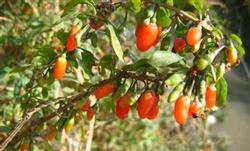
How to prevent and control wolfberry black fruit disease? These methods are very practical
Wolfberry black fruit disease damages the green fruit, flowers and buds of wolfberry, and also damages young shoots and leaves. From the early fruiting stage in early May to the late fruiting stage in mid-October, wolfberry can be infected by this disease. From May to June, when the daily average temperature is above 17°C, the relative humidity is around 60%, and there are 2~3 rainy days per ten-day period, the disease can occur in the field. From July to September, when the daily average temper...
-
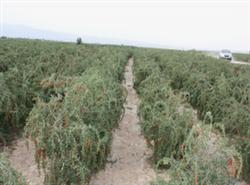
Control Methods and Key Technical Points for Black Fruit Disease of Goji (Lycium barbarum)
Goji root rot is widespread and causes serious damage. Plants killed by the disease account for 3%-5% each year, causing great losses to goji production. According to research by Lu Zhankui and others at the Ningxia Academy of Agriculture and Forestry Sciences, root rot symptoms fall into the following two types: (1) Root decay type. Roots or the root crown show varying degrees of decay and peeling, and the stem...
-
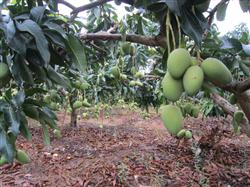
What are the methods for preventing and controlling pests and diseases in mango trees?
What methods are there for preventing and controlling pests and diseases in mango trees? Please provide an introduction to the methods. The following methods can be referenced for preventing and controlling pests and diseases in mango trees: 1. Agricultural control. Select improved varieties that are resistant or tolerant to pests and diseases according to local conditions. A single variety should be planted in the same plot, avoiding mixed planting of varieties with different maturity periods. In...
-
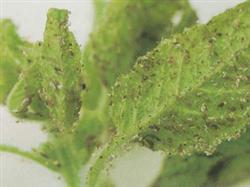
Control Methods for Major Sesame Pests and Diseases
How should the major sesame pests and diseases be controlled? Please give guidance. The major sesame pests and diseases include the following: 1. Sesame hawk moth: before the larvae reach the 3rd instar, when there are an average of 2 larvae per 100 leaves on the plants, pesticide should be applied for control. Commonly used pesticides: 2.5% trichlorfon powder or 5% carbaryl powder sprayed at 1.5-2.5 kg per mu; 90% crystalline trichlorfon or 80%...
-
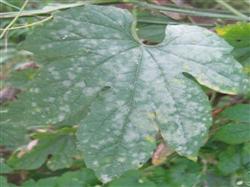
What pests and diseases should be prevented and controlled when growing bitter melon?
What pests and diseases should be prevented and controlled when growing bitter melon? Please provide an introduction to the control methods. The pests and diseases of bitter melon cultivation include the following and their control methods: 1. Powdery mildew. Symptoms of damage: mainly damages leaves. At the early stage of the disease, nearly circular small white powdery spots appear on the front or back of the leaves, mostly on the back of the leaves, and later the spots gradually expand, ...
-
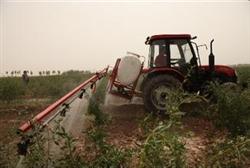
Detailed Explanation of Key Points for Goji Berry Pest and Disease Control
1. Black fruit disease, which occurs during the rainy season, causing affected fruits, flowers and flower buds to turn black. Control: remove diseased flowers and fruits, and spray with mancozeb or Tuzet (fentin acetate) for control. 2. Aphids, which mainly damage leaves and tender shoots. Control: spray with 40% dimethoate at 1000 times dilution to kill them.
-
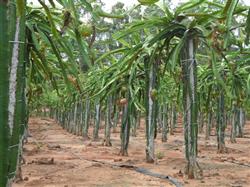
What are the common pest and disease control methods for dragon fruit?
What pests and diseases need to be controlled when growing dragon fruit? Please provide an introduction and guidance. To control pests and diseases when growing dragon fruit, you can refer to the following methods: (1) Pests and diseases. Because dragon fruit is a wild plant and has not been domesticated for long, it has no specific pests and diseases. To date, no fatal insect pests have been found. As for diseases, after transplanting or injury, its resistance weakens and it may be infected by bacteria or viruses, but no local or widespread infectious diseases have been found. As for insect pests, during the branch growth period, the tender shoots will be gnawed by pests, but because the plant produces many tender shoots in a very short time and they grow rapidly (more than 2 cm per day), the amount gnawed by pests is extremely limited and will not affect branch growth.
-
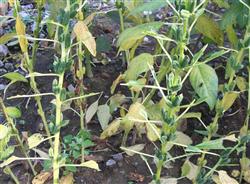
How to prevent and control sesame mosaic virus disease? Detailed control methods
How to prevent and control sesame mosaic virus disease? Please advise. Distribution and damage of sesame mosaic virus disease: It mainly occurs in sesame-producing areas of Henan, Hubei, Jiangxi, Anhui and other provinces. There are two types: common mosaic type and crinkled mosaic type. It is caused by single or mixed infection of Turnip mosaic virus (TuMV) and a spherical virus (CMV)....
-
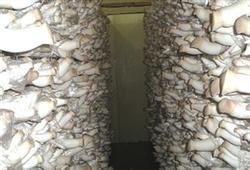
What are the common pest and disease control methods for king oyster mushrooms?
Because it mainly grows on plants such as eryngo (Eryngium) in the Apiaceae family, the king oyster mushroom is also known as eryngo oyster mushroom. The king oyster mushroom is rich in nutrients; its fruiting body contains about 16% protein, 11% crude fat, 6% ash and 4% crude fiber, and is rich in 18 amino acids, with an excellent taste. Regular consumption can help prevent cardiovascular disease, diabetes and obesity, and has beauty...
-
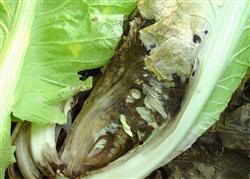
What are the control methods for Chinese cabbage viral disease in summer?
How do you control Chinese cabbage viral disease in summer? Please provide guidance on control methods. Chinese cabbage viral disease in summer generally causes yellowing and crinkling of the heart leaves at the seedling stage, preventing head formation into a ball; at the adult plant stage, the leaves become brittle and hard, crinkled, and the head fails to fill out solidly, with grayish-brown patches forming on the leaves, affecting yield and market quality. High temperature and drought, ...
条件筛选