What are the common pests and diseases in sunflower cultivation?
What are the common pests and diseases of sunflowers? Please give an introduction. Sunflowers have the following pests and diseases: Sclerotinia rot ① Crop rotation; ② Seed treatment: for uncoated seeds, mix with 50% carbendazim wettable powder at 3% of the seed weight; ③ Soil treatment: mix 250 g/mu of 50% procymidone wettable powder with fine sandy soil to make medicated soil, and apply it...
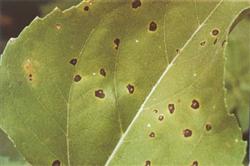
What are the common pests and diseases of sunflowers? Please give an introduction
Sunflowers have the following pests and diseases:
Sclerotinia rot
① Crop rotation;
② Seed treatment: for uncoated seeds, mix with 50% carbendazim wettable powder at 3% of the seed weight;
③ Soil treatment: mix 250 g/mu of 50% procymidone wettable powder with fine sandy soil to make medicated soil, and scatter it into the furrow during sowing;
④ Wide-narrow row planting: wide rows 80 cm, narrow rows 40 cm; plant spacing: about 40 cm for confectionery sunflowers, about 25 cm for oilseed sunflowers;
⑤ Applying medicated soil at the roots: mix 350 g/mu of 50% procymidone wettable powder or 50% carbendazim wettable powder with fine sandy soil to make medicated soil, and scatter it at the root crown during the period when sclerotia spores are discharged;
⑥ Spraying: at the early flowering head stage, spray with a 1500-fold solution of 50% procymidone wettable powder or 50% carbendazim wettable powder, or an 800-fold solution of 40% dimethachlon.
Borers
① Adult control: sex pheromone lures and insect-killing lamps; chemicals include 1000-fold 10% methomyl emulsifiable concentrate and 800-fold 40% chlorpyrifos emulsifiable concentrate, sprayed in the evening;
② Control before larvae bore into the seeds: chemicals include 500-fold 90% trichlorfon crystal, 1000-fold 20% fenvalerate, and 1500-fold 4.5% beta-cypermethrin. Spray again after about 5 days.
Broomrape
① Choose broomrape-resistant varieties.
② Rotate with gramineous crops for at least 6-7 years.
③ Cultivate and weed 2-3 times before broomrape emerges and flowers and sets seed, pulling it out by the roots and burying it deeply or burning it.
④ Strict seed quarantine to prevent bringing broomrape seeds in from infected areas.
Rust
① Rotate with gramineous crops;
② Deep plow to destroy stubble;
③ Seed treatment: uncoated seeds must be treated with chemicals, using 25% triadimefon wettable powder at 100 g per 50 kg of seed;
④ Wide-narrow row planting, timely cultivation and drainage to reduce field humidity;
⑤ Chemical spraying. Spray promptly at the early stage of disease onset. Use 1000-1500-fold 15% triadimefon wettable powder, 800-fold 50% carboxin emulsifiable concentrate, etc., and treat again after about 10 days.
Click to get more sunflower cultivation techniques
Click to get more grain and oil crop cultivation techniques