-
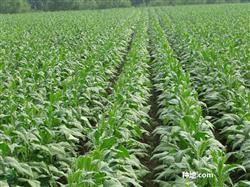
What Fertilizer to Apply to Tobacco to Increase Yield? A Detailed Guide to Scientific Fertilization Methods
How to fertilize tobacco scientifically? The various nutrients needed by flue-cured tobacco throughout its entire field growth period are mainly absorbed from the soil. Judging from the soil nutrient conditions in tobacco-growing areas under various ecological conditions in China, whether in terms of nutrient quantity or the dynamic supply process, they often cannot satisfy flue-cured tobacco's requirements for yield and quality...
-
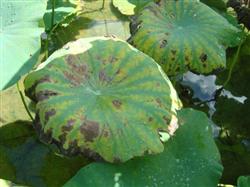
Symptom Identification and Control Methods of Lotus Root Black Spot Disease
What is lotus root black spot disease? How to control it? Please explain: in the early stage of lotus root black spot disease, needle-tip-sized yellowish-brown small spots appear; in the later stage, the entire leaf is covered with lesions that have concentric rings, causing half or the whole leaf to dry up. Control: increase the application of phosphorus and potassium fertilizers, and avoid over-applying nitrogen fertilizer. In winter, thoroughly remove diseased and residual leaves from the field and burn them in a centralized manner; in the early stage of the disease, remove...
-
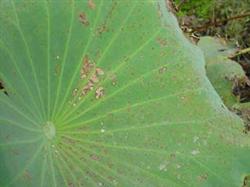
How to control brown spot disease in lotus root cultivation?
How to control brown spot disease when growing lotus root? Please give an introduction. For growing lotus root, the following methods can be used to control brown spot disease: 1. Symptoms. This disease mainly damages the leaves and leaf stalks of lotus root. In the early stage of leaf infection, small brownish-green spots appear, which later expand into reddish-brown to dark brown irregular to polygonal necrotic lesions...
-
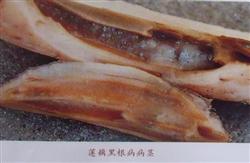
What diseases need to be prevented and controlled during lotus root cultivation?
What diseases need to be prevented and controlled when growing lotus root? Please give an introduction. Lotus root is a high-yield, high-efficiency aquatic cash crop and a vegetable variety commonly eaten by the general public. It is widely cultivated in various regions, and with the adjustment of industrial structures in various places, its cultivation area tends to keep expanding. In recent years, lotus root diseases have become increasingly serious...
-
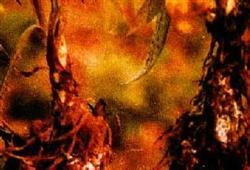
Identification and Control Techniques for Diseases and Pests of Atractylodes macrocephala
Southern blight: Also known as "white sugar rot", it damages the rhizome of Atractylodes macrocephala, with no obvious symptoms on the aboveground parts in the early stage of the disease. Later, as temperature and humidity rise, the mycelium penetrates through the soil surface, and white mycelium densely covers the rhizome and the surrounding soil surface. The top shoots of the affected plants wilt, droop, and eventually the entire plant dies. Disease characteristics: soil and planting material are...
-
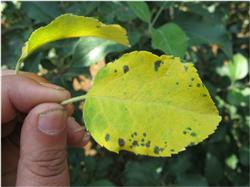
Common Summer Pests and Diseases of Apple Trees and Their Control Methods
What pests and diseases of apple trees need to be controlled in summer? Here are several pests and diseases that may need to be controlled in summer apple orchards for reference: 1. Peach fruit borer: The larvae bore into the fruit and cause damage, resulting in deformed fruit development and the formation of "monkey-head fruit," "bean-paste-filled fruit," and the like. Commonly used pesticides are 2.5% Kung Fu at 1500x dilution, or chlorpyrifos...
-
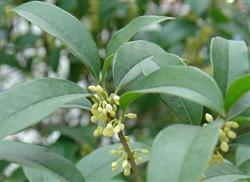
A Detailed Guide to Controlling Common Pests and Diseases of Osmanthus
How do you control common pests and diseases of osmanthus? Methods wanted. The pests and diseases of osmanthus trees include the following: 1. Leaf spot: it mainly damages the leaves, starting as small brown spots; the lesions are round or irregular, later gray to grayish white in the center with reddish-brown edges, and dark gray mold-like growth appears on the lesions. High temperature and high humidity are often the triggers, and it spreads through wind and rain, causing infection; after October the disease subsides. Control: 1) In winter, prune off diseased leaves and clear away fallen diseased leaves, and burn them in a centralized manner; 2) In early May, spray 1:2:100-200 Bordeaux mixture, after which you can spray 50% benomyl 1000 to 1500 times dilution or pyrazophos 500 times dilution or 70% thiophanate-methyl 1000 times dilution.
-
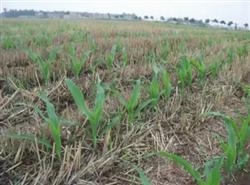
What are the methods for controlling pests and diseases in summer corn at the seedling stage
Which pests and diseases need to be controlled in summer corn at the seedling stage? Please introduce the control methods. The following pests and diseases need to be controlled in summer corn at the seedling stage: 1. Seedling-stage pest control. The main pests at the corn seedling stage are: armyworm, cotton bollworm, small brown planthopper, thrips, Swedish fly, etc. To control armyworm and cotton bollworm, 5% beta-cypermethrin or 2.5% cyhalothrin 50-75 g/mu can be used, sprayed with 30 kg of water. For the control of Swedish fly, when corn has just emerged (i.e. one leaf and one heart), spray 15% beta-cypermethrin·chlorpyrifos emulsifiable concentrate 50 mL per mu. If damaged plants appear in the field, those with severe damage should be pulled out promptly, and for lightly damaged ring-shaped plants, the tip of the plant should be cut off. To control the grain mealybug, use 50% phoxim emulsifiable concentrate 500-1000 mL/mu or 48% Lesiben emulsifiable concentrate 200-400 mL/mu for root drenching.
-
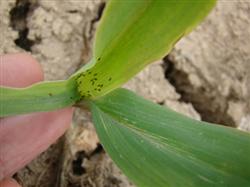
Complete Guide to Summer Corn Pest and Disease Control
How do you control summer corn pests and diseases? Here is an introduction. During the summer sowing period and seedling stage, many types of pests, diseases and weeds occur, and the damage is severe. If control is poor, it very easily causes missing plants and broken rows, leading to reduced yield. Therefore, throughout the entire growth period of corn, carrying out comprehensive control of pests, diseases and weeds at the sowing and seedling stages is crucial. First...
-
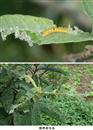
What are the methods for controlling pests and diseases of loquat?
What pests and diseases need to be controlled when growing loquat? Please provide an introduction and control methods. The pests and diseases that need to be controlled when growing loquat are: 1. Flower cluster rot. There are many causes of loquat flower cluster rot, but they are mainly due to two aspects: harmful organisms and climate. During the loquat flowering period (September-November), continuous autumn rain and high humidity accelerate the occurrence of flower cluster rot. Especially in the mid-to-late flowering period, the flower axis turns brown, soft and rotten, appearing mushy. When the diseased part is squeezed by hand, a viscous liquid flows out, and in the later stage the flower axis shrinks, dries up and appears wilted.
条件筛选