-
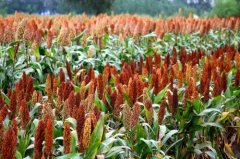
What Is Sweet Sorghum? Differences from Sorghum and a Detailed Guide to Growing Techniques
Do you know sweet sorghum? Why is sweet sorghum called sweet sorghum? Let's take a look at how it differs from sorghum. Sweet sorghum is a variety of grain sorghum and can also produce 5000-6000 kg of grain per hectare, but the seeds are smaller, with a 1000-grain weight
-

What Kind of Corn Is Fruit Corn? Differences from Other Corn and How to Eat It
What is fruit corn? Is fruit corn easy to grow? Fruit corn is a type of sweet corn suitable for eating raw. Compared with ordinary sweet corn, its main characteristics are thin skin with no residue, a delicate texture, lots of juice, and a crisp, sweet taste; it can also be eaten after cooking. Fruit
-

Sword Bean Growing Techniques, Propagation Methods, and the Differences Between Vining and Dwarf Varieties
Do you know the red phoenix bean? This plant has another name, the sword bean. So what are the planting time and methods for sword beans? Let's take a look together! The sword bean blooms from June to July and fruits from August to October. Among plants, those commonly called "sword bean" come in vining
-
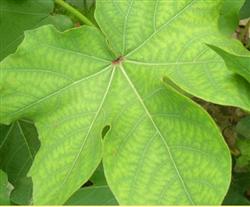
What is the difference between cotton Fusarium wilt and Verticillium wilt?
Cotton Verticillium wilt, cotton Fusarium wilt - what is the difference between cotton Fusarium and Verticillium wilt? Please give an introduction. Cotton Fusarium and Verticillium wilt have the following differences: Cotton Fusarium wilt can occur throughout the entire growth and development period of cotton, but it is more severe at the seedling stage; if favorable conditions occur, it can also break out severely at the mature plant stage. Sudden wilt type: leaves suddenly lose water, droop and wilt, leaf color turns dark green, leaves become soft and thin, the whole plant dries out green and dies, but the leaves generally do not fall off, and the petioles bend.
-
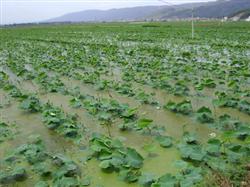
What is the difference between deep-water lotus root and shallow-water lotus root? Explained in one article
What is the difference between deep-water lotus root and shallow-water lotus root? Please give an introduction. Deep-water lotus root and shallow-water lotus root are different. According to the adaptability of lotus root to water level, it can be divided into two ecological types: shallow-water lotus root and deep-water lotus root. Shallow-water lotus root is suitable for a water level of 10-20 cm, with a maximum water depth tolerance of 30-50 cm. Deep-water lotus root is suitable for a water level of 30-50 cm, with a maximum water depth tolerance...
-
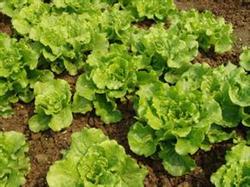
What is the difference between fertilizing newly planted vegetable plots and long-cultivated vegetable plots?
Leaf lettuce, also known as romaine lettuce, is a 1-2 year herbaceous plant in the Asteraceae family, Lactuca genus, that can form leaf heads or tender leaves for consumption. Lettuce is rich in vitamins and minerals, and during cultivation it is easy to obtain pollution-free products without using pesticides, making it increasingly popular among consumers, with planting areas increasing year by year. One...
-

Are edamame and soybeans the same? The differences between the two explained clearly in one go
Are edamame and soybeans the same?
-

Is yellow chives the same as chives? The differences explained in one article
Is yellow chives the same as chives?
-

What is the difference between tomato flower dotting and flower spraying?
What is the difference between tomato flower dotting and flower spraying? Please explain. Although tomato flower dotting and flower spraying are different methods, they achieve the same result by different means. Relatively speaking, tomato flower spraying saves more time than flower dotting, mainly reflected in two differences. First is the number of sprayings. Flower dotting is generally done once during flower bud differentiation...
-
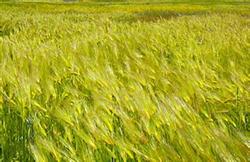
Technical Key Points and Methods for Introducing Barley to Different Regions
I. Seed Preparation and Seeding Rate For barley seeds, the high-quality, high-yield variety S-4 should be selected, and variety S500 can be used as a companion variety. For fields following grain stubble, the seeding rate is 10-11 kg per mu; for fields following flue-cured tobacco or corn, the seeding rate is 8-9 kg per mu. II. Timely Sowing Barley has less strict requirements for sowing time than wheat, and can...
条件筛选