-
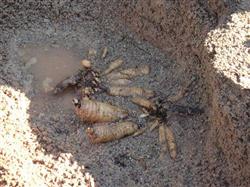
Differences Between Sexual Hybrid Breeding of Gastrodia and Traditional Varieties, and Management Methods
Explaining the principles and technical methods of mulching for increased yield: the principle of mulching for increased yield. Gastrodia is a plant that prefers cool, humid conditions. In nature, it is mainly distributed under forest canopies or in shrublands, mostly growing on gentle slopes at 10-30°C. During its growth period, it likes moisture but fears waterlogging; it likes warmth, with the most suitable temperature being 20-2...
-

Detailed Explanation of the Botanical Characteristics of Different Species of Angelica
There are more than 40 species of Angelica plants in China. Some plants have effects similar to Angelica sinensis, and a few varieties are also used medicinally as Angelica in certain regions. The main varieties include whole Angelica and Dong Angelica (Angelica acutiloba). In addition, there are some counterfeit products on the market that are similar to Angelica but have different effects, which are processed and mixed in as Angelica. Those discovered so far include Lovage (Levisticum officinale), Peucedanum decursivum, wild Angelica, Angelica pubescens f. biserrata, and Angelica gigas. For commercial procurement and clinical application, it is necessary to identify Angelica and its confusable varieties based on their properties. Commonly used Angelica includes: 1. Angelica: also known as whole Angelica
-
What is the difference between ordinary Gastrodia elata and "Mingtianma"? Are they two different varieties?
After harvesting Gastrodia elata, select those that are large, uniform, and have a red "parrot's beak," wash them in water, peel them, boil them (adding alum water), shape them, dry them, and then fumigate them with sulfur; in this way the color is good, and through this fine processing "Mingtianma" is made. Most of those supplied for export are called Mingtianma. Gastrodia elata and Mingtianma are the same variety; the only difference is that the processing is coarse or fine.
-
How is Gastrodia elata planted according to different temperature conditions?
The conditions required by Gastrodia elata and Armillaria mellea are mainly temperature. It can grow and develop normally under conditions of 2-28°C. How to control this condition is the most important factor in whether Gastrodia elata production succeeds. Temperatures across the country can be broadly divided into three major types: (1) Heilongjiang, Jilin, Liaoning, Inner Mongolia, Qinghai, **. In these areas, it must be ensured that the seedlings are not damaged by freezing in winter, and there is no need to consider the effect of high temperatures on Gastrodia elata growth in summer. The best plan is: plant Gastrodia elata indoors, with slight heating in winter, so that it is suitable if the room does not freeze. Outdoor planting of Gastrodia elata
-
Cultivation Methods for Gastrodia elata Under Different Temperature Conditions
The conditions required by Gastrodia elata and Armillaria mellea are mainly temperature. It can grow and develop normally under conditions of 2-28°C. How to control this condition is the most important factor in whether Gastrodia elata production succeeds or fails. Temperatures across the country can be broadly divided into three major types: (1) Heilongjiang, Jilin, Liaoning, Inner Mongolia, Qinghai, **. In these areas, it must be ensured that the seedlings do not freeze in winter, and in summer there is no need to consider the effect of high temperatures on the growth of Gastrodia elata. The best plan is: plant Gastrodia elata indoors, with slight heating in winter, so that the indoor space does not freeze.
-
Differences Between Madeira Vine, Tian Sanqi and New Vine Vegetable
Aliases: Tian Sanqi, tofu vegetable, new vine vegetable. Family and genus: Basellaceae, perennial herbaceous plant. Distribution: Cultivated in Yunnan, Sichuan, Hubei, Taiwan, China and other provinces, with bulbils and leaves used as food. Morphological characteristics: Madeira vine is a perennial succulent small vine of the Basellaceae family, with a well-developed root system; half a year after planting, tubers can form underground. The stem is round, the young stem is green, and the mature stem turns brown; adventitious roots easily form at the nodes. The leaves are alternate, heart-shaped, 8-15 cm long, 9-16 cm wide,
-
What are the differences between Panax notoginseng and Anredera cordifolia
Anredera cordifolia: The dried tuber of the Basellaceae plant Anredera cordifolia (Boussingaultia gracilis Miers var. pseudobaselloides Bailey). After processing and brief boiling, it is used to counterfeit Panax notoginseng. The medicinal tuber is irregularly spindle-shaped or subcylindrical, some slightly flattened, slightly curved. 3-8 cm long, 1-3 cm in diameter. The whole surface bears numerous wart-like protruding buds and circular scars from breakage. The surface is grayish-brown, with curved longitudinal wrinkles and a few
-
What is the difference between Panax notoginseng and Gynura segetum? This article teaches you to tell them apart
Also known as red-backed sanqi, soil sanqi, and blood-breaking elixir. The source is the root of the Asteraceae plant Gynura segetum (Lour.) Merr. Plant morphology: perennial herb, 1-1.5 m tall. Stem erect, somewhat succulent, with fine longitudinal ridges. Basal leaves clustered, spoon-shaped, entire or serrate or pinnately divided, purple-green beneath; cauline leaves alternate, oblong, 10-25 cm long, 5-10 cm wide, pinnately divided, lobes ovate to lanceolate, margin shallowly
-
What is the difference between water pinellia and dry pinellia?
Dry pinellia and water pinellia are both pinellia, and the two are mainly distinguished by the shape of the tuber. The tuber of dry pinellia is spherical or oblate, 0.5-4 cm in diameter, with the bottom and lower half pale yellow, and the bottom or side of the tuber has a "scar" occupying one-third or one-fifth of the tuber surface. Water pinellia has a pointed bottom, shaped like an arrowhead, so water pinellia is also called "arrowhead". Dry pinellia is a "sphere" and water pinellia is a "cone", so the shapes are very easy to distinguish.
-
What is the difference between Solomon's seal (Yuzhu) and Siberian Solomon's seal (Huangjing)? A quick guide to tell the two apart
Yuzhu is the dried rhizome of Polygonatum odoratum, a perennial herb of the genus Polygonatum in the Liliaceae family. It was first recorded in the Shennong Bencao Jing, where it was listed as a top-grade drug under the original name Nülou. The Mingyi Bielu calls it Weirui, and in Hunan it is also called Weishen. Huangjing was first recorded in the Mingyi Bielu and listed as a top-grade drug. There are many botanical sources; broadly speaking, the commercial drug can be divided into two types: chicken-head Huangjing and ginger-shaped Huangjing. Chicken-head Huangjing is the dried rhizome of Polygonatum sibiricum, a few Polygonatum macropodum, and Polygonatum stenophyllum, all perennial herbs of the genus Polygonatum in the Liliaceae family; ginger-shaped Huangjing is the dried rhizome of Polygonatum kingianum, Polygonatum cyrtonema, and Polygonatum cirrhifolium, all perennial herbs of the genus Polygonatum in the Liliaceae family.
条件筛选