Sword Bean Growing Techniques, Propagation Methods, and the Differences Between Vining and Dwarf Varieties
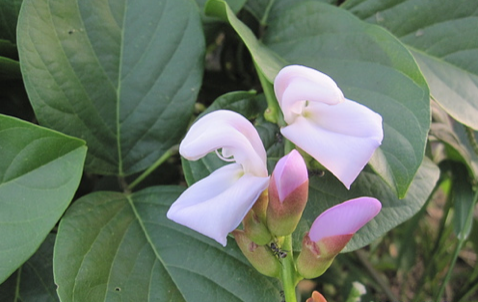
Do you know the red phoenix bean? This plant has another name, the sword bean. So what are the planting time and methods for sword beans? Let's take a look together! The sword bean blooms from June to July and fruits from August to October. Among plants, those commonly called "sword bean" come in vining
Do you know the red phoenix bean? This plant has another name, the sword bean. So what are the planting time and methods for sword beans? Let's take a look together!
The sword bean blooms from June to July and fruits from August to October.
Among plants, those commonly called "sword bean" come in two varieties, vining and dwarf. Because the pods are unusually large and shaped like a big sabre, they got this name. The vining sword bean (Canavalia gladiata), also known as the red phoenix bean, originated in India. Its stems are vining and its pods are relatively long, 20-35 cm long and 4-6 cm wide, with red or brown seed coats; the hilum is about 3/4 of the seed's circumference, and the hilum length is nearly equal to the seed length. The dwarf sword bean (Canavalia ensiformis), also known as the white phoenix bean, horse bean, or upright sword bean, originated in tropical America. Its stems are dwarf or semi-vining and its pods are relatively short, 20-30 cm long and 2.5-4 cm wide, with white seed coats; the hilum length does not exceed 1.5 mm, only about half the seed length. The two are quite easy to tell apart.
Propagation can be done by sowing. Seeds can be sown year-round, but spring from March to April and autumn from September to October are best. Before sowing, soak the seeds in water for 18-20 hours to let them absorb water and soften, which can increase the germination rate. Loam or sandy loam is best for the growing medium, and drainage must be good. Sunlight must be ample; fruiting is poor in shady spots. When growing, stakes must be set up for the vining stems to climb. When the seedlings are about 30 cm tall, pinch off the growing tips once to encourage more branching, and train them onto the stakes. During the growth period, apply fertilizer once a month; various organic fertilizers or the three major nutrients are all ideal, and increasing the proportion of phosphorus and potassium fertilizer favors flowering and fruiting. If you want to eat them, the tender pods must be harvested when they are about 10-15 cm long; once slightly older and riper, they are no longer fit to eat. It likes high temperatures and tolerates cold.