What is the difference between tomato flower dotting and flower spraying?
What is the difference between tomato flower dotting and flower spraying? Please explain. Although tomato flower dotting and flower spraying are different methods, they achieve the same result by different means. Relatively speaking, tomato flower spraying saves more time than flower dotting, mainly reflected in two differences. First is the number of sprayings. Flower dotting is generally done once during flower bud differentiation...
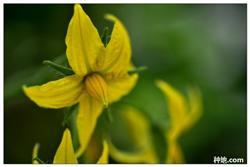
What is the difference between tomato flower dotting and flower spraying? Please explain.
Although tomato flower dotting and flower spraying are different methods, they achieve the same result by different means. Relatively speaking, tomato flower spraying saves more time than flower dotting, mainly reflected in two differences.
First is the number of sprayings.
Flower dotting is generally done once during flower bud differentiation, which is relatively labor-intensive and time-consuming. Flower spraying requires two sprayings, but still saves more time.
The first spraying is done when one flower in each cluster opens and the other flowers "show yellow", and the second is done 5 days later, that is, when 2-3 flowers in each cluster are in full bloom.
The first spraying should not be done too early. If spraying is done before any flower in each cluster has opened, it is easy to delay the flowering date.
Flower spraying is best done from 8:00-10:00 in the morning or from 15:00-17:00 in the afternoon. Try to avoid spraying under high temperatures, otherwise it is easy to cause hormone poisoning.
Second is the spraying concentration.
The flower dotting solution is generally: water + 4-CPA + procymidone/vinclozolin (to prevent gray mold). Usually one ampoule of 4-CPA (5ml/ampoule) is mixed with one jin of water.
When spraying flowers, the concentration of 4-CPA and pesticide should be reduced. Each ampoule of 4-CPA (5ml/ampoule) is mixed with four jin of water.
The difference between 4-CPA and 2,4-D:
4-CPA causes relatively light phytotoxicity to tomato young buds and young leaves, is less likely to produce deformed fruit, is relatively safe to use, and can be sprayed on flowers, saving time and labor, but its efficacy is relatively slow.
Compared with 4-CPA, 2,4-D acts quickly, has a high fruit-setting rate, and has a good effect on preserving flowers and fruit, but it causes phytotoxicity to tomato young buds and young leaves, its concentration is harder to control, and it easily produces deformed fruit.
The specific choice of which flower dotting solution to use should be determined according to the growth vigor of the tomatoes. Plants with excessively strong or excessively weak growth vigor should all use 2,4-D for flower dotting. Only tomatoes with moderate growth vigor can use 4-CPA.
Plants with relatively strong growth vigor show thick upper stems and thin lower stems, large and thick leaves, dark green leaf color, and relatively high water content in stems and leaves.
Plants with relatively weak growth vigor show thin upper stems and thick lower stems, small and thin leaves, yellow-green leaf color, and relatively low water content in stems and leaves.
Plants with moderate growth vigor show uniform thickness from top to bottom on the stems, flat-spreading leaves, and crisp green leaf color.
Click to get more tomato growing techniques
Click to get more vegetable growing techniques