What is the difference between cotton Fusarium wilt and Verticillium wilt?
Cotton Verticillium wilt, cotton Fusarium wilt - what is the difference between cotton Fusarium and Verticillium wilt? Please give an introduction. Cotton Fusarium and Verticillium wilt have the following differences: Cotton Fusarium wilt can occur throughout the entire growth and development period of cotton, but it is more severe at the seedling stage; if favorable conditions occur, it can also break out severely at the mature plant stage. Sudden wilt type: leaves suddenly lose water, droop and wilt, leaf color turns dark green, leaves become soft and thin, the whole plant dries out green and dies, but the leaves generally do not fall off, and the petioles bend.
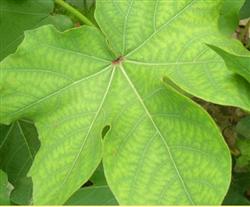 Cotton Verticillium wilt
Cotton Fusarium wilt
What is the difference between cotton Fusarium and Verticillium wilt? Please give an introduction.
Cotton Fusarium and Verticillium wilt have the following differences:
Cotton Fusarium wilt can occur throughout the entire growth and development period of cotton, but it is more severe at the seedling stage; if favorable conditions occur, it can also break out severely at the mature plant stage.
Sudden wilt type: leaves suddenly lose water, droop and wilt, leaf color turns dark green, leaves become soft and thin, the whole plant dries out green and dies, but the leaves generally do not fall off, and the petioles bend.
Yellowing type: can occur at both the seedling stage and the mature plant stage. The yellowing type mostly starts from the leaf margins, with part or all of the leaf turning yellow, and finally the leaf dies or falls off, while the vascular bundles in the petioles and stems turn brown.
Purple-red type: mostly occurs at the seedling stage. Purple-red lesions appear on part or all of the diseased leaves, the veins in the diseased area also appear reddish-brown, and the leaves then wilt and dry up, and the cotton plant dies.
Crinkling type: can occur at both the seedling stage and the mature plant stage. The typical symptoms are crinkled, thickened leaves, dark green leaf color, shortened internodes, and dwarfed plants, which generally do not die.
Yellow net-vein type: mostly appears at the seedling stage. The veins of the diseased plant fade to yellow, while the mesophyll remains green, and part or most of the leaf shows a yellow net-vein pattern, and finally the whole leaf wilts or falls off.
Half-leaf yellowing type: mostly occurs at the seedling stage. After the cotton plant is infected, only one side shows yellowing and wilting, while the other side grows normally. When it occurs together with Verticillium wilt, the symptoms appear as dwarfed wilt or blight, etc. A longitudinal cut of the diseased stem shows dark brown streaks in the xylem.
Acute blight type: mostly occurs at the mature plant stage. After a rainstorm followed by sudden clearing, acute blight symptoms often appear in heavily diseased fields. The cotton plant suddenly loses water, wilts, dries out green, and droops, and the leaves, buds, and flowers fall off in large numbers, forming bare stems, while the top of the main stem and the fruiting branches scorch and dry up.
Cotton Verticillium wilt
It can occur throughout the entire growth period, but under natural conditions symptoms rarely appear at the seedling stage. It generally begins about 40 days after sowing, at the cotton plant's squaring stage, and the disease in the middle and later stages is noticeably more severe than in the early stage.
Yellow spot type: symptoms mostly appear at the squaring stage, and development is relatively slow. The diseased plant starts showing symptoms on the lower leaves and gradually develops upward. In the early stage of the disease, the leaf margins curl upward, and pale yellow irregular lesions form between the veins, while the area near the veins remains green. Generally, it does not die early and the leaves do not fall off.
Leaf blight type: the leaves show local blight spots or palmate blight spots. After the leaves blight and die, they fall off, but the cotton plant generally does not form bare stems.
Wilting type: mostly occurs at the boll-setting stage. After every heavy rain, a kind of acute Verticillium wilt may appear, with water-soaked pale green patches forming between the main veins of the leaves, and the leaves quickly wilt and droop.
Defoliation type: affected plants generally show symptoms first on the upper leaves. The typical symptoms are wilting and drooping leaves that fall off rapidly, and the cotton plant has already formed bare stems before it dies.
Click to get more cotton cultivation techniques
Click to get more food crop cultivation techniques