What is the difference between fertilizing newly planted vegetable plots and long-cultivated vegetable plots?
Leaf lettuce, also known as romaine lettuce, is a 1-2 year herbaceous plant in the Asteraceae family, Lactuca genus, that can form leaf heads or tender leaves for consumption. Lettuce is rich in vitamins and minerals, and during cultivation it is easy to obtain pollution-free products without using pesticides, making it increasingly popular among consumers, with planting areas increasing year by year. One...
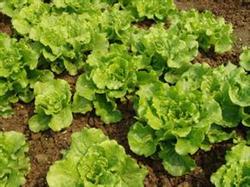 Targeted fertilization for different types of vegetable plots is an important measure for achieving high quality and high yield in vegetables. In rural areas, I often hear some vegetable farmers report that in newly planted vegetable plots (that is, land where vegetables have just been planted), applying more fertilizer produces an obvious yield increase, while in long-cultivated vegetable plots that have grown vegetables year after year, it is easy to cause fertilizer damage, and applying more fertilizer sometimes actually reduces yield.
In terms of the absorption and utilization of fertilizers by vegetables, the strength of their ability depends on the "seepage pit" formed between the high and low sucrose concentrations within their own fibers, relying on pressure differences to promote the flow of nutrient solution, and using leaf transpiration to drive the transport and absorption of fertilizers by roots and stems, causing them to exchange and operate between balance and imbalance, thereby enabling the vegetable plants to grow and develop. In newly planted vegetable plots where vegetables have just been grown, the soil nutrient solution concentration is low, the "seepage pit" is large, the signal in the plant body with sucrose as the main component of transmission is strong, and the regulatory capacity is great. Applying more fertilizer to this type of vegetable plot precisely meets the urgent demand of vegetables for fertilizer and their rapid absorption and utilization, resulting in the obvious effect of more fertilizer and more yield increase. However, in long-cultivated vegetable plots, because the soil nutrients themselves are heavily consumed, the "seepage pit" is small, and the sucrose signal transmission and regulatory capacity in the plants are weak. In some long-cultivated vegetable plots that are often planted with vegetables, because nutrient components are sufficient, the "seepage pit" effect is even lost. Applying too much fertilizer to this type of vegetable plot not only fails to promote the absorption and utilization of fertilizer by vegetables, but on the contrary causes the nutrient components in the vegetable plant body to be blocked, resulting in many physiological disorders harmful to the normal growth of vegetables, causing rotten seeds and dead seedlings that destroy the planting, or dehydration and dead seedlings, or rotten roots and dead seedlings, and many other phenomena of being "stuffed to death."
Many long-cultivated vegetable plots that have grown vegetables year after year show some soil aging phenomena. The main manifestations are increased pathogens and residual toxins, soil compaction, and lack of organic matter. Due to large amounts of compound fertilizers, diammonium phosphate and other chemical fertilizers being applied while organic fertilizer application is neglected, soil compaction is caused, air permeability is reduced, aerobic microbial activity declines, root development is poor, and plants are susceptible to disease. Excessive application of chemical fertilizers raises the pH value of vegetable plots and worsens soil salinization. Trace elements are insufficient. In soil under continuous cropping for many years, trace elements such as zinc, boron, iron, and molybdenum are absorbed in large quantities by vegetables, and when they cannot be replenished, these trace elements decrease year by year, seriously affecting the growth and development of vegetables. The soil plow layer is relatively shallow. Vegetable plots are mostly turned over manually, and in garden plots using intercropping and relay intercropping with successive crops, turning is even less frequent, so the soil layer gradually becomes shallower, affecting root extension. However, because newly planted vegetable plots have not been growing vegetables for long, the above phenomena generally do not appear, so fertilizer utilization efficiency is high and the yield increase effect is significant.
For these two types of vegetable plots, in order to let vegetables grow normally and obtain good benefits of increased yield and income, fertilization must be reasonable, so that the vegetable plot maintains a suitable nutrient concentration and the vegetables maintain a moderate plant "seepage pit" effect. The principles of scientific fertilization are: First, apply large amounts of thoroughly decomposed organic fertilizer. In particular, for long-cultivated vegetable plots, the use of chemical fertilizers and single nitrogen fertilizers should be stopped. Second, persist in applying organic fertilizers such as plant straw, barnyard manure, and human and livestock manure all year round to improve the soil's granular structure and make water, fertilizer, air, and heat clearly coordinated. To improve soil that has already become acidic or alkaline, in addition to increasing organic fertilizer application, appropriate amounts of neutral fertilizers should also be applied. For example, if the soil is acidic, lime or plant ash can be applied to neutralize it; if the soil is alkaline, ammonium sulfate or superphosphate can be applied to regulate it, so as to improve the acidified properties of the vegetable soil. Third, implement reasonable rotation and crop succession of vegetables from different families. Whether it is a newly planted vegetable plot or a long-cultivated vegetable plot, it is not suitable to continuously plant the same vegetable for several successive crops on the same plot. Rotation and crop succession should be carried out frequently. Fourth, adhere to scientific fertilization principles. Maintain 19 kg of pure nitrogen, 7 kg of available phosphorus, and 30 kg of pure potassium per mu. Before fertilizing, first test the available content in the soil, then calculate the varieties and quantities that need to be supplemented, and then decide the application method and amount according to the variety and seedling condition. The general principle is: apply more to "newly planted vegetable plots" and vegetable plots with barren soil; apply less to "long-cultivated vegetable plots" and vegetable plots with fertile soil. The ratio of nitrogen, phosphorus, and potassium is 2.5:0.9:5.5. Appropriately supplement boron and zinc fertilizers, and pay attention to hole application of multi-element vegetable special-purpose fertilizer. For seedlings with fertilizer damage, control fertilizer in time and spray growth regulators outside the roots. When salt damage or fertilizer damage occurs, water the vegetable plot in time, cover with barren soil, suppress salt and buffer the soil nutrient concentration, and prevent vegetables from being "stuffed to death" by fertilizer.