-
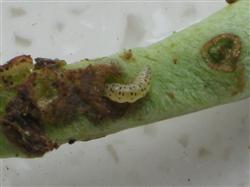
How to effectively control pod borers in bean cultivation
How to control pod borers during bean cultivation? Please explain the control methods. The adult pod borer lays eggs on the tender leaves of the plant, and after 5-7 days, the hatched larvae bore into the pods and feed on the beans. Once larvae older than the 3rd instar have bored into the pods, spraying pesticides can hardly kill them. Therefore, to control this pest, fertilizer and water management should be strengthened...
-
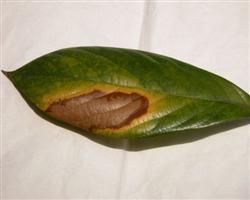
How to prevent and control magnolia leaf blight? Master these practical methods
How to prevent and control magnolia leaf blight? Please give an introduction. The main symptoms of magnolia leaf blight occur on the leaves, and in severe cases can spread to the petioles and flower buds. The lesions mostly occur at the leaf margins, initially appearing as faded green yellow spots, water-soaked, with numerous lesions joining together into patches, expanding outward in a fan shape, with dark brown edges and grayish-yellow interiors, which can cause...
-
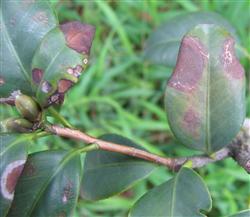
Detailed Guide to Identifying and Controlling Common Camellia Diseases
What diseases of camellias need to be controlled? How should they be controlled? Please give an introduction. The diseases that camellias need to be controlled include: anthracnose. [Cause and symptoms] This disease is caused by the fungus Colletotrichum gloeosporioides infecting camellia leaves. This is the main disease of camellias, with an incidence rate of 33%. Symptoms mostly appear on the leaf margins, leaf tips, and both sides of the veins....
-
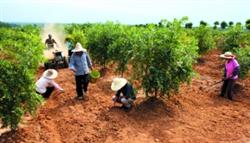
Pest Control Tips and Management Methods for Jujube Trees in Autumn and Winter
How to control pests on jujube trees in autumn and winter? Please provide methods. Pest control on jujube trees in autumn and winter can be carried out with reference to the following methods: 1. Deep plowing of the soil. After the jujube fruit is harvested, promptly deep-plow the soil beneath the trees, generally to a depth of 10-50 cm. This measure can reduce the damage caused by more than 20 species of pests, including the jujube slug moth, jujube gall midge, red spider mite, and peach fruit borer...
-
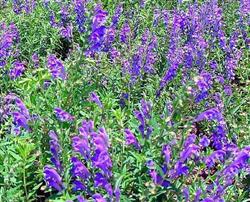
Common Diseases of Scutellaria baicalensis (Chinese Skullcap) and Their Control Methods
What diseases need to be controlled when growing Scutellaria baicalensis? Here is an introduction. The diseases that need to be controlled when growing Scutellaria baicalensis are the following two: 1. Leaf blight. ① Occurrence period and symptoms. It is prone to occur during hot and rainy seasons. It begins with irregular dark brown lesions at the leaf tip or leaf margin, gradually extending inward, causing the leaves to dry up...
-
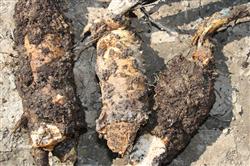
How to prevent and control ginseng root rot? These methods you need to master
How to prevent and control ginseng root rot? Please give an introduction. Symptoms of ginseng root rot: it mainly damages the roots of seedlings and the stem parts below the soil surface. The rotting ginseng roots appear dark brown and wet-rotten, and later become decayed and hollow, with only the hollow root skin remaining. The aboveground parts of affected ginseng seedlings show no obvious symptoms in the early stage, and in the middle and late stages the leaves fade to yellow, wilt and die....
-
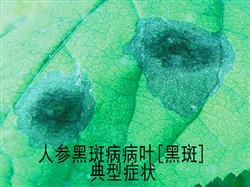
What fungicide works well to control ginseng black spot disease?
What fungicide should be used to control ginseng black spot disease? Please explain that ginseng black spot disease is caused by fungi of the genus Alternaria infecting the stems, leaves, flowers and fruits of ginseng. It spreads through the air. It occurs easily when there are many rainfall events, high air humidity and temperatures of 18°C-22°C, and spreads to surrounding plants. Stem spots mostly appear in mid-to-late May,...
-
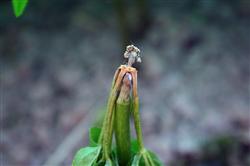
What are the control methods for ginseng gray mold?
How do you control ginseng gray mold? Please explain the methods. Ginseng gray mold symptoms: It damages ginseng leaves; the lesions on the leaves are limited by the leaf veins and appear polygonal or irregular. They are light brown, and on the underside of the lesions there is a sparse, thin, grayish-white or pale yellow mold layer, namely the pathogen's sporangiophores and sporangia. In the later stage, the lesion tissue necroses, breaks apart easily...
-
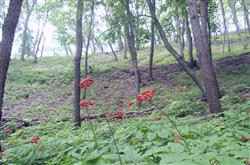
How should ginseng damping-off disease be prevented and controlled?
How is ginseng damping-off disease prevented and controlled? Ginseng damping-off disease occurs at the base of the stems of seedlings, mostly underground at the transition zone between dry and moist soil 3-5 cm below the surface. Control methods: 1. Disinfection of "transplanting stock": use 25% fludioxonil suspension seed coating at 5-20 times dilution to mix with seeds, or 50-100 times dilution to dip the "transplanting stock" to kill the pathogens carried by the seeds...
-
What are the methods for preventing and controlling pests and diseases of oyster mushrooms in summer?
How do you prevent and control pests and diseases of oyster mushrooms in summer? Please describe the methods. The following methods can be used to prevent and control pests and diseases when cultivating oyster mushrooms in summer: 1. Site disinfection. Spray the entire cultivation site with dichlorvos for disinfection, spread a layer of quicklime on the ground, and nail window screens over windows and ventilation holes to prevent pests from entering. 2. Substrate...
条件筛选