How to prevent and control ginseng root rot? These methods you need to master
How to prevent and control ginseng root rot? Please give an introduction. Symptoms of ginseng root rot: it mainly damages the roots of seedlings and the stem parts below the soil surface. The rotting ginseng roots appear dark brown and wet-rotten, and later become decayed and hollow, with only the hollow root skin remaining. The aboveground parts of affected ginseng seedlings show no obvious symptoms in the early stage, and in the middle and late stages the leaves fade to yellow, wilt and die....
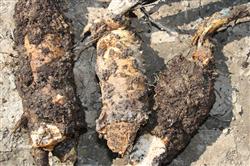
How to prevent and control ginseng root rot? Please give an introduction
Symptoms of ginseng root rot: it mainly damages the roots of seedlings and the stem parts below the soil surface. The rotting ginseng roots appear dark brown and wet-rotten, and later become decayed and hollow, with only the hollow root skin remaining. The aboveground parts of affected ginseng seedlings show no obvious symptoms in the early stage, and in the middle and late stages the leaves fade to yellow, wilt and die.
Pathogen of ginseng root rot: the pathogen is a fungus of the genus Fusarium in the subphylum Deuteromycotina. The fungal hyphae are slender, colorless, and septate. The macroconidia are colorless, sickle-shaped, slightly curved, with 3 to 5 septa; the microconidia are colorless, single-celled, elliptical to ovoid; the hyphae and macroconidia can produce light brown, round, thick-walled chlamydospores.
Occurrence pattern of ginseng root rot: the pathogen overwinters as mycelium and chlamydospores, can survive in the soil for more than 3 years, and can spread through rainwater, flowing water, and contaminated compost. Fusarium mainly infects and causes damage through wounds. After infection, new pathogens are produced in the diseased parts, causing re-infection and expanding the damage. The ginseng root rot pathogen prefers high temperature and high humidity, and the suitable temperature for growth and development is 29 to 32°C. It mainly occurs in the high-temperature and rainy season from July to August. Ginseng beds that are waterlogged, have excessive humidity, and poor drainage are prone to the disease. It often causes ginseng roots to rot and ginseng seedlings to die in patches.
Control measures for ginseng root rot:
(1) Apply organic fertilizer and biological microbial agents to condition the soil and inhibit pathogen reproduction.
(2) Pay attention to rain protection, drainage, and ventilation, and maintain stable soil temperature and humidity; loosen the soil and weed in time to reduce soil compaction, so as to facilitate humidity reduction and increase soil temperature.
(3) Soil disinfection: use 99% hymexazol powder 10 to 20 grams per bed + 50% carbendazim wettable powder 200 grams per bed; or treat the soil with a 150-fold dilution of 3% hymexazol-metalaxyl aqueous solution.
(4) Seed (seedling) disinfection: mix seeds with a 5- to 10-fold dilution of 2.5% fludioxonil (Celest) suspension seed coating agent; mix transplanted seedlings with a 50- to 100-fold dilution. Or soak seeds and transplanted seedlings with a 600-fold dilution of 50% carbendazim wettable powder. (After soaking, drain thoroughly to prevent frost damage.)
(5) Promptly dig out and remove diseased plants, and disinfect and isolate the affected area. Use agents such as hymexazol, polyoxin, and hymexazol-metalaxyl aqueous solution.
Click to get more ginseng cultivation techniques
Click to get more medicinal herb cultivation techniques