-
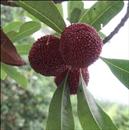
What to Do About Copper Deficiency in Waxberry? Causes and Control Methods Explained
Waxberry twig blight is caused by boron deficiency, so planned boron supplementation can eliminate the harm of this disease. Spraying a 0.1 to 0.2 borax solution 2 to 3 times during the waxberry growing period can effectively control the disease. Root application can also be used; for mild boron deficiency, use 0.3 to 0.6 kg of borax per mu, and for severe boron deficiency, use 1.3...
-
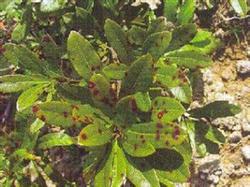
A Detailed Guide to the Main Diseases of Chinese Bayberry (Yangmei) and Their Control Methods
I. Chinese Bayberry Crown Gall Disease 1. Symptoms: Chinese bayberry crown gall disease is a bacterial disease. It mainly affects the branches and trunks of 2-3 year old fruiting trees, mostly forming tumors on the branches and trunks. The tumors are nearly spherical, vary in size, are very hard and corky, and range in color from brown to dark brown. Generally, the tumors on the branches and trunks begin to enlarge in early April, and from July to August...
-
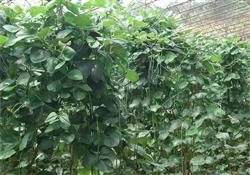
What to Do About Spindly Overgrowth in Greenhouse Beans? Detailed Analysis of Causes and Control Methods
The causes of spindly overgrowth in summer vegetables differ at each stage. Practice has proven that greenhouse beans are most prone to spindly overgrowth during the summer, and the main causes can be grouped into two major categories: 1. Seedling-stage overgrowth. The main cause of spindly overgrowth in seedlings is excessively high temperature, especially when nighttime temperatures are too high and respiration consumes too much...
-
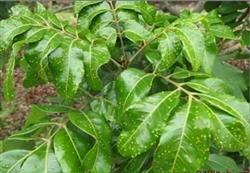
How to control the longan eriophyid mite? Detailed control methods
Damage situation: It pierces and sucks sap in the terminal buds of new longan shoots and in flower clusters, causing the internodes of the flower clusters to shorten, and the florets cannot open normally and develop into swollen flower clusters that do not fall off for a long time. Fruit growers in Guangdong commonly call them "ghost flowers"; damaged new shoots become bow-shaped and claw-like, with leaf margins curling inward and unable to unfold, which growers call ghost shoots. In particular, ghost flowers cannot set fruit...
-
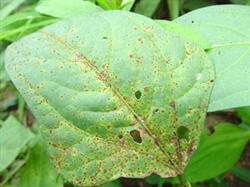
How to prevent and control diseases of yardlong beans? A detailed guide to practical methods
I. Main symptoms The yardlong bean can be infected by pathogens throughout its entire growing season, but its resistance weakens and susceptibility increases from the beginning of flowering to the fruiting period. The disease mainly attacks the leaves; in the early stage of the disease, chlorotic yellow-white spots appear on the leaves, and the spots gradually increase until they densely cover the entire leaf. The plant is short and stunted, with few and small pods, and its growth...
-
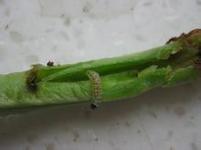
What are the control methods for the bean pod borer?
The bean pod borer, also called the cowpea pod borer, is one of the main pests of beans. The adult cowpea pod borer is dispersed and hidden, flies over a wide range to lay eggs, and lays many eggs, so it is not easy to kill or trap by spraying. Adults lay eggs on the tender leaves of the plant, and after about 5--7 days they hatch and bore into the pods to feed on the beans. Larvae over 3rd instar bore into the pods, and spraying...
-
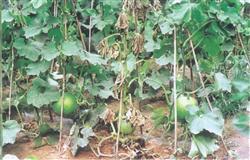
What are the control methods for winter melon pests and diseases?
Fusarium wilt is the most serious disease affecting autumn-planted winter melon. It strikes when the plant begins to flower and set fruit, causing the vines to wither and die. This disease is a fungal disease, and when it occurs severely, it spreads aggressively and rapidly, affecting entire patches and killing whole plants, resulting in heavy losses. Close attention must be paid to its control in order to protect the stems and vines and promote flowering and fruit set....
-
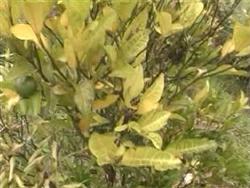
A Detailed Introduction to the Asian Citrus Psyllid and Its Control Methods
Asian citrus psyllid [Diaphorina citri Kuwayama] belongs to the order Homoptera, family Psyllidae. It is an important pest during the tender shoot stage of citrus, mainly damaging citrus, and can also damage Rutaceae plants such as orange jasmine (Murraya paniculata) and wampee (Clausena lansium). Damage characteristics: adults and nymphs gather in groups on tender shoots, young leaves and new buds to suck sap. The damaged tender shoots...
-
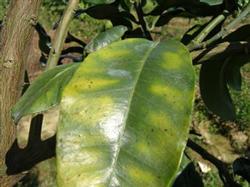
What are the control methods for magnesium deficiency in citrus?
In recent years, as a large amount of rural labor has moved to cities and towns, the number of livestock raised by farming households has declined, and the sources of organic fertilizer have decreased significantly. Coupled with years of low fruit prices, fruit growers have greatly reduced or even stopped using organic fertilizer in fruit production, causing the phenomenon of nutrient deficiency in orchards to worsen continuously in recent years. This is especially true for the secondary element magnesium...
-
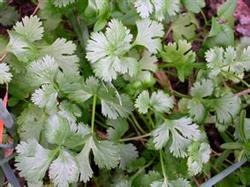
What are the common diseases of cilantro? Detailed explanation of prevention and control methods
Coriander (cilantro) is used as a seasoning vegetable; it is nutritious and simple to cultivate and manage. The key points of coriander cultivation techniques are introduced as follows: Characteristics of coriander. Coriander belongs to the Apiaceae family. It can withstand low temperatures of -1°C to 2°C, and its suitable growing temperature is 17°C to 20°C. Above 20°C it grows slowly, and at 30°C it stops growing. Coriander has requirements for soil...
条件筛选