-
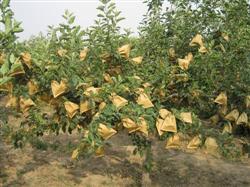
Pest and Disease Control Methods for Pear Trees Before Bagging in Early Spring
The period before and after bud break in early spring is when diseases and pests begin their activity, and once the pear orchard is bagged, spraying becomes considerably more difficult. Therefore, pest and disease control before bagging is the key to pest and disease management in bagged pear orchards. During this period, the focus should be on strengthening control of the pear psylla (Psylla pyrisuga), pear aphid, and red spider mite, among others. (1) Strengthen soil, fertilizer, and water...
-
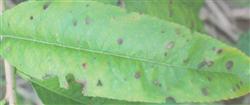
A Detailed Guide to Common Pests and Diseases of Plum Trees and Their Control Methods
After the first pinching of plum trees, pinch the new secondary shoots when they reach 20 cm, and pinch the developing branches when they reach 60-80 cm. If there are many branches, some can be thinned out; if the branches are not too dense, thin as little as possible and rely more on control. Before mid-July, clear all weeds from the orchard. 1. Bacterial shot hole disease, can use carbendazim...
-
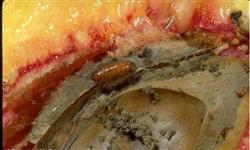
Spring Pest and Disease Control Methods for Protected Plum Trees
1. Mound soil at the base of the trunk. Before overwintering adults emerge from the soil (mid to late May), build a 10 cm thick mound of soil around the tree basin and tamp it down firmly so that emerging adults cannot come out of the soil. 2. Apply pesticide to the ground. Before overwintering adults emerge (after petal fall), spray the tree basin with 75% phoxim emulsifiable concentrate at 0.5 kg/mu, or 40...
-
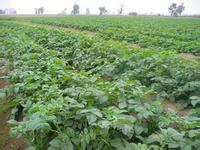
Control Methods and Technical Key Points for Excessive Growth of Greenhouse Potatoes
Mepiquat chloride: During the bud stage to flowering stage of potatoes, foliar spraying of 60-120 mg/L mepiquat chloride (use the lower concentration limit at the bud stage) can inhibit the growth of the aboveground part of the plant, increase yield, and increase the proportion of large and medium tubers. Chlormequat chloride: During the plant bud stage to early flowering stage, use 2000-2500 mg/L chlormequat...
-
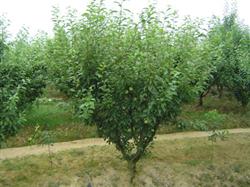
How to control alternate bearing in plums? These methods are essential
Plum trees have been cultivated in China for more than 3,000 years. The Book of Songs records "the blossoms are peach and plum" and "you throw me a peach, I return you a plum." The Guanzi states, "On the five fertile soils, the trees suited to them are plum and apricot." This shows that plum trees and apricot trees have a long history of cultivation in China and adapt well in both the north and the south. But for a long time, our...
-
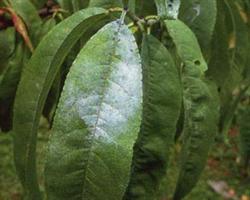
Peach Tree Powdery Mildew: Control Methods and Key Technical Points
Control methods for peach tree powdery mildew: 1. After leaf fall, remove diseased leaves to reduce the source of infection. 2. Spray fungicides for protection during the growing season: in the early stage of the disease, spray 0.2 to 0.3 degrees Baume lime sulfur mixture, or a 2000 to 3000 times dilution of 15% wettable powder triadimefon, or a 1500 to 2000 times dilution of thiophanate-methyl. 3. Improve ventilation and light penetration...
-
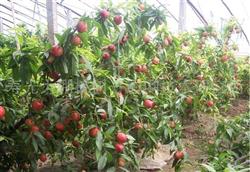
Peach Tree Pest and Disease Control Methods and Technical Key Points
1. Note that peach trees are chlorine-sensitive crops. Applying chlorine-containing fertilizer easily causes root rot and yellowing leaves; in mild cases the tree vigor weakens, and in severe cases the plant dies. Therefore, do not apply chlorine-containing fertilizers. 2. Be careful about watering during the flowering period. Watering during flowering can easily lower soil temperature and reduce soil air content, affecting root growth and absorption, leading to...
-
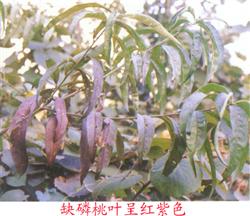
What Are the Symptoms of Phosphorus Deficiency in Peach Trees? Detailed Guide to Prevention and Control Methods
I. The Role of Phosphorus in the Growth and Development of Peach Trees Phosphorus has two roles in the growth and development of peach trees. On one hand, it can strengthen tree vigor, maintain healthy tree growth, promote flower formation, lead to earlier fruiting, promote the maturation of fruit and seeds, increase sugar content, and improve fruit quality. On the other hand, it can enhance the peach tree's adaptability to the external environment...
-
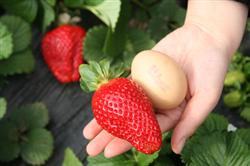
Strawberry Summer Pest and Disease Control Methods and Precautions
Applying Boron and Iron Fertilizer Can Improve Strawberry Quality. Strawberries are currently being marketed in large quantities, but as strawberries grow and fruits are harvested, farmers neglect the application of micronutrient fertilizers, and combined with unreasonable fertilization, this causes a deficiency of trace elements needed for strawberry growth, especially with boron and iron deficiency symptoms being particularly obvious, which has already affected strawberry yield...
-
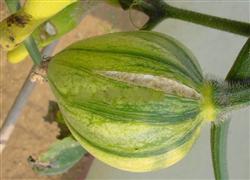
Causes of Pumpkin Fruit Cracking and Control Methods
Main symptoms: Fruit cracking occurs in both young and mature pumpkins, producing longitudinal, transverse or diagonal cracks on the fruit surface. The cracks vary in depth and width; severe cracks can reach deep into the flesh, exposing the seeds, and the injured surfaces of the cracks become suberized; minor cracks are only small fissures. If young fruit cracks, by the time the pumpkin matures it generally becomes severe...
条件筛选