How to control the longan eriophyid mite? Detailed control methods
Damage situation: It pierces and sucks sap in the terminal buds of new longan shoots and in flower clusters, causing the internodes of the flower clusters to shorten, and the florets cannot open normally and develop into swollen flower clusters that do not fall off for a long time. Fruit growers in Guangdong commonly call them "ghost flowers"; damaged new shoots become bow-shaped and claw-like, with leaf margins curling inward and unable to unfold, which growers call ghost shoots. In particular, ghost flowers cannot set fruit...
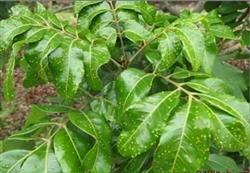
Damage situation: It pierces and sucks sap in the terminal buds of new longan shoots and in flower clusters, causing the internodes of the flower clusters to shorten, and the florets cannot open normally and develop into swollen flower clusters that do not fall off for a long time. Fruit growers in Guangdong commonly call them "ghost flowers"; damaged new shoots become bow-shaped and claw-like, with leaf margins curling inward and unable to unfold, which growers call ghost shoots. In particular, ghost flowers cannot set fruit, seriously affecting yield.
Morphological characteristics: Adult mites and nymph mites are both tiny and generally invisible to the naked eye. Under a high-power magnifying glass, they can be seen to be carrot-shaped (refer to the lychee eriophyid mite), with dense rings on the dorsal and ventral surfaces, and similar numbers of rings.
Occurrence characteristics: Eriophyid mites prefer shade and fear light, so they mostly occur in the unopened compound leaves of terminal buds on shaded inner-canopy shoots. During the flowering period of the year, population density is highest; more than a hundred eriophyid mites can hide in a single floret, and the ovary and anthers also carry mites. Population density during the autumn shoot period is next highest, followed by the summer shoot period. During the shoot period, eriophyid mites are basically concentrated in the terminal buds causing damage, and transfer activity occurs during the stage when compound leaves unfold in layers.
Control methods
1. Prune off "ghost flowers" and "ghost shoots" and then clean up the orchard for disposal.
2. Sow and plant Ageratum conyzoides in the orchard and surrounding open areas to facilitate the habitation and reproduction of predatory mite natural enemies.
3. Spray pesticide during the period when new shoots unfold leaves and eriophyid mites are active in transfer. Use 20% dicofol emulsifiable concentrate at 800-1000 times dilution or 40% omethoate at 1000 times dilution.