What to Do About Spindly Overgrowth in Greenhouse Beans? Detailed Analysis of Causes and Control Methods
The causes of spindly overgrowth in summer vegetables differ at each stage. Practice has proven that greenhouse beans are most prone to spindly overgrowth during the summer, and the main causes can be grouped into two major categories: 1. Seedling-stage overgrowth. The main cause of spindly overgrowth in seedlings is excessively high temperature, especially when nighttime temperatures are too high and respiration consumes too much...
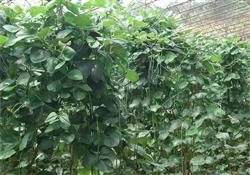
The causes of spindly overgrowth in summer vegetables differ at each stage. Practice has proven that greenhouse beans are most prone to spindly overgrowth during the summer, and the main causes can be grouped into two major categories:
1. Seedling-stage overgrowth
The main cause of spindly overgrowth in seedlings is excessively high temperature, especially when nighttime temperatures are too high and respiration consumes too much, which makes it even more likely to occur. In addition, excessive nitrogen fertilizer and water, sowing too densely, and failure to transplant seedlings in time can also easily cause spindly overgrowth in seedlings. Seedling-stage overgrowth can be divided into the following four types:
① The period from emergence to cotyledon expansion is the most prone to causing spindly overgrowth. At this time, the overgrowth is mainly due to sowing too densely and failure to remove the covering in time after emergence, making the seedlings too crowded. ② Failure to lower the temperature in time after emergence also easily causes excessive elongation of the hypocotyl, resulting in spindly overgrowth. ③ From cotyledon expansion to the 2-3 leaf stage, failure to thin the seedlings in time, or excessively high temperature without timely pricking out (transplanting seedlings into pots), makes the seedlings overly crowded and causes spindly overgrowth. ④ After the pricking-out and seedling recovery period until before planting, because the soil and air humidity in the seedbed are too high, the nutrient soil contains too much nitrogen fertilizer, and management fails to ventilate and let in light in time or to thin out the crowded seedlings, spindly overgrowth can also occur.
Solutions:
1. Sowing density should not be too high, so as to avoid crowding of seedlings after emergence. At the same time, after about 30% emergence, remove the ground covering in time.
2. Thin seedlings and plant out in time.
3. Strengthen ventilation and light transmission, and control temperature and humidity. After the seedlings emerge and before planting, ventilation and light transmission should be carried out to reduce temperature and humidity, strengthen low-temperature hardening, and control excessive growth of the seedlings.
4. Carry out fertilizer and water management reasonably. In preparing nutrient soil, attention should be paid to the amount of phosphorus and potassium fertilizer, and the amount of nitrogen fertilizer should be controlled. In the seedbed, strictly control water and topdressing. When topdressing is needed, do not apply nitrogen fertilizer alone.
5. Thin seedlings in time. About 20 days before planting, seedlings often become overly crowded. At this time, the seedlings should be moved appropriately so that large and small seedlings are separated, and the living space of each individual plant is expanded.
6. Chemical control of spindly overgrowth. Once seedling overgrowth occurs, in addition to taking the above measures, a 2000-2500 times dilution spray of 50% chlormequat can also be used.
2. Plant overgrowth. The causes of plant overgrowth likewise include factors such as temperature, humidity, excessive nitrogen fertilizer, or excessive nutrients.
Solutions:
1. Apply less quick-acting nitrogen fertilizer: During the cultivation of various crops, especially during the pod-setting stage, excessive nitrogen fertilizer often causes overly vigorous growth and serious flower and pod drop, resulting in excessive vegetative growth and insufficient reproductive growth. Therefore, when applying nitrogen fertilizer, it is better to apply less rather than more;
2. Nutritional regulation: Based on the property of humic acid foliar fertilizer and amino acid foliar fertilizer to control growth vigor at a certain concentration, combined with disease and pest control, adding hormone drugs such as mepiquat chloride and chlormequat has a good effect, and the fruit is well shaped with pure color and high yield;
3. Hoeing to cut roots: When the plants are growing too vigorously, the "hoeing method" can be adopted. On the one hand, it increases soil aeration; on the other hand, it can cut some roots, which helps secondary roots grow downward;
4. Frequent light watering: Meet crop needs while reducing soil humidity;
5. Auxiliary cooling measures such as shade nets.