-
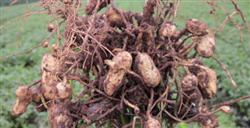
What are the harms of continuous peanut cropping? A detailed guide
What are the harms of continuous peanut cropping? Please note that continuous peanut cropping has the following harms: 1. It causes severe soil nutrient deficiency. Because peanut roots have a large number of rhizobia, they are not very sensitive to nitrogen. Continuous cropping leads to soil nutrient deficiency that cannot meet the nutrients needed by peanuts, thereby affecting the normal growth and development of peanuts. The longer the continuous cropping...
-
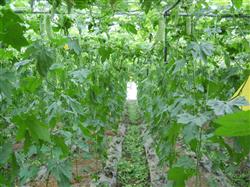
Bitter Melon Continuous Cropping: Planting Methods and Key Technical Points
How to grow bitter melon in continuous cropping? Please provide guidance on the methods. First, pay attention to timely pest and disease control. In the middle and late stages, bitter melon's stress resistance decreases, and the likelihood of pest and disease infection increases, so prevention should be carried out early. At present, the main disease harming bitter melon is powdery mildew, which can be controlled by spraying 12.5% myclobutanil emulsifiable concentrate at 2000 times dilution or 12.5% tebuconazole...
-
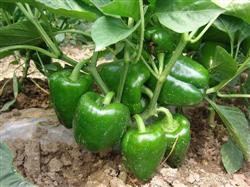
What is the best method for sweet peppers to set fruit continuously?
What method can make sweet peppers set fruit continuously? Please advise. To make sweet peppers set fruit continuously, do not rely on flower spotting to promote fruit set; you can promote sweet pepper fruit set through temperature regulation. Measures such as ventilation and shading can be taken to control the greenhouse temperature, and if necessary, spray chlormequat or daminozide to control excessive vegetative growth and promote flowering and fruit set. Nitrogen fertilizer application...
-
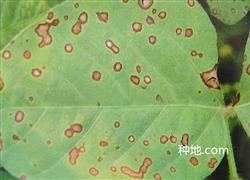
What does continuous and alternating soybean cropping mean? Read this article and you will understand
How should soybean leaf spot disease be prevented and controlled? What are the causes of the disease? 1. Distribution Soybean leaf spot disease occurs in Sichuan, Henan, Shandong, Jiangsu and other places in China, and occurs more often in autumn soybeans. 2. Symptoms The lesions on the leaves are light brown to grayish white, irregular, with dark brown edges. In the later stage, the lesions develop...
-
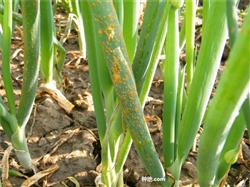
How to prevent and control Welsh onion rust disease during continuous rainy days?
How to prevent Welsh onion rust disease during continuous rainy weather? Please advise. In summer and autumn, with high temperatures and frequent rain, if continuous rainy weather occurs, Welsh onions are prone to rust disease, and farmers should promptly take effective measures to strengthen prevention and control. Timely pesticide application for prevention and control: In summer and autumn, especially after 2-3 days of continuous rainy weather, promptly inspect Welsh onions for rust...
-
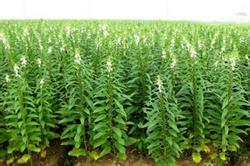
Why Are Sesame Plants Afraid of Continuous Cropping? An Analysis of the Causes of Continuous Cropping Harm
1. The key lies in timely topping. Usually, spring sesame retains the first pair of true leaves, and summer sesame retains the second pair of true leaves. Experiments have shown that this is the best time for topping, inducing a double-stem rate of 100%. The specific timing is: when the second pair of true leaves of spring sesame is half-unfolded, and when the third pair of true leaves of summer sesame is half-unfolded, with an interval of about one week...
-
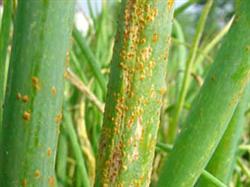
How to prevent and control rust disease in Welsh onions during continuous rainy weather
In summer and autumn, with high temperatures and abundant rain, Welsh onions are prone to rust disease if continuous rainy weather occurs. Farmers should promptly take effective measures and strengthen prevention and control. Apply timely medication for prevention and control. In summer and autumn, especially after 2-3 days of continuous rainy weather, promptly check the occurrence of rust disease in Welsh onions. If brown-green...
-

What to Do About Garlic Continuous Cropping? Practical Control Methods Shared
Yongnian County is a major garlic-growing county, but in recent years, continuous year-after-year garlic planting has caused physiological diseases to become increasingly severe. In addition, garlic's selective absorption of nutrients has made the problem of insufficient nutrient supply prominent, showing symptoms such as dead seedlings, root rot, anthracnose, and in the later stage some cylindrical leaves like scallion leaves, which are unfavorable for the normal bolting of garlic scapes. This not only increases the labor intensity of garlic farmers but also reduces garlic yield. Changing the garlic root environment is the key to increasing garlic income, as follows: apply "Nong Dage" or "Chongcha No. 1" biological bacterial fertilizer per mu of garlic
-
What to Do About Continuous Garlic Cropping? Detailed Explanation of Prevention and Control Methods
Question: Because garlic has been planted for many years, the garlic in the field now gets sick every year, and the bulbs get smaller year after year. Changing the seed garlic does not help. Is it a problem with the soil? What should be done? Answer: When garlic is continuously cropped for many years, various soil-borne diseases and root maggots worsen year by year, which can easily lead to garlic disease and poor growth. For the above fields, it is best to practice paddy-upland rotation of garlic with rice, or rotate garlic with non-garlic upland crops for more than 3 years.
-
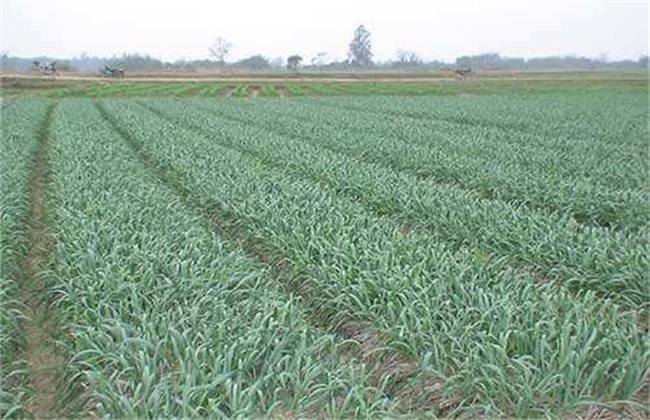
What Causes Garlic Continuous Cropping Obstacles? Detailed Explanation of Prevention and Control Measures
Causes of Garlic Continuous Cropping Obstacles and Prevention and Control Measures
条件筛选