-
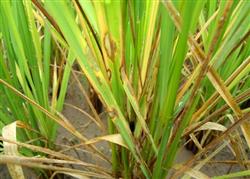
What Is Rice Sheath Blight? A Complete Guide
What is rice sheath blight? What damage does rice sheath blight cause? We ask friends to help explain the damage of rice sheath blight: Rice sheath blight is also called banded leaf blight. It can occur from the seedling stage to the heading stage. When leaf sheaths are infected, small dark green water-soaked spots with blurred edges appear near the water surface, then gradually expand into oval or cloud...
-
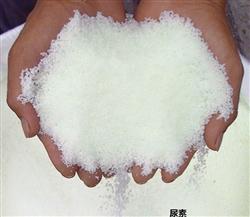
What Is Inorganic Fertilizer? A Complete Guide to Common Types of Inorganic Fertilizer
What is inorganic fertilizer? Which fertilizers are inorganic? An introduction. Inorganic fertilizer is also called chemical fertilizer. The characteristic of this type of fertilizer is that the nutrients it contains are relatively simple; most are a single chemical fertilizer containing only one or two nutrients. When applied to water it is easily broken down and takes effect quickly, so it is also called a "quick-acting fertilizer." It includes nitrogen...
-

What Is a Macro-Element Water-Soluble Fertilizer? A Complete Guide
What is a macro-element water-soluble fertilizer? Here is a detailed introduction. A macro-element water-soluble fertilizer is a multi-nutrient compound fertilizer that dissolves completely in water. It dissolves rapidly in water, is more easily absorbed by crops, and its absorption and utilization rate is relatively high. Macro-element water-soluble fertilizers are liquid or solid products that are dissolved or diluted in water...
-
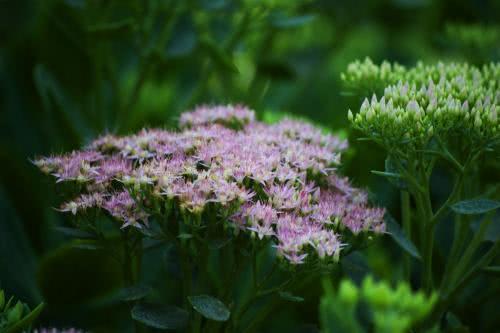
How to Grow Hylotelephium erythrostictum? A Complete Guide to Household Plant Care Notes
Hylotelephium erythrostictum is generally a wildflower that grows in the wild, but we must not look down on this flower just because it grows in the wild; it usually grows on hillside grasslands or in mountain gullies. The whole plant of this flower appears powdery white...
-
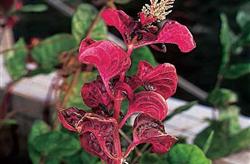
What Is Red Wood Ear? A Complete Guide to Red Wood Ear
What is red wood ear? An introduction: red wood ear is a perennial upright herb. The stems are purplish-red, 1-2 m tall. Leaves are simple and opposite; broadly ovate to nearly round, 2.5-5 cm long, apex deeply concave or 2-lobed, base nearly truncate, slightly decurrent into an ear-like shape, margins wavy, slightly rolled inward, leaf surface slightly curled and uneven, purplish-red with...
-
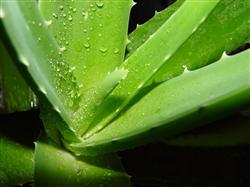
What are the cultivation methods for aloe? A complete guide to care tips
What are the cultivation methods for aloe? Please give an introduction. The cultivation methods for aloe can refer to the following methods: Aloe is originally a tropical plant and is naturally afraid of cold. But it is also an easy-to-grow and easy-to-keep plant. Of course, to make aloe grow fast and propagate abundantly, you must carefully cultivate it according to its characteristics. Aloe likes to grow in...
-
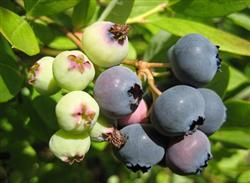
What Is Blueberry Anthocyanin? A Complete Guide
What is blueberry anthocyanin? What does blueberry anthocyanin do? We invite knowledgeable readers to help explain. Blueberry fruit has delicate flesh and very small seeds, is sweet and sour to the taste, and has a fresh, pleasant aroma. Moreover, the anthocyanin contained in blueberries is the highest in content among all fruits and vegetables. Blueberry anthocyanin...
-
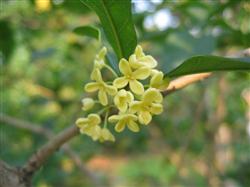
Complete Collection of Osmanthus Tree Planting Techniques: Videos and Pictures
Landscape Use The osmanthus stays evergreen all year round, with luxuriant branches and leaves, blooming in autumn and filling the air with fragrance, truly "dominating the three autumns and overshadowing all other flowers." It is widely used in gardens, often as a landscape tree, planted singly, in pairs, or in clumps and groves. In classical gardens in China, osmanthus is often paired with buildings, rocks and stones, with clump-forming shrub...
-

Complete Guide to Lotus Root Varieties and Introduction to Common Varieties
What lotus root varieties are there? Where can I find a complete guide to lotus root varieties? We ask knowledgeable readers to help introduce them. Lotus root is slightly sweet and crisp, and can be eaten raw or cooked; it is one of the common table vegetables. But exactly which lotus root varieties exist is something some readers still do not know well, so Zhongdi Net has compiled the commonly cultivated lotus root varieties, detailed below...
-
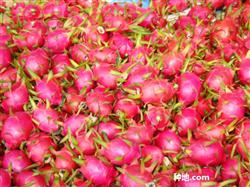
Dragon Fruit Cultivation Techniques: Complete Video and Photo Collection
Benefits of Dragon Fruit: Dragon fruit gets its name because its fleshy outer scales resemble the outer scales of a dragon. When its smooth, enormous flowers bloom, they release fragrance in all directions, and grown as a potted ornamental it gives people a sense of good fortune, which is why it is also called the "auspicious fruit." Dragon fruit is rich in nutrients and has unique properties; it contains plant albumin, which is rare in ordinary plants...
条件筛选