What Is Inorganic Fertilizer? A Complete Guide to Common Types of Inorganic Fertilizer
What is inorganic fertilizer? Which fertilizers are inorganic? An introduction. Inorganic fertilizer is also called chemical fertilizer. The characteristic of this type of fertilizer is that the nutrients it contains are relatively simple; most are a single chemical fertilizer containing only one or two nutrients. When applied to water it is easily broken down and takes effect quickly, so it is also called a "quick-acting fertilizer." It includes nitrogen...
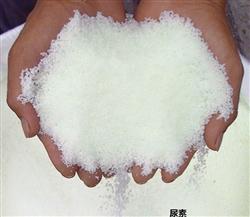
What is inorganic fertilizer? Which fertilizers are inorganic? An introduction
Inorganic fertilizer is also called chemical fertilizer. The characteristic of this type of fertilizer is that the nutrients it contains are relatively simple; most are a single chemical fertilizer containing only one or two nutrients. When applied to water it is easily broken down and takes effect quickly, so it is also called a "quick-acting fertilizer." It includes nitrogen fertilizer, phosphate fertilizer, potassium fertilizer and calcium fertilizer, among others.
Inorganic fertilizers include:
1. Nitrogen fertilizer
Nitrogen fertilizer can be absorbed and used directly by phytoplankton, and in aquaculture it is often used to promote the growth and reproduction of phytoplankton and to increase the amount of feed available for filter-feeding fish and non-crucian carp. Nitrogen fertilizers commonly used in fish farming include ammonium bicarbonate, ammonium sulfate, ammonium nitrate, ammonium chloride and urea. These nitrogen fertilizers, which exist in the ammonium form, readily turn into gas and volatilize when they meet alkali, reducing fertilizer efficiency, so they cannot be mixed and applied with alkaline fertilizers. Nitrogen fertilizer is also a quick-acting fertilizer, suitable as a top dressing, and it can also be used as a base fertilizer. When used as a base fertilizer, 1.5-2 kg can be applied per mu; when used as a top dressing, the amount is 1/4-1/3 of the base fertilizer.
2. Phosphate fertilizer
Commonly used phosphate fertilizers include superphosphate and rock phosphate powder, among others. Ponds generally lack phosphorus, and applying phosphate fertilizer has a clear effect on promoting the growth of plankton and aquatic organisms. Superphosphate is a water-soluble quick-acting fertilizer containing 16%-18% available phosphorus. Rock phosphate powder, on the other hand, is made by crushing phosphate rock; the phosphorus compounds it contains are mainly fluorapatite, which is difficult to break down, so the availability of its phosphorus is poor and its fertilizer effect is also slow. When using superphosphate as a top dressing, only 0.25 kg per mu is needed. Likewise, it cannot be mixed and applied with alkaline fertilizers, otherwise a chemical reaction will occur, producing insoluble tricalcium phosphate and reducing fertilizer efficiency.
3. Potassium fertilizer
Common potassium fertilizers include potassium chloride, potassium sulfate and plant ash, all of which are soluble in water. Under normal circumstances, the potassium in pond water is relatively abundant, so the amount of potassium fertilizer applied does not need to be too much. When used as a base fertilizer, the amount per mu is roughly 0.5 kg; when used as a top dressing, the amount applied is 1/4-1/3 of the base fertilizer. Plant ash contains a relatively large amount of potassium and is strongly alkaline, and this characteristic cannot be overlooked when mixing it with other fertilizers. When using plant ash, it is best to moisten the ash first, then spread it evenly in the pond. It should also be pointed out that plant ash should be kept dry; if it is exposed to rain, a large amount of its potassium content will be lost. Usually potassium fertilizer is mixed and applied together with nitrogen fertilizer and phosphate fertilizer, and the ratio of the three chemical fertilizers, nitrogen, phosphorus and potassium, in the mixed fertilizer is best at 2:2:1.
4. Calcium fertilizer
Commonly used calcium fertilizers include quicklime and slaked lime, among others. Applying calcium fertilizer has many effects: it can disinfect, and it can also neutralize acidic water and provide the calcium that aquatic organisms need. Among these, the most commonly used and most suitable is quicklime, which is both convenient and economical, and can be used as a pond-clearing disinfectant as well as a base fertilizer and top dressing.
5. Compound fertilizer
Generally refers to chemical fertilizers made by chemical processing that contain the three elements nitrogen, phosphorus and potassium, or two of them. Those containing two elements are called binary compound fertilizers, such as ammonium phosphate and potassium nitrate; those containing three are called ternary compound fertilizers, such as potassium nitrate phosphate. In addition, there are also multi-element compound fertilizers containing the three elements and certain other elements. Applying compound fertilizer can meet plants' needs for multiple nutrients, its fertilizer effect is better than that of other chemical fertilizers, and it is also relatively convenient to store and transport.
Click to get more compound fertilizer application techniques
Click to get more fertilizer application techniques