-
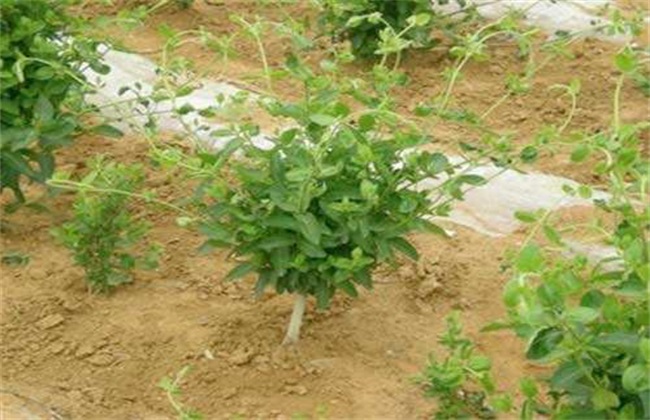
A complete guide to honeysuckle planting techniques, easy for beginners to get started
Honeysuckle planting techniques
-
Complete picture guide to brine soup spice ingredients, with the ingredients clear at a glance
Brine spices are the seasonings used to make braised dishes, generally referring to the Chinese medicinal spices used to make brine. Brine spices have a strong fragrant aroma, can remove the fishy and gamy smell of food ingredients, and enhance...
-

A Complete Analysis of the Key Technical Points for Alfalfa Planting and Management
Key Technical Points for Alfalfa Planting and Management
-

What are the difficulties in cultivating Schisandra chinensis? A complete analysis of practical countermeasures
Cultivating Schisandra chinensis artificially to replace wild resources has already become an inevitable trend in the development of the Schisandra chinensis industry. Many difficulties have also emerged in the production process of artificially planting Schisandra chinensis, and these difficulties have seriously hindered the path of Schisandra chinensis production toward intensive, large-scale, and industrialized development, and are also the fundamental reason for the current lack of large-scale successful experience in artificially cultivating Schisandra chinensis. Regarding the harm caused by pests and diseases, pesticide residues, and drift. The overall countermeasure is: adhere to the three principles of prevention, mitigation, and treatment. Prevention: in the process of Schisandra chinensis cultivation, consistently implement the policy of placing greater emphasis on prevention than on treatment, act early to seize the initiative. Take preventive measures before trouble arises and avoid being passive. In recent years, due to consecutive warm winters, the development of Schisandra chinensis has advanced, so all agronomic measures must also be carried out earlier. Among the 24 solar terms, after Awakening of Insects, Schisandra chinensis should be protected according to local phenological conditions. To prevent certain fungi in the atmosphere from attaching to the stems and vines of Schisandra chinensis, the specific measure is to spray Bordeaux mixture, prepared with equal amounts of quicklime and copper sulfate, one part each, and 200 parts water. After Schisandra chinensis leafs out, promptly spray broad-spectrum fungicides and foliar fertilizers, Bihu + polyoxins + fulvic acid. Mitigation: if nearby farmland is sprayed with butyl ester pesticides, we must take targeted measures and spray mitigating agents, or spray foliar fertilizers to improve immunity. At this stage, prevention should focus mainly on leaf blight. Spray pesticides against Deuteromycota fungi. Treatment: if diseases still occur when protective and mitigating measures are ineffective, apply the right remedy for the condition. Carry out timely treatment. Strictly prevent the loss of the optimal prevention and treatment timing, which causes losses. For the treatment of several common diseases, please follow the methods in the Schisandra chinensis pest and disease section below. Keep firmly in mind the lesson of the large-scale damage to Schisandra chinensis in Heilongjiang in 2007, and never allow the tragic situation to repeat itself.
-
How to Grow Honeysuckle? A Complete Guide to Methods and Techniques
I. Cultivation Methods (1) Seed propagation. Seeds collected in autumn can be sown immediately or stored until early April of the following year. Both broadcasting and drilling are acceptable. Apply 750-1000 kg of farmyard manure per mu as base fertilizer. Before sowing, soak the seeds in 25°C warm water for 24 hours to promote germination, and sow after the seeds show white sprouts. When the seedlings are about 6 cm tall, combine intertillage weeding and thinning with 1 topdressing of 10% urea solution. When the seedlings are 10 cm tall, spray 1 application of 200-fold Bordeaux mixture; they can be lifted from the nursery and transplanted in 30-36 days.
-
Why does Gastrodia elata rot completely after maturing?
Li Zongguo, a farmer from Jinluan Mountain Village, Jiahe Town, Yunxi County, wrote in to ask: I started learning to grow Gastrodia elata last year. Based on the relevant information, I planted fifty or sixty sq m indoors, and last year's harvest was good. This year I began to expand the planting, still following last year's methods. By September this year, I started digging, and sold at the market for only three days. Afterward I went to dig again, and found that all the Gastrodia elata had completely rotted. What is going on? Zhang Qiudong of the Pest and Disease Control Section, Provincial Plant Protection Station, answers: The cause is mostly a poor environment, such as high temperature, high humidity, poor aeration and other unfavorable
-
A Complete Analysis of Gastrodia Planting Methods and Technical Key Points
Gastrodia, also known as Chijian Dingfengcao, Mingtianma, etc., is the species Gastrodia elata of the orchid family. Its tuber is used as medicine, and it has the effect of calming wind and relieving spasms; it mainly treats rheumatic waist and knee pain, limb spasms, dizziness and headache, and infantile convulsions. Gastrodia is a perennial symbiotic herb; the mature plant has an underground tuber and an aboveground flower stem. It has no roots, the stem is single and upright, 100-100 cm tall, with no green leaves, only degenerated scale-like leaves that clasp the stem; the raceme is terminal, and the tuber is fleshy and enlarged, oblong. Living gastrodia prefers a cool and humid climate, with relative humidity between 70% and 90%.
-
A Complete Guide to Schisandra Cultivation Techniques in the Courtyard
Growing Schisandra in courtyards and on vacant land in front of and behind houses can not only increase economic income and solve the problem of insufficient land, but also relieve summer heat, provide shade and coolness, green the courtyard, and beautify the environment. Whether in urban or rural homes, factories, schools, offices, and other institutions, Schisandra can be grown in courtyards. This is a very promising and creative project. 1 Cultivation Characteristics 1.1 Rational Use of Space, Convenient Management Schisandra is a vine fruit tree that can extend its fruiting with the help of trellises, making full use of space. In courtyards, it is very suitable for planting.
-
A Complete Analysis of the Chemical Components, Effects and Pharmacological Actions of Reishi Mushroom
Reishi mushroom [Ganoderma lucidum (Fr.) Karst] is a fungus of the genus Ganoderma in the class Basidiomycetes. Since ancient times it has been known as the "immortal herb" and "auspicious herb". It is a precious traditional Chinese medicine for strengthening the vital essence and consolidating the constitution, and for nourishing and invigorating the body. It has a long history of medicinal use in our country and extremely high medicinal value, and is regarded as a precious Chinese medicinal material and a treasure in the treasury of traditional Chinese medicine. In the Eastern Han dynasty, the (Shennong Bencao Jing) listed reishi mushroom as a top-grade substance, holding that "taken over a long time, it lightens the body, prevents aging, and prolongs life like an immortal." Modern medicine has proven that reishi mushroom contains a variety of physiological
-

条件筛选