What Is Rice Sheath Blight? A Complete Guide
What is rice sheath blight? What damage does rice sheath blight cause? We ask friends to help explain the damage of rice sheath blight: Rice sheath blight is also called banded leaf blight. It can occur from the seedling stage to the heading stage. When leaf sheaths are infected, small dark green water-soaked spots with blurred edges appear near the water surface, then gradually expand into oval or cloud...
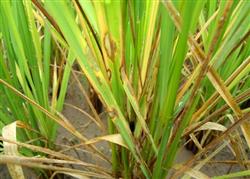 What is rice sheath blight? What damage does rice sheath blight cause? We ask friends to help explain
Damage caused by rice sheath blight:
Rice sheath blight is also called banded leaf blight. It can occur from the seedling stage to the heading stage.
Leaf sheath infection: Near the water surface, small dark green water-soaked spots with blurred edges appear, then gradually expand into oval or banded shapes, with the center turning grayish green or grayish brown; when humidity is low, the center turns pale yellow or grayish white, the central tissue breaks down and becomes semi-transparent, and the edges are dark brown. When the disease is severe, several lesions merge to form large lesions, appearing as irregular banded spots, often causing leaves to turn yellow and die.
Leaf infection: The lesions are also banded, with yellowing edges; when the disease develops quickly, the lesions are dirty green and the leaves rot quickly. Stem damage: The symptoms resemble those on leaves, turning yellowish brown later, and the stems break easily.
Damage to the panicle neck: At first it is dirty green, later turning grayish brown; often the plant cannot head, and headed plants have more shriveled grains and a lower 1000-grain weight. When humidity is high, white net-like mycelium grows on the diseased parts, then gathers into white mycelial masses and forms sclerotia; the sclerotia are dark brown and fall off easily. Under high temperature, a white powdery mold layer forms on the lesions, namely the basidia and basidiospores of the pathogen.
Causes of rice sheath blight:
Sclerotia from early rice are the main source of infection for sheath blight in late rice. The number of sclerotia is the main cause of disease occurrence. When there are more than 60,000 sclerotia per 667 m2, suitable conditions can trigger an epidemic of sheath blight.
High temperature and high humidity are another major factor in the occurrence of rice sheath blight. It can occur at 18-34°C, with 22-28°C being most suitable. The relative humidity for disease occurrence is 70%-96%, with above 90% being most suitable. The temperature range for mycelial growth is 10-38°C; sclerotia can form at 12-40°C, with 28-32°C being the optimum for sclerotium formation. When relative humidity is above 95%, sclerotia can germinate to form mycelium. After 6-10 days, new sclerotia can form again.
Sunlight can inhibit mycelial growth and promote sclerotium formation. Rice sheath blight is suited to occurrence and spread under high temperature and high humidity. In the early growth stage, with many rainy days, high humidity, and relatively low temperatures, the disease spreads slowly; in the middle and late stages, with high humidity and high temperatures, the disease spreads rapidly; in the late stage, high temperature and dryness inhibit the disease.
When the temperature is above 20°C and relative humidity is greater than 90%, sheath blight begins to occur; at 28-32°C, with continuous rain, the disease develops rapidly. When the temperature drops below 20°C and field relative humidity is less than 85%, disease development slows or stops. Long-term deep flooding, excessive and late application of nitrogen fertilizer, and a dense, spindly rice canopy promote the occurrence and spread of sheath blight.
Click to get more rice cultivation techniques
Click to get more grain crop cultivation techniques