Complete Collection of Osmanthus Tree Planting Techniques: Videos and Pictures
Landscape Use The osmanthus stays evergreen all year round, with luxuriant branches and leaves, blooming in autumn and filling the air with fragrance, truly "dominating the three autumns and overshadowing all other flowers." It is widely used in gardens, often as a landscape tree, planted singly, in pairs, or in clumps and groves. In classical gardens in China, osmanthus is often paired with buildings, rocks and stones, with clump-forming shrub...
Landscape Use
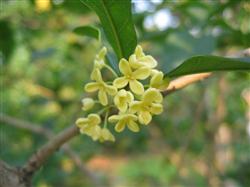
The osmanthus stays evergreen all year round, with luxuriant branches and leaves, blooming in autumn and filling the air with fragrance, truly "dominating the three autumns and overshadowing all other flowers." It is widely used in gardens, often as a landscape tree, planted singly, in pairs, or in clumps and groves. In classical gardens in China, osmanthus is often paired with buildings, rocks and stones, with clump-forming shrub-type plants set near pavilions, terraces, towers and chambers. Old-style courtyards often used paired planting, anciently called "two osmanthus facing the courtyard" or "two osmanthus leaving fragrance." Planting osmanthus trees on all four sides of a residence or before a window can achieve the effect of "golden wind delivering fragrance." Osmanthus has a certain resistance to harmful gases such as sulfur dioxide and hydrogen fluoride, and is also a fine flowering tree for greening industrial and mining areas.
The osmanthus has a penetrating fragrance and contains various aromatic substances, and can be used for food or for extracting fragrance. At present, China has formed concentrated osmanthus-growing regions including Xianning in Hubei, Taoyuan in Hunan, Lu'an in Anhui, Guilin in Guangxi, Zunyi in Guizhou, and Wu County in Suzhou, Jiangsu. Because "gui" (osmanthus) is homophonous with "gui" (noble), people believe the osmanthus is a "tree of wealth and honor." In recent years, it has been hyped in various places, with a single tree selling for as much as tens of thousands, even over a hundred thousand yuan. Small saplings can also sell for several yuan each.
Medicinal Value
Osmanthus: Oleaceae family. Evergreen tree, 3-15 m tall, branches gray. Leaves opposite, leathery, oblong, 6-12 cm long, 2-4.5 cm wide, entire. Flowers clustered in leaf axils, pale yellowish-white, 4-lobed. Drupe elliptical, purple-black when ripe. Flowers fragrant, used to extract aromatic oil and make osmanthus concrete, which can be used in food and cosmetics, to make pastries and candies, and to brew wine. It is also an ornamental plant. Osmanthus is pungent in taste and can be used as medicine.
Osmanthus has edible health benefits, and osmanthus tea has a fresh fragrance and refreshing effect. After briefly scalding osmanthus in boiling water, remove and air-dry it, then preserve it with white sugar, seal it in a bottle to maintain color and fragrance, and use it as a food flavoring. Mix osmanthus and pure lotus root starch with white sugar and brew with hot water to make osmanthus lotus root starch, which is delicious and appetizing. Take top-grade small jujubes, cook them with sugar, and when the liquid is nearly gone, add osmanthus to make spleen-strengthening and appetite-opening osmanthus candied jujubes. Traditional Chinese medicine holds that osmanthus is warm in nature and pungent in taste; taken internally as a decoction, tea or infused wine, it can resolve phlegm and dissipate blood stasis, and has a certain therapeutic effect on poor appetite, phlegm-induced cough and asthma, intestinal wind and bloody dysentery, and amenorrhea with abdominal pain. Osmanthus twigs, seeds and roots can all be used as medicine. Guizhi Tang (Cinnamon Twig Decoction), prepared from osmanthus twigs, peony, ginger, jujube and licorice, specifically treats externally contracted wind pathogen, fever and headache and other symptoms. Osmanthus root is sweet with a slight astringency.
Osmanthus Tree Propagation:
Grafting propagation Rootstocks can be glossy privet, small-leaf glossy privet, white ash and fringetree, etc. For mass propagation, small-leaf glossy privet is mostly used in the north. Before spring sprouting, cut the rootstock off 5 cm above the ground, cut 1- to 2-year-old strong osmanthus branches 10 to 12 cm long, and cut both sides of the base into 45-degree slants. Make a vertical cut about one third of the way along one side of the rootstock, 2 to 3 cm deep. Insert the scion into the cut, align the cambium layers, tie tightly with a plastic bag, and bury in soil for cultivation. Using small-leaf glossy privet as the rootstock gives a high grafting survival rate and fast growth, but tends to form a "small foot" condition.
Potted osmanthus mostly uses approach grafting, with fringetree as the rootstock. Approach grafting should be done in the growing season; choose a scion and rootstock of similar branch thickness, cut a prism-shaped notch on a suitable part of the scion, deep enough to reach the xylem. Cut a notch on the rootstock matching the size of the scion, bring the two cuts together, fit the cambium layers closely, and tie tightly with plastic strips. After healing, cut off the rootstock above the union and the scion below it.
Cutting propagation Before spring sprouting, choose one-year-old well-developed branches and cut them into 5 to 10 cm lengths. Remove the lower leaves, keep 2 to 3 leaves at the top, and insert into a river sand or loess seedbed at a spacing of 3 x 20 cm. After insertion, water promptly and shade, maintaining a temperature of 20°C to 25°C and a relative humidity of 85% to 90%; roots can form in 2 months.
Layering propagation Divided into simple layering and air layering. Simple layering requires selecting a low-branching or clump-forming osmanthus mother plant; from spring to early summer, use a sharp knife to cut or girdle the easily bendable 1- to 2-year-old lower branches, deep enough to reach the xylem, press them into a 3 to 5 cm deep trench, and fix with wooden sticks. For the air layering method, in spring select 1- to 2-year-old branches from the mother tree, girdle them, then wrap the wound with a growing medium and tie a plastic bag tightly. During cultivation, keep the medium moist at all times, and after roots develop in autumn, cut away from the mother plant.
Osmanthus Tree Seedling Raising:
Seed sowing is commonly used for raising seedlings. Seed sowing can produce large numbers of osmanthus seedling trees, suitable for use as street trees. Sowing usually uses wide-row drilling, with a row spacing of 20 to 25 cm and a width of 10 to 12 cm, sowing 20 kg per mu, yielding 25,000 to 30,000 osmanthus seedlings per mu. Before sowing, place the seed hilum facing one side, cover with 1 to 2 cm of fine soil, then cover with a thin layer of rice straw, and spray water until the soil is thoroughly wet, to prevent soil crusting and reduce water evaporation. When the seeds germinate and emerge from the soil, remove the straw promptly and place it between the rows, which can both keep the soil moist and prevent weed growth.
Osmanthus Tree Transplanting:
1. Transplanting time: August osmanthus can be transplanted in spring or autumn, but spring transplanting is best. Autumn transplanting should be carried out where the temperature gradually turns cooler and water sources are abundant; generally, south of Guizhong, transplanting is done after October.
2. Selection of transplanting seedlings: For August osmanthus, choose seedlings with good growth, strong branches, no pests or diseases, no new shoots yet, and that have already been transplanted. At the same time, August osmanthus seedlings that have not been fertilized within a month and those grown with plant hormones are best not used for transplanting.
3. Land preparation: The specific land preparation method depends on the size of the August osmanthus seedlings selected for transplanting, but regardless of the specific method, it is best to first clear-cultivate the whole area and apply base fertilizer. If the August osmanthus transplanting seedlings are less than 1 m tall, it is best to make beds and plant; beds 20 m long and 0.9 to 1.2 m wide are ideal. Plant spacing 10 to 30 cm, row spacing 20 to 40 cm; if the seedlings are more than 1 m tall, it is best to dig holes for planting, with the hole size depending on the seedling, and open good drainage and irrigation ditches.
4. Lifting seedlings: Lift August osmanthus seedlings on cloudy days or in the early morning or evening of sunny days; do not lift seedlings on rainy days, and the lifting time should preferably not exceed two days. Water once 3 to 5 days before lifting, use a hoe or shovel to lift the seedlings; generally, those with a ground diameter below 2 cm can be lifted as bare-root seedlings, with the retained root length (main root) not less than 15 cm; those above 2 cm must have a soil ball, with the soil ball size 6 to 10 times the diameter class. Injure the roots as little as possible, and never pull the seedlings up. For long-distance transport or sunny days, promptly dip bare-root seedlings in yellow mud slurry, wrap them with moist rice straw or film, etc., and tie them tightly into bundles. For seedlings with soil balls, bind them firmly with straw rope or food bags and string. If the soil ball is incomplete, patch it with wet yellow mud. Lifted August osmanthus should be placed in a shaded, wind-sheltered place, and the roots covered with shade netting.
5. Loading and transport: Except at midday on sunny days and on rainy days, loading can be done at other times. August osmanthus bare-root seedlings can be loaded upright or horizontally; when loading, be careful not to step on and injure the trunk or roots, and for seedlings less than 1 m tall, also be careful not to break the terminal buds. Those with soil balls should be loaded upright; the number of layers for upright loading can depend on the size of the soil ball, generally not exceeding 5 layers, and be careful not to exceed height or weight limits. It is best to cover the August osmanthus seedlings with a tarpaulin or shade net, and never water the seedlings. Transport should preferably reach the destination within two days.
6. Treatment of seedlings before planting: After the August osmanthus seedlings arrive at the destination, unload them immediately. Place the seedlings upright in a wind-sheltered, shaded place or use shade. If planting promptly, the seedlings can be unloaded at the planting site; note that on sunny days, use shade netting or other material that can shade but is not likely to raise the temperature too high to shade the seedling roots; prune the branches, leaves and root system of the August osmanthus; generally, those less than 1 m tall should not be tip-pruned, while those over 1 m can be treated according to the situation, retaining 1/3 to 1/2 of the total branches and leaves, and those with large soil balls can retain more. For the roots, mainly prune split roots and overly long roots. Pruning can be done before planting or while planting.
7. Planting: For August osmanthus seedlings planted in beds, open rows for planting according to specifications; for August osmanthus seedlings planted in dug holes, first put back a small amount of loose soil at the bottom of the hole, stand the seedling in the center of the hole, with the hole surface 3 to 5 cm above the seedling's root collar, straighten it and backfill soil to about 1/2 of the hole, lift the seedling slightly, then fill to 2 to 3 cm from the hole surface, firm evenly around and backfill soil until the hole is full. If the weather is dry at planting time, you can slurry the roots with yellow mud plus 1% superphosphate before planting, and can also mix mud slurry in the hole for planting. After planting, water thoroughly promptly.
Osmanthus Tree Diseases:
Anthracnose It easily occurs under high-temperature and high-humidity conditions. In the early stage of disease, nearly circular purplish-brown lesions appear on stems and leaves, with small black spots on them; in the later stage, under moist conditions, pink viscous material overflows from the small black spots, causing leaf blight. From July to August, spray 500 to 600 times diluted zineb 1 to 2 times, then switch to 50% amobam 800 to 1000 times dilution for control; in winter, thoroughly clear dead branches, fallen leaves and weeds from the garden.
Top spot disease Mostly occurs from the leaf tip or leaf margin. In the early stage of disease, small brown spots appear on the leaves and gradually expand into large circular or irregular lesions. In the later stage, many small black spots form on the lesions, but no viscous material overflows. In severe cases, multiple lesions connect to form large blighted spots, and the leaves curl and crack. In the early stage of disease, spray 1:2:200 Bordeaux mixture, then use 50% benomyl wettable powder 1000 to 1500 times dilution for control.
Brown spot disease In the early stage of disease, small chlorotic yellow spots appear on the leaves and gradually expand into nearly circular lesions, yellowish-brown to grayish-brown, with a yellow halo around the edge. In the later stage, black mold-like material forms on the lesions. After the lesions connect, the leaves wither and fall. In the early stage of disease, spray 1:1:200 Bordeaux mixture, and half a month later spray 65% zineb wettable powder 800 times dilution or 50% tecnezene wettable powder 1000 times dilution for control.
Rot disease Mainly occurs at the root collar; the affected part becomes water-soaked, and after the lesions gradually expand, the plant's growth weakens or it even dies. It occurs severely in the rainy summer and autumn seasons. In early spring, scatter a small amount of sulfur powder around the plant; in winter, whitewash the trunk; the whitewash is prepared from 25 jin quicklime, 3 jin salt, 0.5 jin vegetable oil, 1 jin sulfur powder, and 100 jin water. After lesions appear, scrape them clean and apply asomate kerosene agent.
Osmanthus Tree Pests:
I. Jewel beetle
1. Damage symptoms: Larvae bore and feed within the branch and trunk cortex, exuding oily dot-like brown gum; when the damage is severe, the bark splits, and the main branch or the whole plant dies. Adults bite and feed on young leaves, creating notches, and in severe cases cause heavy leaf fall. Trees with poor management and weak growth suffer more severely.
2. Control: At the peak of larval hatching (generally May), scrape off the bark and apply 80% dichlorvos emulsifiable concentrate 20 times dilution; during the adult occurrence period (about June), spray the canopy with 90% trichlorfon 1000 times dilution 2 to 3 times.
II. Scale insects
1. Damage symptoms: The scale insects harming osmanthus include red wax scale, cottony cushion scale, and chaff scale, etc. Nymphs and adults pierce their mouthparts into branch and trunk tissues to suck sap, causing branches and leaves to wither and die. At the same time, they secrete honeydew, inducing sooty mold, causing severe damage.
2. Control: During the nymph hatching period, spray 20% fenvalerate-cypermethrin emulsifiable concentrate or 2.5% deltamethrin emulsifiable concentrate 2500 times dilution for control; when the scale shell forms, spray 40% methidathion emulsifiable concentrate 1500 times dilution; due to its strong penetration, the control effect is good.
III. Slug moths
1. Damage symptoms: The main slug moths harming osmanthus include yellow slug moth, green slug moth, blue slug moth, and flat slug moth, etc. Most overwinter as larvae in cocoons; young larvae cluster to feed on leaves, most severe from July to September, and adults have strong phototaxis.
2. Control: From May to June, use black light traps to kill adults; manually remove cocoons attached to branches and trunks; in the young larval stage, carry out chemical control promptly; you can choose 10% cypermethrin 2000 times dilution or 90% trichlorfon 1000 times dilution to spray and kill the larvae.
IV. Bagworms
1. Damage symptoms: The bagworms harming osmanthus mainly include large bagworm, tea bagworm and other species. The larvae can spin silk to make cocoons, with various broken twigs and leaves stuck on them, forming various forms of bags. The larvae mostly gather at the top of the canopy to feed on leaves, and in severe cases can eat all the leaves, causing severe damage to plant growth or even death.
2. Control: In winter, prune out infested branches and remove the bags; in the young larval stage, carry out chemical control promptly; you can choose 95% crystalline trichlorfon 1000 times dilution or 50% fenitrothion 1000 times dilution to spray and kill the larvae.
Reasons Why Osmanthus Trees Do Not Bloom:
(1) Poor seedling selection. There is a kind of purple osmanthus that can only bloom after growing into a large tree. If purple osmanthus is mistakenly propagated as cuttings or seedling trees, it is very difficult to bloom. Osmanthus planting stock should be grafted seedlings using mature branches of good varieties as scions, or seedlings obtained by air layering at the base of flower-bearing branches; not only is the quality good, but they bloom easily after survival.
(2) Improper cultivation. Neutral sandy soil is most suitable; in loam with relatively high alkalinity, it often blooms little or not at all; root injury or freezing during transplanting will certainly weaken growth, and it cannot bloom within 3 to 5 years; osmanthus likes light and dislikes warmth, and long-term insufficient light may prevent blooming; soil that is too wet causing root rot or long-term high temperature and dryness will also affect flower bud differentiation.
(3) Caused by diseases. Osmanthus fears chlorine gas and cannot tolerate smoke and dust. With heavy smoke and dust, growth is poor, leaves become smaller and fall off, and it cannot bloom. Osmanthus is also easily harmed by pests and diseases such as anthracnose and scale insects; if not controlled promptly, blooming is likewise affected. In addition, mistakenly pruning spring shoots will affect blooming that year. Picking too many branches from blooming osmanthus will weaken growth and affect future blooming.
Click to get more osmanthus planting techniques
Click to get more flower planting techniques