-
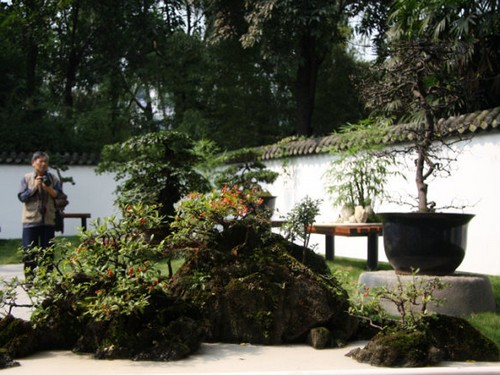
Sichuan-style bonsai reflects Chengdu's refined and elegant urban character
In Chengdu's gardens and museums, bonsai is a major highlight. As a distinctive intangible cultural heritage of Chengdu, Sichuan-style bonsai is one of the four major schools of traditional Chinese bonsai. Starting from the Eastern Han Dynasty, bonsai artists in the Shu region began exploring how to condense the wonders of mountains, waters and nature into a small pot. By the Five Dynasties
-

Shucheng Xiaolanhua makes the list. Do you know this famous Anhui tea?
Shucheng Xiaolanhua is produced in Shucheng County, Anhui Province, and is a variety of green tea. It has a unique orchid fragrance and a sweet, mellow taste, making it a fine tea. If you want to drink Shucheng Xiaolanhua tea, you need to carefully judge the quality of the tea leaves when buying it. Shucheng Xiaolanhua has a sweet, mellow taste and offers both drinking value and health benefits. The tea leaves retain a relatively large amount of natural substances, and long-term drinking brings many benefits to the body. The tea polyphenols and vitamins in Shucheng Xiaolanhua.
-
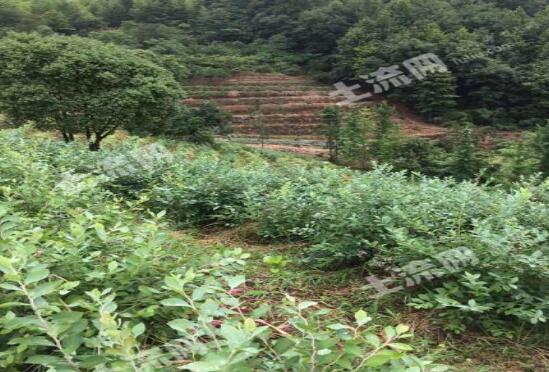
How large is the land area of Wucheng District and Jindong District in Jinhua City, and what plants are profitable to grow?
Jinhua is a prefecture-level city under the jurisdiction of Zhejiang Province, bordering Taizhou to the east, Lishui to the south, Quzhou to the west, and Shaoxing and Hangzhou to the north. Its territory comprises 2 municipal districts, Wucheng District and Jindong District, 4 county-level cities, Lanxi City, Yiwu City, Dongyang City and Yongkang City, and 3 counties, Wuyi County, Pujiang County and Pan'an County.
-
Introduction to the Characteristics and Traits of the Chengdou No. 6 Soybean Variety
(1) Variety source: An early-maturing spring soybean variety bred by the Crop Research Institute of the Provincial Academy of Agricultural Sciences. (2) Characteristics and traits: The growth period is about 103 days, 5 days later maturing than the control Aijiaozao. Plant height is about 55 cm, with determinate pod-bearing habit, lanceolate leaves, white flowers, gray hairs, brown mature pods, elliptical seeds, yellow seed coat, brown hilum, and 100-seed weight of about 17 g. The seed protein content is 45.7%, and the fat content is 19.61%. It mainly shows long pods and many seeds, with 2.2-2.6 seeds per pod. It is resistant to viral diseases.
-
Introduction to the Soybean Variety Chengdou 7 (8601-4)
(1) Variety origin: This line was developed by the Sichuan Academy of Agricultural Sciences in 1986 by crossing Baiqiancheng as the female parent with Chengdu Tiankan Dou as the male parent, followed by generation-by-generation directional selection. (2) Characteristics: This variety is a medium-maturing spring soybean variety, with a spring sowing growth period of about 120 days. It has a determinate podding habit, white flowers, and gray pubescence. The seeds are large (100-seed weight about 26 g), nearly round, with yellow seed coats and yellow hila. The rate of fully developed seeds is relatively high, the protein content is 43.5%, and the fat content is 20.7%. It has good yield potential, excellent quality, resistance to mosaic virus disease, and strong lodging resistance.
-
Introduction to the Characteristics of the Soybean Variety Chengdou No. 8
(1) Variety source: Chengdou No. 8 (formerly coded 8407-1) was developed by the Crop Research Institute of the Sichuan Academy of Agricultural Sciences through crossbreeding of Chengdou No. 4 and (Rongjing) badouzi. (2) Characteristics: An early-maturing spring soybean variety, it can also be planted in summer and autumn. The growth period for spring sowing is about 105 days, plant height is 40 cm, it has strong virus resistance and lodging resistance, the white grain weight is about 18 g, and the seeds contain 44.4% protein and 20.2% fat. (3) Yield performance: The three-year provincial regional trial average from 1994-1996
-
Brief Introduction to the Characteristics of the Chengdou No. 9 Soybean Variety
(1) Variety source: Chengdou No. 9 was developed by the Crop Research Institute of the Sichuan Academy of Agricultural Sciences in 1988 through sexual hybridization using Aijiaozao as the female parent and Leidian (introduced from Japan) as the male parent, followed by selection through successive generations. (2) Characteristics: The plant is about 50 cm tall, with elliptical leaves, white flowers, brown mature pods, elliptical seeds, yellow seed coats, and brown hilum, with a 100-seed weight of about 21 grams. This variety is an early-maturing spring soybean variety with determinate podding, suitable for spring sowing, and can also be planted in summer and autumn. When spring-sown, the whole
-
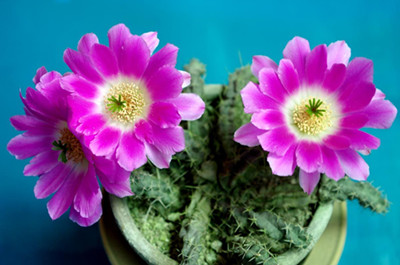
What are the cultivation methods for Echinocereus reichenbachii?
It is a plant in the Cactaceae family, genus Echinocereus, flowering in spring and summer. The flowers of Echinocereus reichenbachii are pink or rose red, cross-pollinated. This variety is relatively tolerant of full sun. During the growing season, water only after the soil has dried out completely. For mature plants, use as little water as possible, otherwise they will easily become leggy and grow very long. The soil mix for Echinocereus reichenbachii is fairly simple: perlite mixed with peat
-
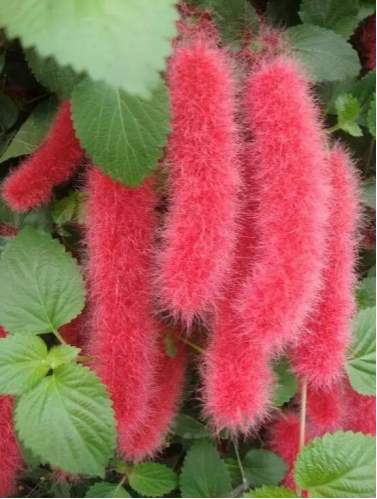
Propagation Methods and Cultivation Management Techniques for the Chenille Plant
1. Propagation method. The chenille plant is commonly propagated by cuttings. In April, when the temperature is suitable, select newly grown branches from vigorous plants, cut them into 10 to 15 cm lengths as cuttings, keep two leaves on each cutting, then insert them into a substrate made of river sand. After inserting the cuttings, water them thoroughly.
-
What are the precautions for growing plants in the kitchen?
Better few and choice than many and mixed. Kitchen space is limited to begin with, and it is not as spacious as a living room or bedroom, so when growing plants in the kitchen you need to keep the number under control, otherwise the kitchen will become messier and look more oppressive. Reasonable placement. Indoor sunlight is limited, so we must treat sun-loving and shade-loving plants differently. In the kitchen
条件筛选