What are the cultivation methods for Echinocereus reichenbachii?
It is a plant in the Cactaceae family, genus Echinocereus, flowering in spring and summer. The flowers of Echinocereus reichenbachii are pink or rose red, cross-pollinated. This variety is relatively tolerant of full sun. During the growing season, water only after the soil has dried out completely. For mature plants, use as little water as possible, otherwise they will easily become leggy and grow very long.
The soil mix for Echinocereus reichenbachii is fairly simple: perlite mixed with peat, with added vermiculite and cinder, in any proportion, with a focus on drainage. Pumice is laid on the soil surface. Clumping Echinocereus reichenbachii grow relatively tall, and they also tend to grow taller when there is not enough light. Normally, water only when the soil looks very dry, and basically water thoroughly.
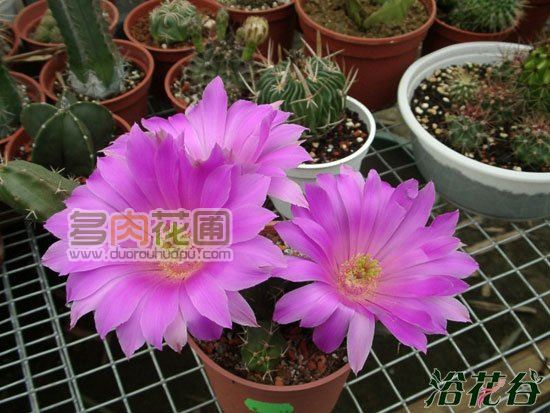
Summer is the growing season for Echinocereus reichenbachii. The plant also needs slight shading and ventilation. During the high-temperature period from July to September, basically maintain half-shade and ventilated care. From September to December, water only after the soil has dried out completely. Throughout the cold winter, when the temperature is below 2 degrees, you can give almost no water. At this time the plant enters its dormant period. Less water can also prevent frost damage and root rot caused by low temperatures. When the potting soil is dry, Echinocereus reichenbachii is relatively tolerant of low temperatures. In Kite's sunroom at minus 4 degrees, Echinocereus reichenbachii shows no change at all. This temperature was measured inside the sunroom, by the way. Kite generally places a basin of water in the sunroom; if the water freezes, it is time to add heat. As long as it is not outdoors, Echinocereus reichenbachii can withstand such temperatures.
During the growing season, watering for Echinocereus reichenbachii is basically done after the soil has dried out completely. Generally, Kite does not water overhead, otherwise it may easily cause the plant to rot. This variety has no hairs, so it is actually not very prone to rotting, but if water gets on the body, marks will appear around the areoles. In spring, watering must be done gradually, paying attention to weather changes. Echinocereus reichenbachii is still relatively easy to care for.
Propagation of Echinocereus reichenbachii is mainly by seed, though grafting is also used. However, seed-grown plants grow very slowly, so you need to be patient. The picture below shows a seed-grown Echinocereus reichenbachii that Kite has raised, which has already formed a clump. During the flowering period, more sun exposure helps with blooming. In summer, just be careful not to let it get sunburned.
Cultivation methods for the succulent Echinocereus reichenbachii
Echinocereus reichenbachii is a plant in the Cactaceae family, genus Echinocereus, flowering in spring and summer. The flowers of Echinocereus reichenbachii are pink or rose red, cross-pollinated. This variety is relatively tolerant of full sun. During the growing season, water only after the soil has dried out completely. For mature plants, use as little water as possible, otherwise they will easily become leggy and grow very long.The soil mix for Echinocereus reichenbachii is fairly simple: perlite mixed with peat, with added vermiculite and cinder, in any proportion, with a focus on drainage. Pumice is laid on the soil surface. Clumping Echinocereus reichenbachii grow relatively tall, and they also tend to grow taller when there is not enough light. Normally, water only when the soil looks very dry, and basically water thoroughly.
Summer is the growing season for Echinocereus reichenbachii. The plant also needs slight shading and ventilation. During the high-temperature period from July to September, basically maintain half-shade and ventilated care. From September to December, water only after the soil has dried out completely. Throughout the cold winter, when the temperature is below 2 degrees, you can give almost no water. At this time the plant enters its dormant period. Less water can also prevent frost damage and root rot caused by low temperatures. When the potting soil is dry, Echinocereus reichenbachii is relatively tolerant of low temperatures. In Kite's sunroom at minus 4 degrees, Echinocereus reichenbachii shows no change at all. This temperature was measured inside the sunroom, by the way. Kite generally places a basin of water in the sunroom; if the water freezes, it is time to add heat. As long as it is not outdoors, Echinocereus reichenbachii can withstand such temperatures.
During the growing season, watering for Echinocereus reichenbachii is basically done after the soil has dried out completely. Generally, Kite does not water overhead, otherwise it may easily cause the plant to rot. This variety has no hairs, so it is actually not very prone to rotting, but if water gets on the body, marks will appear around the areoles. In spring, watering must be done gradually, paying attention to weather changes. Echinocereus reichenbachii is still relatively easy to care for.
Propagation of Echinocereus reichenbachii is mainly by seed, though grafting is also used. However, seed-grown plants grow very slowly, so you need to be patient. The picture below shows a seed-grown Echinocereus reichenbachii that Kite has raised, which has already formed a clump. During the flowering period, more sun exposure helps with blooming. In summer, just be careful not to let it get sunburned.