How large is the land area of Wucheng District and Jindong District in Jinhua City, and what plants are profitable to grow?
Jinhua is a prefecture-level city under the jurisdiction of Zhejiang Province, bordering Taizhou to the east, Lishui to the south, Quzhou to the west, and Shaoxing and Hangzhou to the north. Its territory comprises 2 municipal districts, Wucheng District and Jindong District, 4 county-level cities, Lanxi City, Yiwu City, Dongyang City and Yongkang City, and 3 counties, Wuyi County, Pujiang County and Pan'an County. It is a national historical and cultural city and one of China's top ten livable cities. How large are the land areas of Jindong District and Wucheng District in Jinhua City respectively? What plants are suitable to grow there for profit?
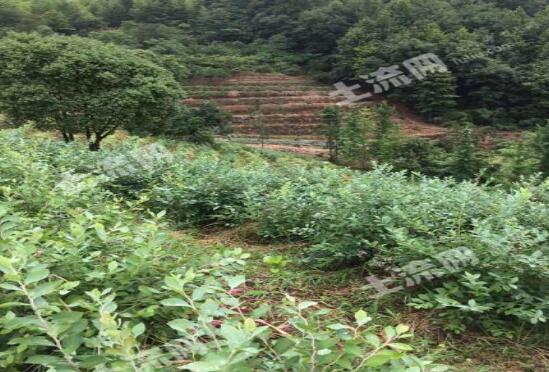
Land area of Jinhua City: 10942 sq km
Jinhua City spans 129 km from north to south and 151 km from east to west, with a total land area of 10942 sq km. The urban area is located at the confluence of the Dongyang River, Wuyi River and Jinhua River, with an area of 2044.7 sq km; in 2010 the built-up area was 66.7 sq km. Jinhua City is located in the eastern section of the Jinqu Basin, a hilly basin area in central Zhejiang, with high terrain in the north and south and low terrain in the middle. “Mountains on three sides enclosing a river plain, with basins scattered among three rivers” is the basic feature of Jinhua's landforms. In the east and northeast of the territory are Dapan Mountain and Kuaiji Mountain, to the south is Xianxia Ridge, and to the north and northwest are Longmen Mountain and Ganligang Mountain Range. The area has a subtropical monsoon climate. Its general characteristics are four distinct seasons, moderate annual temperature, abundant heat, abundant rainfall, and obvious dry and wet seasons. In spring the temperature rises quickly, but the temperature changes unpredictably; in late spring and early summer rainfall is concentrated, with occasional hail and strong winds; summer is long and hot, and rain and heat rise together, with frequent droughts; autumn is cool, the air is humid, and the season is short; winter is clear, cold and dry, with a stable atmospheric stratification. Annual rainfall is relatively abundant, but seasonal and interannual variation in rainfall and regional differences are all great. The seasonal distribution of rainfall shows a single peak, with much spring rain, a large amount of plum rain, and less rain in summer, autumn and winter.
Land area of Jindong District: 661.8 sq km
Jindong District was established in February 2001 and now governs 8 towns, 1 township and 2 subdistricts, with a total area of 661.8 sq km. As of December 31, 2005, Jindong District governed 2 subdistricts, 8 towns and 1 township: Duohu Subdistrict and Dongxiao Subdistrict; Xiaoshun Town, Fucun Town, Caozhai Town, Lipu Town, Lingxia Town, Jiangdong Town, Tangya Town and Chisong Town; and Yuandong Township. The terrain of Jindong District is high in the north and south and low in the middle. The north is an extension of Jinhua Mountain, with elevations mostly between 500 and 900 m; Luosijian on the border with Lanxi City, at an elevation of 890 m, is the highest point in the district, and to the south it slopes gently down into low ridges and shallow hills. The south is an extension of the Xianxia Ridge, a terrain of low mountains and shallow hills alternating with stream valley plains. In the middle, along the Yiwu River and Wuyi River and the lower reaches of their tributaries, are alluvial plains. It has a subtropical monsoon climate, with an average annual temperature of about 17°C, an average July temperature of 29°C, and an average January temperature of about 4.8 °C. Average annual precipitation is between 1300-1400 mm.
Land area of Wucheng District: 1387.88 sq km
Wucheng District is the historical and cultural ancient city of Jinhua, Zhejiang, and the central urban district of Jinhua City, as well as the political, cultural and commercial center of Jinhua City. Its total land area is 1387.88 sq km, of which the built-up area is 43 sq km, and its total population is 761,700; it is the economic and cultural center of central and western Zhejiang. The terrain is high in the southwest and northeast, extending respectively from the Xianxia Ridge and Jinhua Mountain, with many medium and low mountains; Xiaojinzhu Jian on the border with Suichang County, at an elevation of 1336 m, is the highest point in the district. The central and northern parts have terrain of low ridges and shallow hills alternating with plains; Yasu in Bailongqiao Town, at an elevation of 31 m, is the lowest point in the whole district. The area has a subtropical monsoon climate, with four distinct seasons, moderate temperature, abundant heat and abundant rainfall.
What plants are suitable to grow there for profit?
In terms of vegetation zoning, Jinhua City belongs to the subtropical evergreen broad-leaved forest zone. Its plant resources include more than 1500 species, among which there are 440 forest tree species, about 300 herbaceous plant species, and more than 800 crop variety resources. Rare tree species under national key protection include 11 species: ginkgo, golden larch, Chinese tulip tree, bilobed officinal magnolia (Magnolia officinalis subsp. biloba), Emmenopterys henryi, Pteroceltis tatarinowii, Zhejiang nanmu (Phoebe chekiangensis), Semiliquidambar cathayensis, Ormosia henryi, Cinnamomum japonicum and Brachystachyum densiflorum. The standing volume of living forest trees is 12.798 million cubic meters, accounting for 11.6% of the province.
There are several hundred kinds of wild fiber, starch and sugar, oil, tannin, aromatic oil plants and woody medicinal plants with relatively high economic value.
Food crops include rice, wheat, beans, tubers, sorghum, millet and others, more than 400 species in total.
Economic crops mainly include cotton, oil crops, sugarcane, melons, vegetables, tea, fruit, sericulture, medicinal materials, flowers, and ramie, rush, lotus seeds, Chinese chestnut, Chinese torreya and others, altogether more than 70 categories and more than 400 species. Among them, Yiwu's sugar cane and green jujube, Wuyi's Xihu honey pear, Xuanlian lotus seeds and job's tears, Lanxi's Chinese tallow tree and large green soybeans, Pujiang's peach-shaped plum, Jinhua's finger citron and Juyan tea, Dongyang's Dongbai tea and rush, the Atractylodes macrocephala, white peony, Corydalis yanhusuo and Scrophularia ningpoensis among the "Zhebawei" medicinal materials of Dongyang and Pan'an, and Yongkang's five-finger ginger and daylily are local high-quality varieties.
In addition, excellent varieties have been introduced, such as Fujiminori grape, fruit mulberry, strawberry, navel orange, Chaofengzao No. 1 rice, Simian No. 3 cotton, colored cotton, Chunqiu 54 cabbage, and Agaricus blazei edible mushroom.
Therefore, if you want to know what to grow for profit, it is suggested that, according to the existing local varieties, you can choose to grow food crops such as rice, wheat, beans, tubers, sorghum and millet; and economic crops such as cotton, oil crops, sugarcane, melons, vegetables, tea, fruit, sericulture, medicinal materials, flowers, and ramie, rush, lotus seeds, Chinese chestnut and Chinese torreya.