-

Should sprouts at the base of a sago palm be removed? Detailed guide to disease prevention methods
The sago palm is a very good landscape plant, with an excellent effect in greening and beautifying the environment, and it is generally grown as a medium-to-large potted plant for use in various settings. But after a potted sago palm has been grown for 4-5 years, some tender sprouts with "lumps" will burst out from the stump base of the mother plant,
-
What should bonsai styling be based on
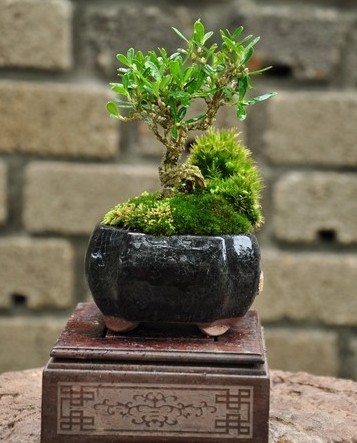
Cultivating and creating bonsai is a topic that every participant is eager to discuss and interested in, but people often each go their own way, assuming they are right, and run into all kinds of doubts and technical deviations, so this chapter mainly focuses on discussing its scientific nature and rationality from a direct entry point, for everyone to make a preliminary analysis and study
-
Plant-based bird's nest: what is the price per jin of Chinese honeylocust seed rice? High-yield planting methods for Chinese honeylocust seeds
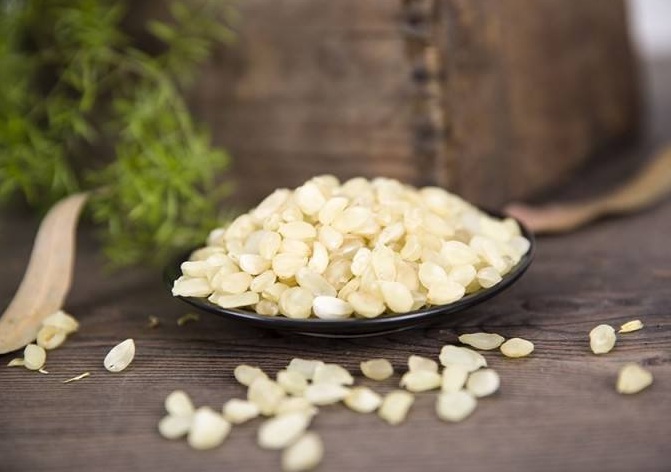
Chinese honeylocust seed rice, commonly known as snow lotus seed and Chinese honeylocust kernel, is the fruit of the Chinese honeylocust (Gleditsia sinensis). It is a high-energy, high-carbohydrate, low-protein, low-fat food and contains plant dietary fiber. So what is the price per jin of the "plant-based bird's nest" Chinese honeylocust seed rice? Included: high-yield planting methods for Chinese honeylocust seeds! Chinese honeylocust seed rice price
-
Source analysis of the American ginseng planting base of Dongyu Shennong
Origin of the name of Wendeng City After Qin unified China, writing was standardized, cart axles were made uniform, and the differing cart track widths of the Warring States were unified at a width of 6 chi, with the capital Xian...
-

Potted spinach is one of the varieties grown at potted vegetable bases.
Varieties suitable for winter, such as potted savoy (Uta-cai), potted spinach, potted Chinese chives, and potted winter cold greens. Potted spinach needs low temperatures and strong light, and is especially sensitive to dripping water under the second film layer...
-

Exploring Biodiversity-Based Konjac Planting Techniques
Konjac is a perennial herbaceous plant of the Araceae family, and its underground tubers are rich in glucomannan, which is rare in other plants. The vast mountainous areas of Zhaotong, Yunnan...
-

Step into the Dahan vegetable planting base and learn about vegetable cultivation on site
Many people have seen and even grown vegetables in the fields. But have you ever seen vegetables grown in a base, on a large scale? Today, let's step into Dahan together...
-

How can cotton be given base fertilizer skillfully to increase yield?
For base fertilizer in cotton fields, first, apply more organic fertilizers of various kinds, or bio-organic compound fertilizers; second, achieve formula fertilization and balanced fertilization, applying nitrogen, phosphorus and potassium in a ratio of 3:1:3; third, for insect-resistant cotton, apply more potassium fertilizer, with no less than 15 kg per mu as base fertilizer, plus 0.5-0.7 kg of zinc fertilizer and 0.4 kg of Chilibor; fourth, apply fertilizer in an appropriate amount, and do not blindly pursue quantity; applying 25-30 kg per mu of high-content ternary compound fertilizer is sufficient; fifth, change broadcast application to furrow application or hole application, and the cotton seedling roots should maintain
-
Experimental Demonstration and Application of Factory-Based Soilless Seedling Raising of Cotton in the Dongtai Area
Factory-based soilless seedling raising of cotton is a seedling revolution in the history of cotton cultivation. It breaks the decades-old cultivation system of raising seedlings in nutrient pots and transplanting them, making cotton seedling raising and transplanting a simple, rapid, time-saving, labor-saving and cost-saving cultivation method, and opening up a new path for cotton cultivation. In 2003, Dongtai City introduced factory-based soilless seedling raising and transplanting trials. In 2004 and 2005, this technology was introduced successively in Tangyang and Luegang for soilless seedling raising and large-area transplanting trials and demonstrations. The details are summarized as
-
How to fertilize stock (Matthiola incana)? Base fertilizer and NPK fertilizer are both indispensable
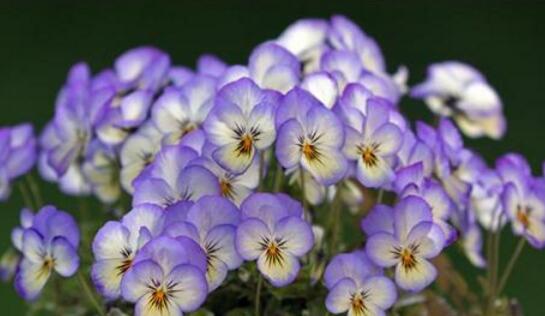
More and more people choose to grow stock (Matthiola incana) at home, so fertilization has become a question many people are considering. Improper fertilization can cause the leaves of stock to turn yellow, so what exactly is the correct way to fertilize stock? Let me give you the detailed answer
条件筛选