Exploring Biodiversity-Based Konjac Planting Techniques
Konjac is a perennial herbaceous plant of the Araceae family, and its underground tubers are rich in glucomannan, which is rare in other plants. The vast mountainous areas of Zhaotong, Yunnan are suitable for growing konjac, and Yongshan County, Suijiang County, Zhaoyang District and Ludian County are the places of origin of Jinsha white konjac. The glucomannan content of white konjac reaches 70%, ranking first in China, and these counties and districts are also the areas most suitable for growing white konjac. However, due to climate issues (weak sunlight, high humidity and other reasons), counties and districts such as Zhenxiong, Yiliang and Daguan are more suitable for growing flower konjac. In 2014, the konjac planting area of Zhaotong City reached 184,700 mu, and at the same time, the konjac industry was designated as one of the eight advantageous agricultural industries of Zhaotong City.
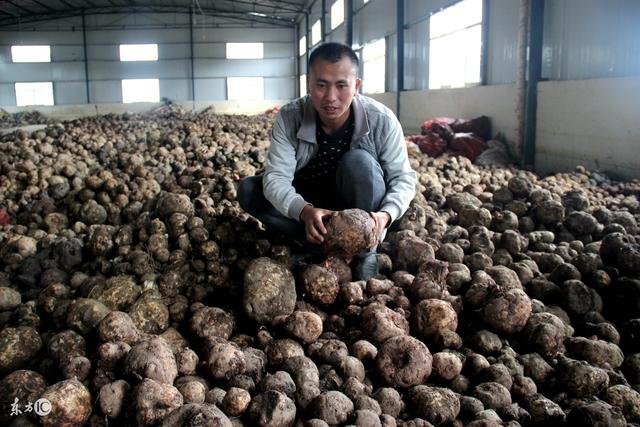
Amorphophallus gigas
Zhaotong City is located in the northeastern part of Yunnan Province, in the transition zone from the Yunling Plateau to the Sichuan Basin. It has a long history of konjac cultivation, and its unique climate resources, topography and landforms, and rich soil resources provide good environmental conditions for the growth and development of konjac. At present, the Jinsha white konjac production base established in Zhaotong City and the promotion of konjac intercropping and relay cropping techniques have made considerable contributions to konjac production in the province and the whole country. At the same time, there are still some problems in Zhaotong's konjac industry, such as variety degeneration, severe pests and diseases, and high production costs.
1 Growth Habits of Konjac
For konjac cultivation, the soil should preferably be fertile, loose sandy soil with a relatively thick soil layer and sandy loam containing humus. Konjac prefers a cool climate, is relatively tolerant of shade and moisture, and avoids continuous cropping, with an interval of 2-3 years being preferable. The ideal temperature for konjac growth is 25°C, and growth stops below 15°C. Konjac avoids strong light and prefers 30-90 shade density. Konjac requires air humidity of 80%-90% and soil moisture of about 70%.
2 Konjac Cultivation Techniques
2.1 Selecting a Suitable Planting Environment
Konjac is not suitable for planting in dry environments and prefers moist conditions. Therefore, for soil selection, konjac prefers an environment with loose soil texture, high fertility, good drainage, a thick soil layer and good aeration. After konjac leaves unfold and the rows close, agricultural operations are no longer very suitable, so sufficient base fertilizer must be applied before planting, requiring about 2,000 kg of farmyard manure and 100 kg of compound fertilizer.
2.2 Intercropping and Relay Cropping
Konjac has a relatively low utilization rate of light, and it does not like strong light. Intercropping and relay cropping can provide the needed shade and maintain an appropriate temperature. Generally, a shade density of 40%-60% is chosen; when the summer temperature reaches 35°C, a shade density of 50%-80% is suitable. The key to intercropping and relay cropping lies in reasonable density and moderate shade, achieving a standard that benefits both the companion crop and konjac. Konjac plants are generally about 1 m tall, and companion crops are generally corn, sunflowers, or deciduous fruit trees and deciduous economic forest trees, such as apple trees and mulberry trees. When intercropping with corn, generally 3 rows of konjac are intercropped with 1 row of corn. With sunflowers, both intercropping and relay cropping are possible. Today, as Zhaotong vigorously promotes agritourism and corridor agriculture, intercropping konjac with sunflowers is a planting model well worth studying and promoting, as it is both beautiful and economically beneficial. For orchards, more should be planted where seedlings are sparse, and less where planting is dense. Generally speaking, within the area of Zhaotong City, Yunnan, areas above 1,900 m in altitude and shaded slope mountain areas should adopt the pure konjac planting model; areas below 1,900 m in altitude are suitable for intercropping.
Diverse planting allows tall-stemmed crops and trees to obtain more sufficient sunlight in the upper layer, while konjac receives appropriate shade in the lower layer. If intercropping with autumn-sown crops such as rapeseed and wheat, early-maturing varieties that are not prone to lodging must be selected, and planting rows for konjac and corn must be reserved to ensure that konjac can receive enough light after sprouting and emerging, and that corn can also be sown or transplanted in time. Because konjac has shallow roots and weak absorption capacity, the roots of companion crops must not affect the development of konjac roots and nutrient absorption. Therefore, companion crops must be planted in dedicated beds and ridges, and their needs must be ensured in terms of base fertilizer and topdressing. After September, temperature and light gradually decline, and the upper leaves of sunflowers, corn and other crops in the later growth stage can be removed to appropriately reduce their shade density and increase light for konjac.
decline, and the upper leaves of sunflowers, corn and other crops in the later growth stage can be removed to appropriately reduce their shade density and increase light for konjac.
Moderate shading can prevent konjac from contracting diseases and ensure high yield. The shade density should be selected according to local conditions. Areas with long sunshine duration and high temperatures are suitable for choosing 50%-80% shade density; if the temperature is not high and the sunshine duration is about 9 h, areas are suitable for choosing 40%-60% shade density; in high-altitude areas, where summer temperatures are low, or on the north slopes of mountainous areas, shading is not needed.
2.3 Sowing Time
For the Zhaotong area, according to years of planting experience, the sowing time should preferably be selected in late March and the first and middle ten days of April. Sowing should be carried out when the temperature stabilizes above 14°C, and the sowing depth should be about 5 cm.
2.4 Reasonable Close Planting
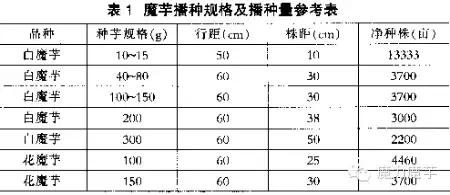
Konjac seeds are divided into different varieties. Long-term practice has shown that when sowing white konjac seeds, seeds weighing 100-150 g should be selected, while when sowing flower-colored konjac seeds, seeds weighing 200-250 g should be selected. Konjac planting requires attention to these points: ① The space occupied by the aboveground stems and leaves of konjac is far greater than that of the underground part, reaching about 10 times, so the close-planting specifications should be noted when sowing, and the sowing density should fully consider the relationship between the upper stems and leaves and the lower tubers. In areas with soft, fertile soil, planting should be sparser; correspondingly, in other areas it should be denser. ② When planting konjac, we can appropriately consider interspersed sowing, that is, planting seed tubers of different sizes mixed together, so that the structure above the land becomes layered, and land use and light can be rationally utilized. The sowing specifications and sowing rates of konjac are shown in Table 1.
3 Disease Prevention and Disease Management
3.1 Soft Rot
① Symptoms of soft rot: Konjac is susceptible to soft rot throughout its entire life cycle. It mainly affects the corms, petioles and leaves of konjac. After infection, the konjac tissue turns black and softens, and at the same time gives off a foul odor. Finally, all leaves turn yellow and lodging occurs. At present, soft rot can be treated in the laboratory, but in the field, the results are very limited. ② Control measures: On the one hand, implement rotational planting of konjac, with the longer the interval the better, and at the same time adopt intercropping measures, which not only solves the shading problem but also controls the disease. On the other hand, before sowing, soak the seeds for 1 h with a 600-700 times dilution of 10 million units of agricultural streptomycin. During the growth period, spray the leaves and petioles with 400 ml per mu of 10 million units agricultural streptomycin solution, 2-3 times per year. In short, for konjac, the principle of "prevention first, integrated control" should be adopted.
3.2 Southern Blight
① Symptoms: The main part of konjac affected by this disease is the base of the petiole, which gradually causes damage to the corm. After konjac is infected with southern blight, some brown spots begin to appear at the base of the petiole, continuously expand over time, and finally white silky mycelium grows on the petiole, appearing pale red. Note that this mycelium grows faster in humid, high-temperature environments and under long-day conditions. ② Control measures: When sowing, scatter 100 kg of quicklime per mu to disinfect the soil, making the soil weakly alkaline or neutral. Applying more organic farmyard manure can also reduce the probability of disease occurrence. Thoroughly remove diseased residues and weeds, and keep the garden clean. After July, check the disease situation at any time. If central diseased plants are found, immediately dig them out with soil and bury them deeply or burn them, scatter lime in and around the planting holes, and press the soil firmly. Strictly prevent plants from being injured or bitten by insects. These methods also have a good effect on preventing soft rot.
3.3 Leaf Blight
① Symptoms: Leaf blight occurs mostly from July to October. High temperature and high humidity in summer, as well as cool and humid conditions in early autumn, can cause the disease to spread rapidly and cause large reductions in konjac yield. As the name suggests, leaf blight mainly harms konjac leaves. Note that this pathogen can overwinter in the soil, and when it rains it may splash onto the leaves. It can also invade through plant wounds, stomata and other openings. Wind and rain can also spread the pathogen. Once the disease occurs, it will cause large yield reductions. ② Control measures: Adapt to local conditions and choose reasonable planting areas. Strictly select seeds and soak seeds with chemicals. Select plots where konjac grows robustly, with clean stems and healthy leaves or only slight disease incidence, for seed retention. Topdressing should also be mainly high-quality farmyard manure and potassium fertilizer, so that konjac grows steadily. At the same time, attention should be paid to using farmyard manure as the main fertilizer when applying fertilizer.
3.4 Some Other Diseases
These are mainly physiological diseases, including konjac sunscald, nutrient deficiency disorders, and freezing injury and rot. The harm of these diseases can be prevented and controlled in time, with the main measures being intercropping with tall-stemmed crops and spraying foliar fertilizer.
4 Insect Pests
Generally speaking, the losses from insect pests are not as great as those from diseases. Konjac grows only one compound leaf a year, and once lost it cannot be compensated for. Moreover, some diseases invade through the aboveground openings, causing double losses. Common pests in konjac planting fields include sweet potato armyworm, bean hawkmoth larvae, scarab beetles and some other aphids, mites and so on.
For pests in small numbers, manual capture can be used. When severe, pesticide spraying should be used to eliminate them. For some larvae, aphids and other pests, spraying chemicals is needed to kill them (90% trichlorfon at 800-1000 times dilution or 40% dimethoate at 1000-1500 times dilution can be sprayed for control).
5 Storage of Seed Tubers
The best storage temperature for seed tubers is 8-12°C, with the maximum not exceeding 20°C and the minimum not less than 5°C. Storage humidity is best kept at 80%. Storage methods include indoor storage, cellar storage and soil burial storage. During storage, attention should be paid to disinfecting the storage environment and maintaining good ventilation. For propagation plots, konjac can be harvested in March of the following year to reduce the probability of seed tuber infection.
6 Prospects for Konjac Planting
With the large-scale promotion of konjac planting, konjac planting bases have already been established in some places. We need to strengthen the improvement of seed tuber varieties, and secondly, we also need to invest more labor in production and take measures to improve yield and quality.
The konjac industry is a processing industry of agricultural products. We need to process end products to enhance industrial value and promote local economic development. Konjac primary processing requires attention to these two points: ① Color protection. This is a treatment measure carried out to prevent konjac from browning after slicing and thereby affecting product value. Generally, sulfurous acid gas (sulfur dioxide) is used for color protection and bleaching, but the amount used should be controlled below 300 mg/kg. Heat treatment at 70-90°C can also effectively prevent browning. ② Drying. Artificial drying and natural drying. Although the natural drying method is cheap, it is greatly affected by climate, and quality is not easy to guarantee. Artificial drying temperature is easy to control, and quality is very stable. Generally, heated kang rooms or tobacco curing barns are used, and where conditions permit, mechanical processing and baking can be used.
7 Conclusion
Although konjac cultivation has a history of thousands of years, it is only in recent years that it has truly formed an industry. Biodiversity-based konjac planting can bring win-win results, and the output value is far greater than that of monoculture. At the same time, we also need to combine long-term planting and production experience to optimize planting and promote the development of the konjac industry.