Plant-based bird's nest: what is the price per jin of Chinese honeylocust seed rice? High-yield planting methods for Chinese honeylocust seeds
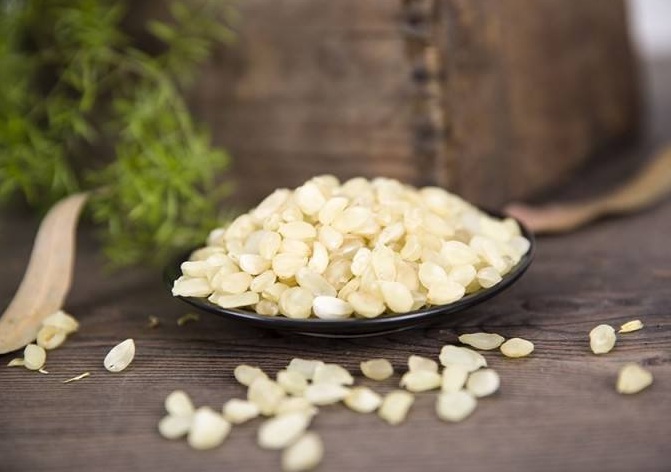
Chinese honeylocust seed rice, commonly known as snow lotus seed and Chinese honeylocust kernel, is the fruit of the Chinese honeylocust. It is a high-energy, high-carbohydrate, low-protein, low-fat food and contains plant dietary fiber. So what is the price per jin of the "plant-based bird's nest" Chinese honeylocust seed rice? Included: high-yield planting methods for Chinese honeylocust seeds!
I. Price of Chinese honeylocust seed rice
Chinese honeylocust seed rice is mainly produced in the Yunnan-Guizhou region of China. Because the grains are plump and semi-translucent, with a soft yet chewy texture, becoming thick and sticky after boiling, and rich in plant collagen, the taste is even smoother. It is a relatively precious natural green delicacy and is highly praised by female consumers. At present, the output of Chinese honeylocust seed rice in China is relatively low, and the price is relatively expensive. The market price of Guizhou's Shuangying Chinese honeylocust seed rice is about 69.8 yuan/100g, and Yunnan's single-pod Chinese honeylocust seed rice is 80 yuan/100g. There are many factors affecting the price, such as quality, brand, and place of origin.
II. Seed planting methods for Chinese honeylocust
1. Harvesting seeds
Every year in October, when the Chinese honeylocust pods mature, seeds can be harvested from the plant. After harvesting, place the seeds under the hot sun and dry them thoroughly, then smash the outer shell of the pods, remove impurities, collect the seeds, put them in a cloth bag, and store them in a cool place for later use.
2. Soaking seeds to promote germination
The seed coat of Chinese honeylocust is relatively hard. In order to make it germinate and grow as quickly as possible, before sowing it is generally soaked to promote germination. Soak the seeds in clean water, changing the clean water once a day to keep the water clean. After about a week, when the seeds have absorbed enough water, take them out and dry them, then bury them in moist fine sand. After about a month, when the seeds have cracked open a small opening, they can be taken out for sowing. To make them germinate faster, you can choose to soak the seeds in warm water for 24 hours. After the seeds have absorbed water, become plump, and expanded, remove them, dry off the moisture, and sow directly.
3. Selecting and preparing the land
Chinese honeylocust seeds are suitable for sowing in loose, breathable, well-drained sandy loam soil, and the terrain is required to be flat, which is more conducive to seed growth. If the soil is relatively heavy clay, 1-2 months before planting, deep-plow it several times, break up the clods, and let it fully weather, so that it can also become loose and breathable soil. Base fertilizer can also be applied during land preparation to promote seedling growth faster. The base fertilizer is mainly decomposed organic fertilizer. Before sowing, water thoroughly once to make the soil loose and breathable, and sow only after the conditions for seed germination are met.
4. Sowing method
The commonly used sowing method is drilling in rows or broadcasting. Open furrows on the ground and directly broadcast the pregerminated seeds into the furrows. Pay attention to the sowing density; it should not be too dense, so as to avoid the seeds competing with each other for nutrients and making sprouting difficult. After sowing, cover with a thin layer of soil, about 5cm thick. After sowing, water once according to the dry or wet condition of the soil. When dry, water more; when moist, water less or not at all.
The above is Tuliu.com's introduction to the market price and planting methods of Chinese honeylocust seed rice. Chinese honeylocust has extremely wide applications and can be processed into soap. The Chinese honeylocust seed rice it produces can be eaten and can also be used as medicine, giving it high planting value.
How much is Chinese honeylocust seed per jin? How to plant it?
Chinese honeylocust, also called Chinese honeylocust tree, is a plant unique to China. Because the pods it produces are a natural raw material for medicine, food, health products, cosmetics, and detergents, and have effects such as dispelling phlegm and relieving cough, opening the orifices and unblocking, and killing insects and dissipating masses, many growers want to plant it. So how much is Chinese honeylocust seed per jin? How to plant it?
I. How much is Chinese honeylocust seed per jin?
The price of Chinese honeylocust seeds is not fixed. Due to differences in seed quality, variety, place of origin, and market, the prices of Chinese honeylocust seeds also vary greatly. But under normal circumstances, the price of Chinese honeylocust seeds is about 40-70 yuan per jin. In addition, Chinese honeylocust mostly grows in plains, valleys, and hilly areas. It likes light and is slightly shade-tolerant, and it likes a warm and humid climate. It also has low requirements for soil and can grow normally in calcareous soil, saline-alkali soil, and even clay or sandy soil. Its growth speed is slow, but its lifespan is very long, reaching six or seven hundred years. In production, seeds are commonly used for propagation.
II. How to plant Chinese honeylocust seeds?
1. Harvesting seeds
Every year in October, when the Chinese honeylocust pods mature, seeds can be harvested from the plant. After harvesting, place the seeds under the hot sun and dry them thoroughly, then smash the outer shell of the pods, remove impurities, collect the seeds, put them in a cloth bag, and store them in a cool place for later use. Of course, such complicated operations are not necessary; you can also directly buy seeds from the market.
2. Soaking seeds to promote germination
The seed coat of Chinese honeylocust is relatively hard. In order to make it germinate and grow as quickly as possible, before sowing it is generally soaked to promote germination. Specifically, soak the seeds in clean water, changing the clean water once a day to keep the water clean. After about a week, when the seeds have absorbed enough water, take them out and dry them, then bury them in moist fine sand. After about a month, when the seeds have cracked open a small opening, they can be taken out for sowing. To make them germinate faster, you can choose to soak the seeds in warm water for 24 hours. After the seeds have absorbed water, become plump, and expanded, remove them, dry off the moisture, and sow directly.
3. Selecting and preparing the land
Chinese honeylocust seeds are suitable for sowing in loose, breathable, well-drained sandy loam soil, and the terrain is required to be flat, which is more conducive to seed growth. If the soil is relatively heavy clay, 1-2 months before planting, deep-plow it several times, break up the clods, and let it fully weather, so that it can also become loose and breathable soil. Base fertilizer can also be applied during land preparation to promote seedling growth faster. The base fertilizer is mainly decomposed organic fertilizer. Before sowing, water thoroughly once to make the soil loose and breathable, so as to meet the conditions for seed germination before sowing.
4. Sowing
The commonly used sowing method is drilling in rows or broadcasting. Open furrows on the ground and directly broadcast the pregerminated seeds into the furrows. Pay attention to the sowing density; it should not be too dense, so as to avoid the seeds competing with each other for nutrients and making sprouting difficult. After sowing, cover with a thin layer of soil, about 5 cm thick. After sowing, water once according to the dry or wet condition of the soil. When dry, water more; when moist, water less or not at all.
Summary: The above is the relevant introduction to the price and planting methods of Chinese honeylocust seeds. Please note that the above price of Chinese honeylocust seeds is for reference only, and the actual price should prevail. Growers can refer to the above price and planting methods of Chinese honeylocust seeds to purchase and plant. I hope it is helpful to friends in need!
Chinese honeylocust seed seedling methods and what is the price
Chinese honeylocust is a plant that produces seeds. The Chinese honeylocust pods are very similar to the seeds produced by the flowering and fruiting of sweet potato. Sometimes it is quite frustrating: how do Chinese honeylocust seeds grow into towering trees through seedling cultivation? How much is a pack of Chinese honeylocust seeds? Let's take a look together with Women's Network:
Chinese honeylocust seed seedling methods:
1. Seed morphology: The pod is linear, flat, not curved, 15-30 cm long, 2-3.5 cm wide, with a surface ranging from dark purple to dark brown, glossy, with inconspicuous transverse cracks. Most seeds are long elliptical, brown, glossy, with fine transverse cracks on the surface. The seed coat is leathery, hard, and difficult to peel open. The thousand-grain weight is about 497 grams.
2. Seed retention and seed cultivation: The flowering period of Chinese honeylocust is May, and the fruiting period is October. When the pods turn dark purple, select pods from plants that grow robustly, have many thorns, and have large, plump pods, and harvest them. Fresh pods are soft and the seeds can be peeled out with scissors. After the pods dry, they become hard and are not easy to open, so a roller must be used to crush the pod skin and sieve out the seeds. Store in a dry place. Seeds still have relatively high viability after 5 years of storage.
3. Seed propagation method: Chinese honeylocust seeds have a hard seed coat that is impermeable to water, absorb water with difficulty, germinate with relative difficulty, and have a very low germination rate. In production, the seeds should be treated with concentrated sulfuric acid, or the seed coat should be damaged mechanically (abraded), which can greatly increase the germination rate. Generally, spring sowing is carried out. Soak the treated seeds in water 1 month before sowing, changing the water once every 5-7 days, so that they fully absorb water and soften the seed coat. After the seed coat cracks, sow and raise seedlings. On a prepared seedbed, dibble at a row spacing and plant spacing of 20—25 cm, cover with 3-4 cm of soil, and sow 10-15 seeds per square meter. Keep the soil moist regularly. After emergence, take care to cultivate for 1-2 years, then transplant and establish in the field before sprouting in early spring.
Chinese honeylocust seed price:
From 5 yuan to 150 yuan, varying.
To plant Chinese honeylocust, you must choose a place with a relatively large area for planting. Chinese honeylocust will grow into a towering tree, and if the place is small, it will not fit.