-
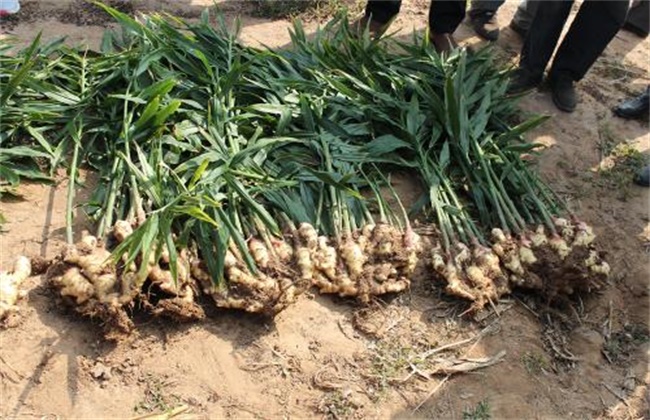
How to apply base fertilizer for ginger? Please save this fertilization plan
Fertilization plan for ginger base fertilizer
-
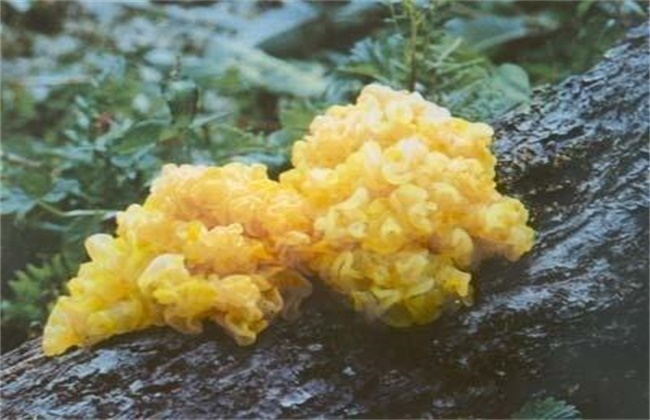
What to Do About Rotten Base of Tremella? Cause Analysis and Control Methods
Causes of Rotten Base in Tremella and Control Methods
-
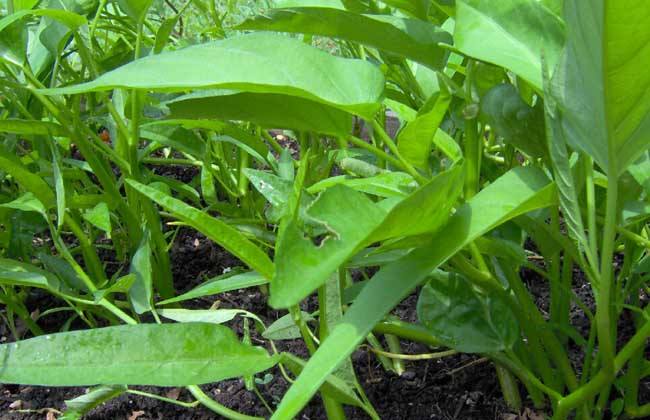
What to Do When Water Spinach Has Swollen Stem Bases? Detailed Explanation of Causes and Control Methods
Causes of Swollen Stem Bases in Water Spinach and Control Methods
-

New bamboo-rice varieties successfully bred at the Meizhou research base
Recently, the author learned from the bamboo-rice research base of the Meizhou Agricultural School in Meizhou City, Guangdong Province that various experiments on drought resistance, disease resistance and ratooning ability of bamboo rice will be carried out here this year, and scientific research on new varieties such as the special bamboo rice "bamboo purple rice" will also be launched. At the same time, bamboo rice 966 and bamboo rice 989 will continue regional trials across the province. Meizhou City has also set up 6 sites in Jiaoling, Meixian, Xingning and Wuhua counties and cities, totaling 300 mu, for trial demonstration planting of bamboo-rice cultivation techniques. The agricultural school has opened a test base to conduct drought-resistance tests on bamboo rice 966 and disease-resistance tests on bamboo rice 989.
-
Detailed Explanation of Key Techniques for Straw-Based Cultivation of Lotus Root in Shallow Ponds
Straw-based cultivation of lotus root in shallow ponds gives high yields, is easy to harvest, saves water and labour, and the planting area is expanding year by year. The average yield is 4000 kg of lotus root per mu, more than 30% higher than that of ordinary shallow-pond lotus root. 1. Choosing suitable varieties. For seed lotus root, choose early-maturing varieties with thick, round rhizomes, white skin, crisp and tender flesh, sweet taste, good quality and high yield, such as 'Elian No. 4', 'Elian No. 5', 'Jinan White Lotus Root', etc. 2. Building the lotus pond 1. Site selection and material preparation: the lotus pond should be chosen in a sunny place without shade from trees, such as village-edge wasteland, abandoned house sites, disused pits and ponds, low-lying abandoned land, etc.
-

How to Regrow Enoki Mushrooms from Their Base? A Detailed Guide to Practical Methods
Methods for Regrowing Enoki Mushrooms from Their Base
-
How to control ginger stem base rot with good results
In recent years, as the area of continuous ginger cropping has continued to expand, combined with extensive field management, ginger diseases have also shown a worsening trend, especially since June, when high temperatures and frequent rain make ginger stem base rot most likely to occur. Recently, Li Hualiang and Lu Changlei of Renzhao Town, Pingdu City, Shandong Province, and Yu Wanquan of Ju County, among others, reported that in their area...
-
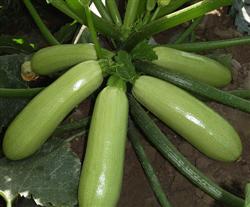
Different base fertilizers for zucchini mean different fertigation methods
In the middle and late stages of zucchini growth in a solar greenhouse, poor indoor ventilation and light transmission, a closed crop canopy, and weak photosynthetic capacity make plants prone to early senescence and low yields. In recent years, vegetable growers in Dongkan Town, Binhai County, Jiangsu, have worked out a set of vine-pressing cultivation techniques that allow the zucchini growing period to be extended from September of the first year to June of the following year, with a yield of 10,000 per mu...
-
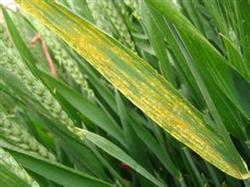
Wheat stripe rust can be managed by a zone-based strategy of treating key spots to protect the wider area
Wheat stripe rust is a serious biological disaster that has long affected the safe production of wheat in China. In years when the disease is common, wheat yields are reduced by 10%-20%, and in years of severe epidemic, losses can reach more than 60%, or even leave wheat with almost no harvest. Based on a comprehensive analysis of factors such as the amount of inoculum, weather conditions and variety distribution, it is predicted that in 2011...
-
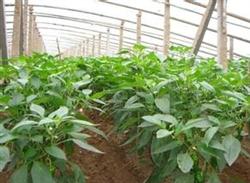
Four cultivation models based mainly on spring radish and chili pepper
Winter-spring chili pepper is currently the most important production season for chili pepper cultivation in solar greenhouses. Generally planted in mid-November, it can be harvested and marketed in early January of the following year, continuing until the next summer. The main cultivation techniques are explained as follows: 1. Build a greenhouse. For new energy-saving solar greenhouses, the structure and environment of the original solar greenhouse...
条件筛选