Four cultivation models based mainly on spring radish and chili pepper
Winter-spring chili pepper is currently the most important production season for chili pepper cultivation in solar greenhouses. Generally planted in mid-November, it can be harvested and marketed in early January of the following year, continuing until the next summer. The main cultivation techniques are explained as follows: 1. Build a greenhouse. For new energy-saving solar greenhouses, the structure and environment of the original solar greenhouse...
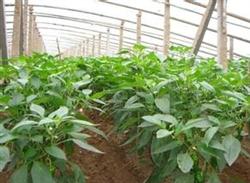 The four-crop, four-harvest cultivation model of spring radish - chili pepper - loofah - green garlic yields a net income of 8,800 yuan per year. The technique is not complicated and is a very good vegetable multiple-cropping model. The key technical points are as follows:
Spring radish variety selection: Choose excellent radish varieties with high yield, good quality, cold tolerance and bolting resistance, such as the Korean Texin Baiyuchun. Land preparation and fertilization: Choose a plot with deep soil and fertile, loose texture, carry out fine tillage and apply sufficient basal fertilizer, then prepare the land and make beds. Use dibbling: Sow 1-2 seeds per hole, cover with plastic film after sowing, and put up a plastic tunnel. Field management: When the cotyledons are flat and spread out, break the film to expose the seedlings; when there are 3-4 true leaves, thin and fill in seedlings, leaving 1 plant per hole. Before March, keep the tunnel closed to maintain a relatively high temperature, and if necessary add some cold-proof materials to prevent freezing damage. After March, as the temperature rises, ventilate appropriately. Keep the bed surface moist with a sufficient water supply.
Chili pepper variety selection: Choose early-maturing, disease-resistant, high-quality large-fruited chili pepper varieties, such as Luojiao 98A. Sowing and seedling raising: Use plastic tunnel seedling raising. Before sowing, soak the seeds in 10% trisodium phosphate solution for 15 minutes, then soak them in 55°C warm water for 20-30 minutes. Land preparation and fertilization: After the radishes are harvested, apply sufficient basal fertilizer while preparing the land. Planting: About 4,000 plants. When planting, open holes in the plastic film and transplant. Temperature and humidity in the tunnel: The daytime temperature should be 25°C-28°C, and the relative air humidity should be 50%-60%. After transplanting, do not ventilate, so that the tunnel maintains high temperature and high humidity to promote early survival. After the plants survive, begin ventilation and persist in ventilating every day. Generally ventilate at 8:00 in the morning and close the tunnel at 4:00 in the afternoon. On rainy days, also ventilate appropriately to exchange air and reduce humidity. Foliar fertilization: After the plants survive, spray 0.1% potassium dihydrogen phosphate solution as a foliar fertilizer once every 5-7 days.
Loofah variety selection: Choose varieties with uniformly thick and thin fruit strips, green color, thick flesh and good quality. Seedling raising: Use plastic tunnels and nutritional pots for seedling raising. Planting: When the seedlings grow to 4-5 true leaves, plant them beside the furrow beds in the chili pepper field. Trellising and vine guiding: When the main vine of the loofah grows to 50 cm-60 cm, set up a trellis, generally a flat trellis. After setting up the trellis, insert 1 bamboo pole for each plant, guide the vines manually, and tie the vines to help the stems climb onto the trellis. At the same time, train the vines: keep 1-2 strong vines per plant on the trellis and remove the other side vines. After they are on the trellis, generally no more vine removal is done, but in the middle and late stages of loofah growth, the positions of the main and side vines must be adjusted, and some old leaves and small forked branches should be pruned to ensure ventilation and light penetration and increase the fruit-setting rate. Strengthen fertilizer and water management: The leaf and vine growth period has a high water demand, especially in hot and dry seasons. After fruit set, water frequently together with fertilization to keep the soil moist.
Green garlic variety selection: Choose "Chengdu Ershuizao". Land preparation and fertilization: After the chili peppers are harvested, immediately deep-plow and prepare the land. After sowing, lightly cover with 2 cm of plant ash and irrigate promptly. Fertilizer and water management: Before emergence, if the soil is relatively dry, replenish water to promote early emergence. During the growing period, if drought occurs, irrigate to keep the soil moist. At the same time, topdress 2-3 times, each time applying 2,000 kg of decomposed manure water or 15-20 kg of urea.