-

Detailed Explanation of the Layering Method for Asexual Propagation of Cornus officinalis
Cornus officinalis, also known as Zaopi, Yaozap, Shuzap, and the fruit peel after pit removal is called Shanyurou or Yurou, is a woody Chinese medicinal herb unique to our country, with wide uses, and its medicinal value, economic value and ornamental value are all very high. It has long been a scarce medicine in domestic and international pharmaceutical markets, and in recent
-
Asexual Propagation Methods and Cultivation Management Techniques for Chuanxiong
Propagation method: Use asexual propagation. Sichuan Chuanxiong planted in flatland (i.e., level ground) is called "flatland Chuanxiong" and is the main source for medicinal use. That planted in mountainous areas is called "mountain Chuanxiong" and serves as propagation material for flatland Chuanxiong. 1. Site selection and land preparation For propagating mountain Chuanxiong in mountainous areas, choose wasteland on a sunny slope or semi-sunny slope, clear all weeds, burn them on-site into ash for fertilizer, plow deeply 25-30 cm, rake level, and make raised beds 1.7 m wide. The preceding crop for flatland Chuanxiong cultivation is mostly early rice. After the early rice grains fill, drain the paddy field, and after harvest plow about 25 cm deep, apply 2500-3000 kg of compost per 667 sq m, make beds 1.6 m wide, loosen and finely break up the topsoil, and shape the bed surface into a turtle-back form.
-
Raspberry cultivation is best done through asexual propagation
Raspberries propagated from seed do not easily develop into seedlings, so root sucker division propagation, layering propagation, and root cutting propagation are mostly used; where conditions permit, tissue culture propagation can be used. 1. Root sucker division propagation method: Red raspberries readily produce basal shoots, and new roots readily form on the underground parts of basal shoots. Based on this
-
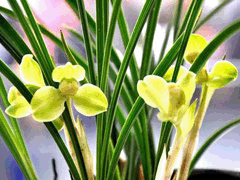
Cloning technology for asexual propagation of rare orchids matures in China
Cloning technology for "asexual propagation" of rare Chinese orchids matures
-

Detailed Cultivation Techniques for Asexual Propagation and Pest and Disease Control of Variegated Privet
Asexual Propagation and Pest and Disease Control Cultivation Techniques of Variegated Privet: Cutting Orchard Site Selection: Choose slightly acidic, neutral and slightly alkaline soil, a site with good drainage and convenient transportation, and set up a shade net with 65% shading rate. Plow, open furrows, make beds, at...
-
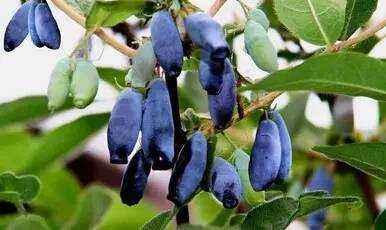
A Detailed Explanation of the Conservation Biology Characteristics and Asexual Propagation Techniques of Lonicera caerulea
Conservation Biology Characteristics and Asexual Propagation Techniques of Lonicera caerulea 1. Bioecological Characteristics of the Lonicera caerulea Plant. In accordance with the spirit of Document No. 13 of the State Council (1981) and the deployment of the Jilin Provincial Zoning Committee, from June 1982 to 1990, ...
-
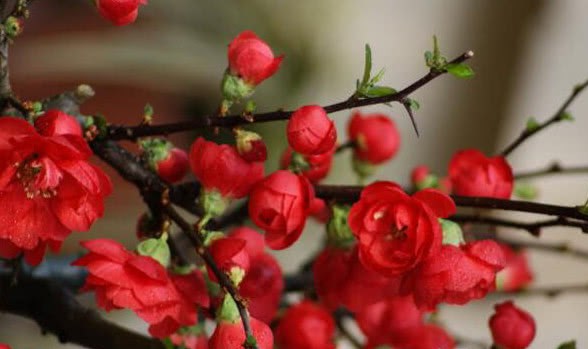
Detailed Explanation of Asexual Propagation Techniques for Japanese Quince
What are the key points of asexual propagation of Japanese quince? Japanese quince is also known as dwarf quince. Its flowering period is from March to April, with flower colors of bright red and pink. After flowering, it bears yellow spherical fruits. It can be planted in courtyards, roadsides, and slopes, and can also be used as...
-
Detailed explanation of asexual propagation techniques for Gastrodia elata, cultivation methods for Chinese medicinal herbs
Cultivation techniques for Gastrodia elata f. glauca. Gastrodia elata f. glauca has good morphology, a high dry-to-fresh ratio (3 jin of fresh product dries into 1 jin of dried product), and excellent quality, and its price is three to four times higher than that of Gastrodia elata f. elata and Gastrodia elata f. viridis. The reason the price of Gastrodia elata f. glauca is high is also because, whether under artificial cultivation or in the wild, the regions and quantities of its distribution are very few. Therefore, artificial...
-
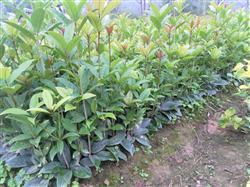
What are the asexual propagation methods for four-season osmanthus?
How do you propagate osmanthus trees by cuttings? The method is as follows: 1. Cutting bed preparation. Select light loamy arable land for deep plowing and bed making. For osmanthus trees, the bed width should be 120 cm, the bed height 25 cm, and the ditch width 40 cm. The soil should be fine and crumbly, the bed surface flat, and the ditches unobstructed. Build a cover above the cutting bed at a distance of...
-
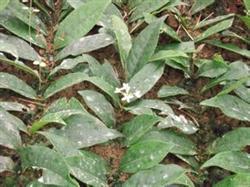
Detailed Explanation of the Rapid Asexual Propagation Technique of Osmanthus by Layering
I. Selection of the mother plant and branches. The mother plant should be chosen from plants 10-15 years old, growing vigorously, with many branches and low node positions; the branches used for layering should grow vigorously, be disease-free, with undamaged bark and plump buds, and a branch length of about 1 m is ideal. About 10 days before layering, first clear the weeds within a 1-1.2 m radius around the mother plant...
条件筛选