Cloning technology for asexual propagation of rare orchids matures in China
Cloning technology for "asexual propagation" of rare Chinese orchids matures
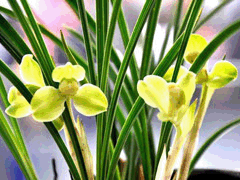 Few people know that before humans cloned the first "Dolly" sheep, speechless plants had already been successfully cloned by humans, and some rare Chineseorchidsare among them; through human cloning technology, they reproduce their offspring by "asexual propagation." Today, at the 12th ChinaOrchidExpo, which closed in Pengzhou, Sichuan, 30 pots of cloned rare Chineseorchidswere displayed, and the technology won a gold award at this orchid expo. Professor Wei Ya (plus) of the Horticulture Institute of the Sichuan Academy of Agricultural Sciences told reporters that at present, cloned rare Chinese orchids can objectively move toward the market on a mass scale, and the success of this technology has created good prospects for the industrialization of agricultural biotechnology in China.
It is understood that Professor Wei Ya (plus) began researching orchid cloning technology as early as 1983 and can be called the founder of rare cloned orchids in China. This research lasted 6 years, and in 1988 Professor Wei successfully cloned the first complete "Song Mei." It is said that the "original" of this "Song Mei" plant "came into being" at least sixty years ago, when its numbers were extremely small. If it developed according to the traditional reproductive capacity of orchids producing only one seedlingorchid plantper year, this rare orchid would find it very difficult to enter ordinary households and to be appreciated by more people. It is said that orchids were not the first plants cloned by humans; before them, China roses, African violets and others were among the objects of cloning, but Professor Wei believes that cloned rare Chinese orchids not only have relatively high ornamental value and economic value, but also have good market prospects. However, due to various economic interest factors, cloned orchids for a time aroused opposition from manyorchid growers. When faced with the 30 pots of cloned rare orchids displayed this time, mostorchid growerswere amazed, and they believe that the development of this technology may cause some rare orchids worth a fortune to lose their former price of millions of yuan. Therefore, as early as the 1980s, there were several incidents in the Taiwan region of China in which test-tube orchid seedlings were burned.
He Qingzheng, secretary-general of the China Orchid Association, believes that using cloning technology to propagate a moderate amount of some rare Chinese orchids that exist in small numbers is a path that must inevitably be taken, because any industry ultimately faces the broad masses, not a small wealthy class. It is understood that at present there are no fewer than ten-plus research institutions in China related to cloned orchidflowers, but most have not succeeded, or cannot achieve mass production. Professor Wei Ya (plus) refused to disclose the number of orchid plants that have been cloned. But she said that cloning rare Chinese orchids is to allow more people to appreciate their beauty; however, such cloning cannot be excessive, otherwise it will lead to chaos in the orchid market. She believes that the future Chinese orchid market should advocate a sound legal protection system, curb the large-scale extraction of natural wild orchidflowers, and increase research and protection of new orchidflowervarieties.