A Detailed Explanation of the Conservation Biology Characteristics and Asexual Propagation Techniques of Lonicera caerulea
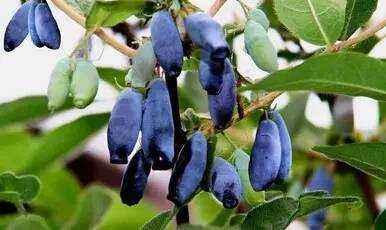
Conservation Biology Characteristics and Asexual Propagation Techniques of Lonicera caerulea
1. Bioecological Characteristics of the Lonicera caerulea Plant
In accordance with the spirit of Document No. 13 of the State Council (1981) and the deployment of the Jilin Provincial Zoning Committee, from June 1982 to 1990, the author studied the biological characteristics of Lonicera caerulea and found that under wild natural conditions its lifespan is 15-30 a; it prefers a cool climate environment and has extremely strong cold resistance, can overwinter in the open field in high-cold mountainous areas such as the Changbai Mountain region, and can withstand low temperatures of -40 degC; in early spring when the daily average temperature is 0 degC the sap begins to flow, and during the budbreak and flowering period it can withstand 0 degC
or -1 degC low temperatures, and the branches can withstand the "desiccation" caused by piercing cold winds; it is not tolerant of high temperatures, and grows poorly when the temperature exceeds 30 degC. The annual average temperature is positively correlated with yield and negatively correlated with fruit quality. It is a light-loving plant with a relatively wide range of adaptability to light; with long sunshine hours and sufficient light, the growth amount is large and the yield is high, and especially sufficient light during the flowering and fruiting period can significantly increase the fruit-setting rate and fruit quality. If it is continuously rainy during the flowering and fruiting period, it can affect the pollination and fertilization rate and affect the fruit-setting rate. Under shaded conditions the plant has a large growth amount, but the branches grow excessively and bear few fruits. The annual required sunshine duration is 2,200-2,400 h. Lonicera caerulea prefers moist conditions and has relatively high water requirements, requiring annual precipitation of 800-1,000 mm and relative air humidity above 70%. The plant can also grow normally under waterlogged conditions. If water is lacking during the fruiting period, yield and fruit quality are affected. The entire growth and development process requires loose, moist sandy loam, sandy soil or peat soil rich in organic matter, with a soil pH requirement of 5.5-6.0 and a soil water content requirement of 50%-60%; plots with a high groundwater table and little surface runoff infiltration are preferable. In addition, the author also classified the site conditions for the growth of Lonicera caerulea, dividing them into 3 site types in total, namely the patch type in forest meadows and swamps, the patch type in wet areas under open forests on mountain margins and slopes, and the patch type in wet areas among mountains, beside water, on riverbanks and along both sides of mountain roads. The author conducted a comprehensive investigation and integrated analysis of the soil, biological yield, economic coefficient, economic yield, net photosynthetic productivity and photosynthetic intensity of the 3 site types where Lonicera caerulea grows, explored the growth and development patterns of this tree species, and determined the biological and ecological characteristics of this tree species, providing a theoretical and practical basis for the development and utilization of this tree species.
2 Asexual Propagation and Seedling-Raising Techniques for Lonicera caerulea
Lonicera caerulea is mainly distributed in the northern parts of Europe, Asia and America. In Asia, the main production areas are Korea, Japan, and the East Siberia and Far East regions of Russia, and it is distributed in Northeast, North and Northwest China. To preserve, expand and effectively utilize this wild resource, a large amount of research on propagation and seedling-raising techniques has been carried out at home and abroad. For example, foreign scholars studied the rooting ability of asexual propagation of Lonicera caerulea and separately conducted experimental studies on hardwood cuttings, hardwood soft-tip cuttings, soft-tip cuttings, and soft green branch cuttings. The results showed that although all 4 cutting methods can root, green branch cuttings give ideal rooting results. The Vavilov Institute of Plant Industry in Russia carried out a large amount of research in this area and established a gene conservation nursery.
Since the 1980s, China has successively carried out research on the propagation techniques of Lonicera caerulea. For example, the author and others began research on soft green branch cuttings of Lonicera caerulea in 2012, and the seedling survival rate was above 90%, and it has been widely used in production. Usually the cutting time is in mid-to-late June, and cuttings are collected when the branches enter a slow growth period. When collecting cuttings, only pruning shears may be used, and care must be taken not to bend, twist, pull or drag them, so as not to damage the rooting tissue. The collected cuttings should be promptly placed in plastic bags and sealed to prevent water loss; the top, middle and base of the branches can all be used for cuttings. Generally the cuttings are 7-12 cm long. Before insertion, remove the lower leaves and retain only the upper pair of leaves; the upper end of the cutting is cut flat at about 1 cm from the bud. Disinfect in 1 per mille mercuric chloride water for 10 min or soak in 0.01% potassium permanganate solution for 10 min, then rinse with clean water to remove the disinfectant solution. Then soak the lower 2 cm of the cutting in 100 mg/kg ABT No. 1 rooting solution for 2-4 h; during soaking, the solution must absolutely not come into contact with the leaves. The preparation of the rooting powder solution is as follows: use ABT No. 1 rooting powder developed by the Chinese Academy of Forestry, take 1 bag weighing 1 g, dissolve it with a small amount of alcohol, then pour it into 10 kg of water to prepare a 100 mg/kg rooting solution. Then prepare the cutting bed substrate, namely clean fine river sand + perlite (1:1) or river sand + sieved peat (1:1), then disinfect with 1%-3% ferrous sulfate (FeSO4), with an application amount of 3.0-4.5 kg of solution per 1 sq m of cutting bed. After that, carry out cuttings in a small arch shed inside a greenhouse or plastic tunnel. Insert 4 cuttings vertically into each nutrition pot, with a cutting depth of 3-6 cm, and a spacing of 6 cm x 6 cm as appropriate.
As the saying goes, "three parts cutting, seven parts management"; management after insertion is key. First, the environmental temperature should be controlled at 22-27 degC, with the optimal temperature at 24 degC, not lower than 16 degC at night, and the soil temperature at 20-24 degC. If the daytime temperature exceeds 30 degC, ventilation or water spraying measures should be taken to lower the temperature. In August, the plastic film can be removed or a shade net can be added. In addition, 20 d before cutting, water should be applied 3-6 times per day, and small water droplets should be kept on the leaf surface, with the number of waterings increased or decreased depending on weather conditions; after rooting, the amount of watering can be reduced and the humidity gradually lowered, to 80% in the 1st week, 70% in the 2nd week, and 60% in the 3rd week; from the 4th week onward, natural humidity is suitable, the water content of the substrate should preferably be maintained at about 60%, and the air humidity should be maintained above 95%. In addition, spray carbendazim once a week to prevent disease.
In addition, techniques to promote rooting and lignification of cutting seedlings were also studied. Observations found that generally 5-7 weeks after cutting, the cuttings root, and fertilization begins to promote growth. The first spraying is with Fuller 655 foliar fertilizer; starting from the third week, compound fertilizer is mainly applied at a concentration of 3%-5%, sprayed on the foliage once a week; 30 d before freezing, a plant growth regulator (chlormequat chloride, abbreviated as CCC) is sprayed to inhibit cell growth, and 0.5% potassium sulfate (K2SO4) is sprayed to promote lignification of the seedlings.