Detailed Cultivation Techniques for Asexual Propagation and Pest and Disease Control of Variegated Privet
Asexual Propagation and Pest and Disease Control Cultivation Techniques of Variegated Privet
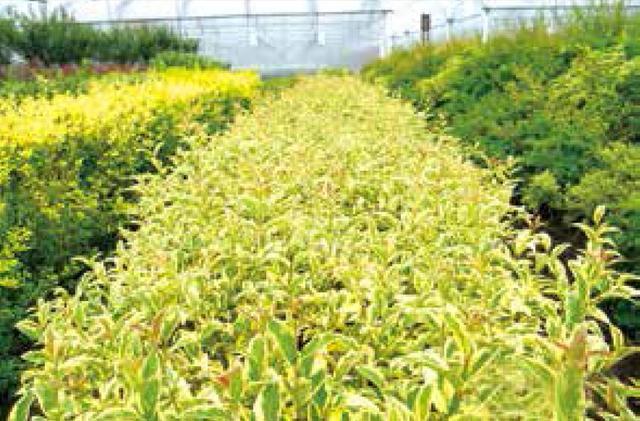
Cutting Orchard
Nursery Site Choose slightly acidic, neutral and slightly alkaline soil, a site with good drainage and convenient transportation, and set up a shade net with 65% shading rate. Plow, open furrows, make beds, open deep furrows around the field plot, level the seedbed surface, with a height difference of less than 2cm between the center and edges of the bed surface, seedbed width 100cm, length generally 30-40m, path width 40cm, depth 25cm, with both ends of the path lower and the middle slightly higher, forming a slope to ensure smooth drainage.
Transplanting Use 1-year-old short-graft seedlings, transplant in early April, planting spacing 30cm, row spacing 30cm, about 5000 plants per mu, dig holes at fixed points, cut off excessively long lateral roots, the transplanting depth should be consistent with the original plant depth, pile fine soil at the roots and compact, water thoroughly with settling water in time, spread 1 layer of rice straw on the bed surface to retain moisture and prevent weed growth.
Management During the seedling recovery period, water in time; if there are consecutive sunny days, water in time; if there are consecutive rainy days, drain in time. Provide full light conditions to promote lignification of cuttings. Start fertilizing 15 days after transplanting, from March to August, broadcast 1 application of urea or compound fertilizer (N : P : K=20 : 20 : 20) every half month, 15kg per mu each time, broadcast urea or compound fertilizer combined with loosening soil and weeding, apply between rows, with the criterion of not damaging seedling stems, branches and leaves. Immediately after cutting in late June, apply 1 application of quick-acting fertilizer, 20kg per mu. Stop applying quick-acting fertilizer after September. From November to December, apply 1 application of decomposed organic fertilizer, 1500kg per mu, by opening furrows and burying. Loosen soil and weed in time to prevent soil compaction.
Propagation
Short Grafting Use 1-year-old Ligustrum sinense seedlings (seedling height 50-60cm, ground diameter 0.6-1cm) as rootstock, use 'Variegated' privet branches as scions, graft in early April using the cut grafting method, the rootstock root system is well developed and free of pests and diseases, the rootstock is retained at a height of 15-20cm, scion length 5-8cm, retain 2 buds (opposite), the cambium of the scion cut must align with the cambium of the rootstock cut, insert tightly, wrap, plant, and maintain until the end of the year to form 1-year-old short-graft seedlings.
High Grafting: Use 6-8-year-old field-grown privet seedlings (plant height 300-350cm, diameter at breast height 5-7cm) as rootstock, rootstock retained at a height of 200-220cm, use 'Variegated' privet branches as scions, graft in early April using the side-veneer grafting method, graft more than 8 scions per plant, scion length 5-8cm, retain 2 buds (opposite), the cambium of the scion cut must align with the cambium of the rootstock cut, insert tightly, wrap, and maintain for 2 years to form high-graft seedlings.
Cuttage The time for cutting scions in the Hangzhou area is 2 times a year: early to mid-May and early to mid-October, scion length 4cm, retain 2 buds (opposite) at the top of the scion. Substrate formula is vermiculite : peat : perlite : river sand = 5 : 3 : 1 : 1. Disinfect plug trays, mesh bags and substrate with 800 times diluted potassium permanganate solution. Small arch shed materials: moso bamboo strips 2m long, 2cm wide, film 2m wide. Use 1g of "Sensheng No. 1" (indoleacetic acid : naphthaleneacetic acid : ABT6 rooting powder = 2 : 6 : 2) plant rooting agent, dissolve with 50ml alcohol for half an hour. Then pour in 250g clean water. Dip the base of the scion quickly for 2 seconds. Cut, treat and insert as you go, minimizing the time from cutting to insertion, insertion depth about 2cm. Use plug trays and mesh bags for cuttage, insert 1 scion per hole or per mesh bag.
For seedbed cuttage, plant spacing 4cm, row spacing 6cm, the cuttage density is such that the leaves do not cover each other after insertion. Water thoroughly after cuttage. Spray 1000 times diluted mixed solution of carbendazim and anthracnose Fumei on the leaf surface. Set up a small arch shed, cover with plastic film, and seal all around. 1 week after cuttage, on rainy days or in the morning or evening of sunny days, check the seedbed; the substrate moisture content should be 60%-70% of saturated moisture content, and the air relative humidity should preferably be above 95%. More than 15 days after cuttage, some scions begin to root. When most scions begin to root, appropriately reduce the substrate moisture content, maintaining it at about 40% of saturated moisture content. On sunny days, especially in summer and autumn, control the temperature inside the small arch shed below 38°C, add a shade net at a height of about 2m above the small arch shed, and simultaneously spray water to cool. About 50 days after cuttage, when more than 80% of the scions have developed new roots, remove all the small arch shed film. Provide full light conditions, combined with watering, spray 1 application of water-soluble fertilizer (1000 times diluted urea) every 7 days, carefully maintain for 8 months to form plug seedlings, mesh bag seedlings and seedbed seedlings [Jishan Huayao].
Disease Control Common diseases include root rot and brown spot. Root rot damages the root system, causing roots to turn brown and rot, and also damages branches; in mild cases it causes disease on half a branch, and in severe cases the entire branch becomes diseased, causing leaves to turn yellow, wither and droop.
Control methods: Remove diseased shoot tips and diseased plants, and burn them in a centralized manner. Control density, provide appropriate ventilation and light. Strengthen management, increase phosphorus and potassium fertilizer. In the early stage of disease, spray 500 times diluted 50% carbendazim solution or 700-800 times diluted 70% thiophanate-methyl solution, once a week, spraying 2-3 times consecutively. Brown spot damages leaves and branches, forming irregular brown spots. When humidity is high, a brown mold layer can be seen on the diseased part. Control methods: Remove diseased branches and diseased leaves, and burn them in a centralized manner. Control density, maintain moderate ventilation and light indoors. Appropriately increase the amount of fertilizer to enhance plant disease resistance. In the early stage of disease, spray 500 times diluted 50% Tuzet solution, or 500-600 times diluted 65% zineb solution, or 300-400 times diluted 30% duotone wettable powder, once a week, for 2-3 consecutive times.
Cutting Orchard
Rootstock for Short Grafting
Short Grafting
Scion for High Grafting
Finished Short-Graft Seedling
High Grafting Budding in May
Scions
Soft Small Container Seedlings