-
-
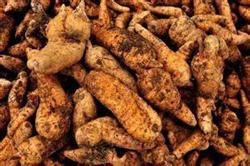
Detailed explanation of asexual propagation techniques for Gastrodia elata, cultivation methods for Chinese medicinal herbs
Cultivation techniques for Gastrodia elata f. glauca. Gastrodia elata f. glauca has good morphology, a high dry-to-fresh ratio (3 jin of fresh product dries into 1 jin of dried product), and excellent quality, and its price is three to four times higher than that of Gastrodia elata f. elata and Gastrodia elata f. viridis. The reason the price of Gastrodia elata f. glauca is high is also because, whether under artificial cultivation or in the wild, the regions and quantities of its distribution are very few. Therefore, artificial...
-
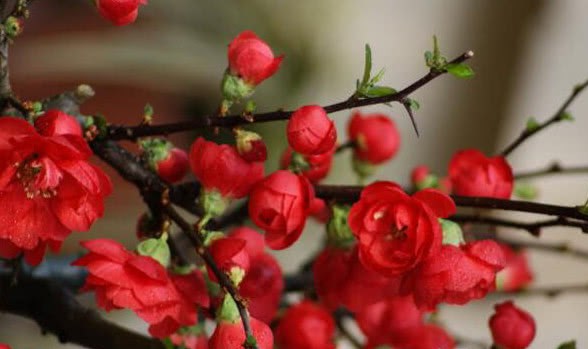
Detailed Explanation of Asexual Propagation Techniques for Japanese Quince
What are the key points of asexual propagation of Japanese quince? Japanese quince is also known as dwarf quince. Its flowering period is from March to April, with flower colors of bright red and pink. After flowering, it bears yellow spherical fruits. It can be planted in courtyards, roadsides, and slopes, and can also be used as...
-

What are the asexual propagation methods for lily bulbs?
(1) Natural bulblet propagation method: naturally divide the mother bulb into individual bulbs (ranging from 2-5, each containing one growth point), plant them in the field and cultivate for one year, and they can grow into larger new bulbs, then plant and propagate again, and by repeating this process, seed bulbs meeting the standard can be obtained. The disadvantages of this method are slow increase in quantity, high seed bulb usage, and serious disease and variety degeneration; the advantage is shortened propagation time, as seed bulbs can be obtained in 1-2 years. (2) Bulblet (daughter bulblet) propagation method: plant small daughter bulblets into the
-
Schisandra chinensis asexual propagation and seedling raising: Rootstock method for green-branch cleft grafting
For the cultivation of rootstocks for green-branch cleft grafting, refer to open-field direct seeding for seedling raising. If the rootstocks are not dug out before winter arrives, pruning must be carried out before the ground freezes. Leave 3 to 4 buds on each rootstock and cut at about 5 cm, then water thoroughly with winter-protection water to prevent freeze damage and drying out. If the rootstock seedlings are to be planted out the following year, the seedlings can be dug out and stored in cellars or trenches, which is more beneficial for rootstock seedling management. When planting out the following year, they also need to be cut back to 3 to 4 buds to establish the trunk. Rootstock seedlings that overwinter in place should be irrigated promptly after the ground thaws the following year and given a topdressing of quick-acting nitrogen fertilizer to promote new shoot growth. Keep 1 to
-
Asexual Propagation and Seedling Methods for Schisandra: A Detailed Guide to Layering Techniques
Layering is one of the oldest propagation methods created by the working people of our country. Its characteristic is that a portion of a branch still attached to the mother plant is bent down into the ground, causing the branch to root and produce a new individual. Its advantages are that the seedling has ample nutrients during the growing period, is easy to survive, grows vigorously, and bears fruit early. Layering is mostly carried out after sprouting in spring, when the new shoots have grown to about 10 cm. First, beside the mother plant intended for layering, dig a 15-20
-
Asexual propagation and seedling cultivation method for Schisandra chinensis: hardwood cuttings with young shoots
In early to mid-May, cut 1-year-old branches from the mother tree into 8-10 cm long cuttings, leaving 1 young shoot 3-5 cm long on the upper part; soak the base of the cuttingundefinedundefinedundefinedundefined in 200 mg/kg a-naphthaleneacetic acid for 24 hours, or dip it in 2000 mg/kg a-naphthaleneacetic acid solution for 3 minutes. The formula and treatment method of the upper substrate are the same as for semi-lignified green cuttings, with a thickness of 5-7 cm; the lower layer is about 10 cm thick
-
Hardwood cleft grafting method for asexual propagation and seedling raising of Schisandra chinensis
After leaf fall and before bud break, collect 1-year-old branches as scions; before the ground freezes, lift 1- to 2-year-old seedling stock as rootstock, and store them at low temperature for cleft grafting during the next year's bud break period (or graft in place without lifting the seedlings). Before grafting, soak the scions and rootstocks in clean water for 12 hours. Cut off the bud-bearing portion at the hypocotyl of the rootstock. For scions, choose fully mature branches with a diameter greater than 0.4 cm, cut them to a length of 4-5 cm, keep 1 bud eye, leave 1.5 cm above the bud, and keep about 3 cm below the bud; use a grafting knife to cut down on both sides of the scion bud eye
-
How to propagate tea plants by asexual cuttings? A detailed explanation of the practical technical points
1. Propagation preparation (1) Seedbed selection. Choose a plot with fertile soil, sufficient water, good drainage, convenient transportation, easy access to materials for building a shade shed, on gentle sloping land, and sheltered from the wind. (2) Seedbed preparation. The seedbed is 1.2 m wide and 5 cm high, with the length determined by the terrain, and the bed ditch about 40 cm wide. The top layer of the seedbed is covered with 5 cm of fine red soil (sterile soil), moistened with water, and then flattened with a wooden board. (3) Building the shade shed. Use 70% or 50% shade netting, with the shed 1.6-2 m high, plant 1
-

What are the asexual propagation methods for saffron crocus?
Saffron crocus is a fairly common plant in people's daily lives and a flower that many plant enthusiasts like to grow. How to propagate saffron crocus is also a question many people care about. In fact, the propagation of saffron crocus depends on the location; different planting sites call for different methods.
条件筛选