-
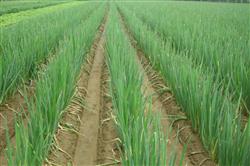
How to correctly apply potassium sulfate compound fertilizer to vegetables
How should potassium sulfate compound fertilizer be applied to vegetables? Please provide an introduction. The following introduces several methods for applying potassium sulfate compound fertilizer to vegetables for reference: Cucumber: For a general high-yield cucumber field, apply 5000 kg of high-quality organic fertilizer and 50 kg of potassium sulfate compound fertilizer per mu as base fertilizer. The principle for topdressing is small amounts applied frequently, with a total topdressing amount of about 50 kg...
-
How to Apply Compound Fertilizer for Best Results? A Detailed Guide to Correct Fertilization Methods
How to apply compound fertilizer for best results? Please explain the application methods. Compound fertilizer has the characteristics of high nutrient content and a fixed nutrient ratio. Because different soils and different crops require different ratios of N, P and K, it is best to test the soil before use to understand the soil texture and nutrient status. In addition, attention should be paid to combining it with N...
-

What are the taboos for applying ammonium bicarbonate? These methods cannot be used
Which methods cannot be used when applying agricultural ammonium bicarbonate? Please note that the following methods cannot be used when applying ammonium bicarbonate: 1. Foliar spraying: Ammonium bicarbonate is highly corrosive to crop leaves and easily burns them, so it cannot be used as a fertilizer for foliar spraying. 2. ...
-
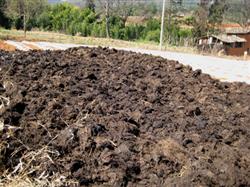
Apply organic fertilizer in moderation, and never apply it blindly in excess.
Composting with microbial agents, compared with traditional composting, has the characteristics of being convenient to ferment, saving labor and time, having low cost, and providing high fertilizer efficiency. The specific method is to use roadsides, field edges and abandoned pits and ponds, add water, urea and microbial agents to wheat and corn straw in a certain proportion, pile them layer by layer, then seal them tightly with soil or mud for decomposition...
-
How to apply fertilizer scientifically in hot and dry weather
It is not advisable to apply large amounts of undecomposed cake fertilizer. Cake fertilizer has a relatively small carbon-to-nitrogen ratio and decomposes quickly, easily generating high temperatures. Applying undecomposed cake fertilizer will raise the local temperature, cause root burn and affect seed germination, and will also attract underground pests. The cake fertilizer should be crushed and soaked in human urine until it heats up before application. Compound fertilizer cannot be used alone...
-

Methods and Key Technical Points for Applying Phosphate Fertilizer in Orchards
In spring and summer, the periods before and after flowering of fruit trees are stages prone to various diseases (physiological diseases and pathogen toxin diseases). At this stage, in addition to necessary chemical prevention, timely application of phosphorus and potassium fertilizers is also a good choice. However, many fruit growers tend to apply only nitrogen fertilizers (such as urea, high-nitrogen...
-
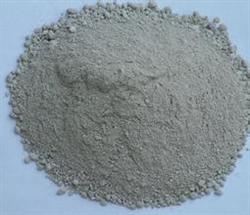
Apply phosphate fertilizer this way, and crops will resist drought and increase income
Crops absorb phosphorus fastest during the seedling stage, and the seedling stage is also the critical period for phosphorus nutrition. If phosphorus is deficient during the seedling stage, it will affect the later growth of the crop. In our province, spring temperatures are low, soil microbial activity is weak, and the release of soil available phosphorus is low. In addition, low soil temperature weakens the root system's ability to absorb nutrients, making it difficult to meet the crop's needs during the critical period of phosphorus nutrition. ...
-

What are the precautions for applying diammonium phosphate?
Phosphorus promotes soybean root growth and is beneficial for the formation of root nodules. When the supply of phosphorus in the soil is insufficient, although soybean rhizobia can invade the roots, they do not form nodules. Molybdenum fertilizer is an essential trace element for nitrogen fixation in root nodules, and when the soil is deficient in phosphorus, applying molybdenum fertilizer alone actually reduces the number of root nodules. Phosphorus's effect on the amino... in root nodules
-
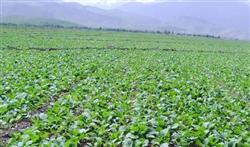
Why is the seedling stage the key period for applying phosphate fertilizer to rapeseed?
Rapeseed is a crop with a relatively high boron requirement. When boron is deficient at the seedling stage, the root system stops growing, there are no root hairs or no lateral roots, and the growing point turns from brown to scorched and dies; applying rapeseed boron fertilizer in a timely manner plays an important role in achieving high yield and good quality in rapeseed. The specific method is: boron fertilizer applied as a base fertilizer is applied directly into the soil, and can be applied to rapeseed...
-
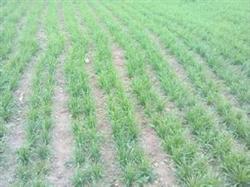
Methods and Techniques for Scientifically Applying Phosphate Fertilizer to Wheat
Wheat is a crop with a relatively high phosphorus requirement, and scientifically applying phosphate fertilizer is one of the key measures to improve phosphate fertilizer efficiency, reduce fertilization costs, and promote high-quality and high-yield wheat. 1. Apply after mixing and composting with organic fertilizer. Organic fertilizer is rich in organic matter, phosphoric acid, and various organic weak acids, which can turn insoluble phosphorus into soluble phosphorus...
条件筛选