How to Apply Compound Fertilizer for Best Results? A Detailed Guide to Correct Fertilization Methods
How to apply compound fertilizer for best results? Please explain the application methods. Compound fertilizer has the characteristics of high nutrient content and a fixed nutrient ratio. Because different soils and different crops require different ratios of N, P and K, it is best to test the soil before use to understand the soil texture and nutrient status. In addition, attention should be paid to combining it with N...
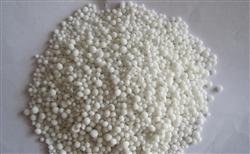
How to apply compound fertilizer for best results? Please explain the application methods.
Compound fertilizer has the characteristics of high nutrient content and a fixed nutrient ratio. Because different soils and different crops require different ratios of N, P and K, it is best to test the soil before use to understand the soil texture and nutrient status. In addition, attention should be paid to combining it with N fertilizer in order to improve the efficiency of N, P and K. In particular, compound fertilizers with three 15% or three 16% should be used alone as little as possible to avoid wasting P and K fertilizer. As grain yields increase, the phenomenon of soil nutrient deficiencies has become apparent, and manufacturers are now beginning to produce more multi-element compound fertilizers.
At present, there are mainly three types of compound fertilizer on the market: the first is crop-specific fertilizer. When choosing, farmers should select the corresponding special fertilizer according to different crops. The second is crop-specific fertilizer accompanied by pesticides. This kind of fertilizer is mainly used as a base fertilizer; a single application can both ensure the nutrients needed by the crop and control underground pests and seedling-stage diseases. The third is high-content granular organic compound fertilizer. The application of this type of fertilizer reduces the amount of fertilizer applied and the number of applications, lightens labor, and improves work efficiency.
Although compound fertilizer is efficient and saves time, it is not an all-purpose fertilizer. When using it, note the following:
1. It should be applied in combination with a variety of fertilizers. Although most compound fertilizers are multi-element, manufacturers include the main elements required by crops, but the secondary elements cannot be fully included, so they cannot completely replace organic fertilizer. Where conditions permit, they should be used in combination with decomposed organic fertilizer; this can improve fertilizer efficiency and nutrient utilization, while also improving the soil, activating beneficial microorganisms in the soil, and more importantly, saving costs and reducing environmental pollution. Where conditions are better, they can be used in combination with bio-organic fertilizer, thereby providing the soil with a large number of beneficial microorganisms and activating soil nutrients. Although special compound fertilizer is produced with a nutrient ratio determined according to the fertilizer requirements of the crop, it is difficult for it to fully meet the actual growth requirements of crops on soils with different fertility levels. Therefore, it is necessary to also apply some single-element fertilizers according to the seedling condition of the crop. For example, on poor soil, leafy vegetables that need more N should be given some additional N fertilizer; on K-deficient soil (such as sandy fields), peanuts and watermelons that need more K should be given some additional K fertilizer at the later stage.
2. Apply according to the characteristics of compound fertilizer
2.1 Compound fertilizer has a long fertilizer effect and is suitable as a base fertilizer. Whether it is crop-specific fertilizer or ternary compound fertilizer, it is best applied as a base fertilizer. This is because crops are extremely sensitive to P and K in the early stage and require P and K fertilizer to be applied early as a base fertilizer. In addition, compound fertilizer uses coating, granulation and other processes during production, so its fertilizer effect is slow and steady, it decomposes more slowly than single-element chemical fertilizer, less nutrients are leached, and utilization is high, making it suitable as a base fertilizer. The usual dosage is 30 to 40 kg per mu. In addition, according to the fertilizer requirement patterns of different crops, quick-acting N fertilizer should be supplemented in time during topdressing to meet the nutritional needs of the crop.
2.2 The content of compound fertilizer varies greatly, so attention should be paid to choosing a suitable variety. Choose economical and efficient compound fertilizer according to region, soil and crop. Generally, high-content compound fertilizer is used on cash crops. Because the content is relatively high, direct contact between seeds and fertilizer should be avoided so as not to affect emergence and cause seedling burn or root rot. When sowing, seeds should be 5-10 cm away from the compound fertilizer.
2.3 According to the composition of the compound fertilizer, pay attention to the scope of use. Different brands and different contents of compound fertilizer have different compositions, and the choice should be made according to soil type and crop type when using. For example, compound fertilizer containing nitrate should not be applied to leafy vegetable crops; compound fertilizer containing ammonium ions should not be applied on saline-alkali land; compound fertilizer containing chloride ions should not be applied to chlorine-sensitive crops (such as tea plants); compound fertilizer containing sulfate should not be applied in acidic soil. Otherwise, fertilizer efficiency will be reduced, and crops may even be harmed. In addition, compound fertilizer should be applied deeply and covered with soil. It should not be broadcast on the surface, because on the surface it is not easily adsorbed by the soil in time, causing N fertilizer to decompose and volatilize under strong sunlight and K fertilizer to be lost in rain; also, P has little mobility in the soil, so when applied on the surface it is not easily absorbed and utilized by crop roots, and in drought conditions the fertilizer cannot dissolve or decompose, resulting in extremely poor fertilizer efficiency.
Click to get more compound fertilizer application techniques
Click to get more fertilizer application techniques