-

Pesticide Application Methods and Analysis of Common Questions About Microbial Pesticides
What problems have you encountered when using pesticides that you are not aware of? See if any of the questions below are what you want to ask, and let us take a look together. Biological pesticides refer to pesticides produced from natural materials, such as animals, plants, and microorganisms, which are relatively harmless to living things and
-
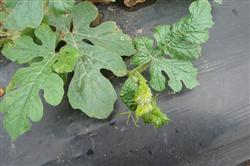
How do you remedy phytotoxicity after propiconazole application?
What are the symptoms of propiconazole phytotoxicity? What are the characteristics of propiconazole phytotoxicity? What causes phytotoxicity when propiconazole is applied? Below, Zhongdiwang gives a brief introduction for netizens' reference. 1. Symptoms of propiconazole phytotoxicity. The common symptoms of phytotoxicity from foliar spraying of propiconazole are hardening, brittleness and easy breakage of young tissues...
-
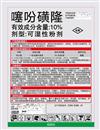
Thifensulfuron-methyl: A Detailed Guide to Its Effects and Application Methods
What are the effects of thifensulfuron-methyl? How is it used? We ask knowledgeable readers to help explain. On the market, thifensulfuron-methyl wettable powder herbicides at 10%, 15%, 20%, 25% and 75%, as well as a 75% thifensulfuron-methyl aqueous solution herbicide, are commonly seen. Many readers are still not very familiar with thifensulfuron-methyl herbicide...
-
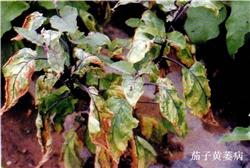
Which Diseases Can Fungicides Prevent and Control? A Detailed Guide to Their Scope of Application
Which diseases can fungicides prevent and control? What chemicals work well when mixed with fungicides? We also invite experienced readers to share their suggestions. As consumers pay more and more attention to food safety, highly toxic and high-residue chemicals in agricultural cultivation will gradually be replaced by environmentally friendly fungicides. Therefore, Zhongdi Network has compiled the diseases that fungicides can prevent and control...
-
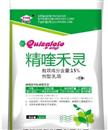
How is quizalofop-p-ethyl herbicide used? A detailed guide to its application methods
What is the herbicidal mechanism of quizalofop-p-ethyl herbicide? How is quizalofop-p-ethyl herbicide used? We ask knowledgeable readers to help explain. On today's agricultural input market, quizalofop-p-ethyl emulsifiable concentrate herbicides at 5%, 8%, 8.8%, 10%, 10.8% and 15% are commonly seen, but many readers do not understand the herbicidal mechanism and scope of application of quizalofop-p-ethyl herbicide...
-
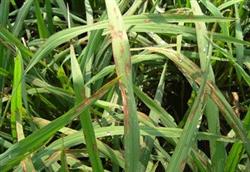
What diseases does chlorothalonil control? A full breakdown of its scope of application
What diseases does chlorothalonil control? How should chlorothalonil be used for the best effect? Experienced gardeners, please share your advice. Chlorothalonil is a non-systemic broad-spectrum fungicide and a low-toxicity fungicide that is now widely used. It works best when sprayed before disease occurs or when disease has just begun, for the best effect...
-
How to use abamectin for the best results? A detailed guide to the correct application method
How can abamectin be used for the best results? What is the insecticidal mechanism of abamectin? Generally, how much pesticide is enough for which pests? Please give an introduction. Insecticidal mechanism of abamectin: It has stomach poison and contact action against mites and insects, but cannot kill eggs. Abamectin sprayed on the leaf surface decomposes and dissipates quickly, but the active ingredient that penetrates...
-

How Effective Is Chitosan Pesticide? A Full Analysis of Its Practical Applications
How effective is chitosan pesticide? What benefits does chitosan pesticide have? Which crops can chitosan pesticide be used on? Please note that the effects of chitosan pesticide include the following: (1) Improvement of the soil ecological environment. (a) Culture medium effect: chitosan is a nutrient source and health supplement for beneficial soil microorganisms...
-
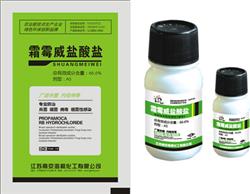
Correct application methods for the low-hazard fungicide propamocarb
How is the low-hazard fungicide propamocarb applied? Please provide an introduction to the application methods. Reference application methods for the low-hazard fungicide propamocarb are as follows: 1. To control damping-off and rhizoctonia rot in cucurbit seedlings, use a 500-fold propamocarb solution, spraying at a rate of 0.75 kg of solution per sq m, spraying 1 to 2 times over the entire seedling-raising period...
-
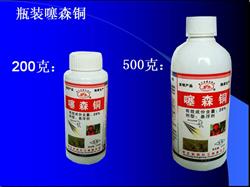
How should copper-based fungicides be used properly? Key points of application explained
How should copper-based fungicides be used properly? Please explain the application method. Copper-based fungicides, as one of the important fungicides, have the characteristics of being the earliest developed and applied, the longest used, the largest application area, the best sterilization effect, and the most uses. Copper-based fungicides can prevent and control both fungal diseases and...
条件筛选