What diseases does chlorothalonil control? A full breakdown of its scope of application
What diseases does chlorothalonil control? How should chlorothalonil be used for the best effect? Experienced gardeners, please share your advice. Chlorothalonil is a non-systemic broad-spectrum fungicide and a low-toxicity fungicide that is now widely used. It works best when sprayed before disease occurs or when disease has just begun, for the best effect...
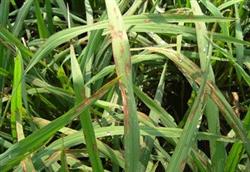 What diseases does chlorothalonil control? How should chlorothalonil be used for the best effect? Experienced gardeners, please share your advice
Chlorothalonil is a non-systemic broad-spectrum fungicide and a low-toxicity fungicide that is now widely used. It works best when sprayed before disease occurs or when disease has just begun, for the best effect. Chlorothalonil controls a wide range of diseases on grain crops, peanuts, vegetables, cucurbits, fruit trees, tea and more. Zhongdiwang has compiled the diseases that chlorothalonil can control and how to use it, listed in detail below for readers' reference.
1. Control method for rice blast:
To control rice blast, start spraying when disease centers appear in the field, then spray again after 7 days. To control panicle blast, spray once at the booting stage and once at the full heading stage. Each time, use 1500-1900 g of commercial 75% chlorothalonil wettable powder per hectare (1125-1425 g active ingredient), add 1050 L of water, stir evenly and spray.
2. Control method for rice sheath blight:
Spray at the early stage of disease occurrence or from the young panicle formation stage to the booting stage, then spray again after 7 days. Each time, use 1500-1900 g of commercial 75% chlorothalonil wettable powder per hectare (1125-1425 g active ingredient), add 1050 L of water, stir evenly and spray, focusing on the stems of the rice.
3. Control method for wheat leaf rust and leaf spot:
Start spraying at the early stage of disease occurrence, spray once every 7 days, for 2-3 consecutive sprays. Each time, use 1500-1900 g of commercial 75% chlorothalonil wettable powder per hectare (1125-1425 g active ingredient), add 1050 L of water, stir evenly and spray.
4. Control method for peanut rust, brown spot and black spot:
Start spraying at the early stage of disease occurrence, spray once every 7-10 days, for 2-3 consecutive sprays. Whether to continue applying depends on the peanut growth stage and how the disease develops. Each time, use 1500-1800 g of commercial 75% chlorothalonil wettable powder per hectare (1125-1350 g active ingredient), or 1500-2250 g of commercial 40% Daconil suspension concentrate (600-900 g active ingredient), add 900 L of water, stir evenly and spray.
5. Control method for cucumber downy mildew:
Start spraying before or at the early stage of cucumber downy mildew, spray once every 7 days, for 3-4 consecutive sprays. Each time, use 2200-4000 g of commercial 75% chlorothalonil wettable powder per hectare (1650-3000 g active ingredient), or 2250-2625 g of commercial 40% Daconil suspension concentrate or 40% chlorothalonil suspension concentrate (900-1050 g active ingredient), add 1125 L of water, stir evenly and spray; reduce the spray volume when the cucumber plants are small.
For cucumber downy mildew in greenhouses, chlorothalonil smoke formulations can be used. Light them at the early stage of disease occurrence to fumigate. Each time, use 7500-12000 g of commercial 10% chlorothalonil smoke formulation per hectare of greenhouse, or 3750-6000 g of commercial 20% chlorothalonil smoke formulation, or 2500-4000 g of commercial 30% chlorothalonil smoke formulation, or 1667-2667 g of commercial 45% chlorothalonil smoke formulation (750-1200 g active ingredient) and light it to fumigate. You can also use 15000-22500 g of commercial 5% chlorothalonil dust formulation (750-1125 g active ingredient) for dusting control. Further control depends on how the disease develops.
6. Control method for tomato early blight:
Start spraying at the early stage of disease occurrence, spray once every 7-10 days, for 3-4 consecutive sprays. Each time, use 2200-4000 g of commercial 75% chlorothalonil or Dacotech wettable powder per hectare (1650-3000 g active ingredient), or 2250-2625 g of commercial 40% chlorothalonil suspension concentrate (900-1050 g active ingredient), add 1125 L of water, stir evenly and spray; reduce the spray volume when the seedlings are small.
7. Control method for cabbage black spot and downy mildew:
At the early stage of disease occurrence, when weather conditions favor disease development, start spraying, spray once every 7-10 days, for 2-3 consecutive sprays. Each time, use 1700-2300 g of commercial 75% chlorothalonil wettable powder per hectare (1275-1725 g active ingredient), add 900 L of water, stir evenly and spray.
8. Control method for bean rust, gray mold and anthracnose:
Start spraying at the early stage of disease occurrence, spray once every 7 days, for 3-4 consecutive sprays. Each time, use 1700-2300 g of commercial 75% chlorothalonil wettable powder per hectare (1275-1725 g active ingredient), add 900 L of water, stir evenly and spray.
9. Control method for potato late blight, early blight and gray mold:
Spray when disease begins to occur before the potato rows close, spray once every 7-10 days; the number of sprays depends on how the disease develops. Each time, use 1700-2300 g of commercial 75% chlorothalonil wettable powder per hectare (1275-1725 g active ingredient), add 900 L of water, stir evenly and spray.
10. Control method for tomato leaf mold, leaf spot and anthracnose:
Start spraying at the early stage of disease occurrence, spray once every 7 days; the number of sprays depends on how the disease develops. Each time, use 1700-2300 g of commercial 75% chlorothalonil wettable powder per hectare (1275-1725 g active ingredient), add 900 L of water, stir evenly and spray.
11. Control method for eggplant and sweet pepper anthracnose and early blight:
Start spraying at the early stage of disease occurrence, spray once every 7 days, for 3-4 consecutive sprays. Each time, use 1700-2300 g of commercial 75% chlorothalonil wettable powder per hectare (1275-1725 g active ingredient), add 900 L of water, stir evenly and spray.
12. Control method for cucurbit downy mildew and powdery mildew:
Start spraying at the early stage of disease occurrence, spray once every 7 days until the disease stops developing. Each time, use 1600-2200 g of commercial 75% chlorothalonil wettable powder per hectare (1200-1650 g active ingredient), add 900 L of water, stir evenly and spray.
13. Control of grape powdery mildew and black pox:
Start spraying at the early stage of leaf disease or two weeks after flowering, generally once every 7-10 days; the number of sprays depends on the disease. Each time, spray at a concentration of 600-700 times dilution of 75% chlorothalonil wettable powder.
14. Control method for pear rust:
Spray once before pear trees bloom (late March) and once after blooming (mid-April); if necessary, spray again two weeks after the second spray. Each time, use a 500 times dilution of 75% chlorothalonil wettable powder.
15. Control method for apple anthracnose:
Start the first spray in early June, spray once every 15 days, for 4-5 consecutive sprays. Each time, use a 500 times dilution of 75% chlorothalonil wettable powder.
16. Control method for citrus scab and sandpaper disease:
Start spraying when citrus petals fall, spray once every 10-14 days, for 2-3 consecutive sprays. Each time, use an 800-1000 times dilution of 75% chlorothalonil wettable powder.
17. Control method for tea anthracnose:
Start spraying at the bud break stage of summer and autumn tea or at the early stage of disease occurrence, spray once every 7-10 days, for 2-3 consecutive sprays. Each time, use a 600-800 times dilution of 75% chlorothalonil wettable powder.
Click to get more fungicide application techniques
Click to get more pesticide application techniques