-

How are herbicides used in rice paddies? A detailed guide to application methods
How are herbicides used in rice paddies? What should you do if herbicide damage occurs? We hope experienced readers can help share their knowledge. Zhongdi Network has compiled the methods for applying herbicides in rice paddies and how to identify and remedy herbicide damage. These are listed below for readers' reference. Methods for using herbicides in rice paddies: The common...
-
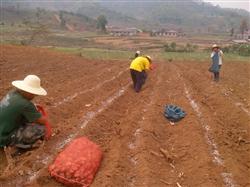
Fertilizer Application Methods for Base Fertilizer and Top Dressing in Yam Cultivation
How do you apply base fertilizer and top dressing when growing yams? Please provide guidance on the methods. For applying base fertilizer and top dressing when growing yams, you can refer to the following methods: 1. Base fertilizer. After selecting a good field, before plowing apply 2000 kg-4000 kg of decomposed farmyard manure and 60 kg-80 kg of compound fertilizer per mu as base fertilizer, then plow the soil 30 cm...
-
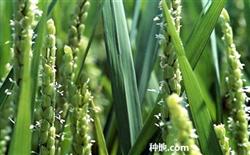
What is the correct application method for rice flower-promoting fertilizer?
How should rice flower-promoting fertilizer be applied? Please guide. Rice flower-promoting fertilizer and flower-preserving fertilizer are collectively called ear fertilizer. Flower-promoting fertilizer is generally applied from the 4th leaf from the top to the 3rd leaf from the top stage of rice. The 4th leaf from the top to the 3rd leaf from the top stage is a reverse leaf age stage. For early-maturing late japonica rice, it is generally applied when the first internode has reached its final length and the second internode is elongating. Flower-promoting fertilizer should be applied according to the seedlings. High-yield fields generally do not apply flower-promoting fertilizer. Only fields with small population growth and obvious yellowing at the early stage of jointing and ear elongation should be topdressed with an appropriate amount. Fields with little base fertilizer, a small population, and obviously faded leaf color should be applied early; fields with sufficient base fertilizer, a large population, and no yellowing of leaf color should be applied less or not at all.
-
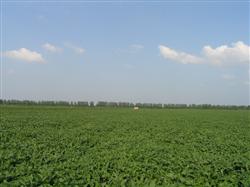
Key Application Points of Soybean Foliar Fertilization Technology in Production
In soybean production, paying attention to foliar fertilization is an important measure for increasing yield and income. Therefore, it is necessary to understand the fertilizer requirements of soybeans at different growth stages, supplement nutrients in a timely manner, and meet the needs of soybean growth and development, thereby achieving the goal of increasing yield and income. Fertilization principles: adequate phosphorus and potassium, less nitrogen, and trace molybdenum. Because...
-
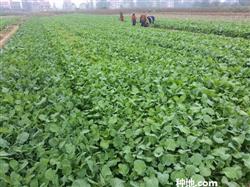
What should be noted when applying boron to rapeseed? Master the correct application method
How to fertilize rapeseed scientifically? Please advise. In rapeseed production in the Yangtze River Basin, the application rates of nitrogen, phosphorus and potassium fertilizers are generally low, the nutrient ratios are unbalanced, organic fertilizer application is insufficient, the straw return rate is low, and deficiencies of trace elements such as boron occur from time to time. Fertilization principles: increase organic fertilizer application and advocate straw return; supplement according to the soil...
-
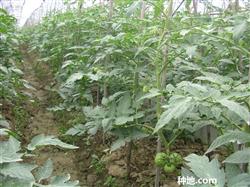
Proper application methods of foliar fertilizer for tomatoes
How should foliar fertilizer be applied to tomatoes? Please explain how to guide the timely spraying of calcium fertilizer on the leaves. Tomato fruit growth requires a relatively large amount of calcium, and when the soil supply of calcium is insufficient, the fruit is prone to blossom-end rot. Therefore, during the fruiting period of tomatoes, calcium chloride, superphosphate, amino acid calcium, calcium supplement preparations, etc. should be sprayed to meet the tomato's need for calcium...
-
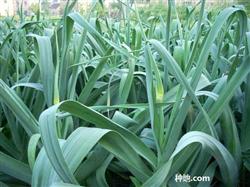
Correct application methods of foliar fertilizer for garlic
How to apply foliar fertilizer when growing garlic? Please give guidance. Foliar fertilization allows nutrients to enter the plant body through the leaves and directly participate in the plant's metabolic processes and the synthesis of organic matter. Its effect is faster than soil fertilization, and it is an economical and reasonable fertilization technique. After garlic is treated with garlic growth promoter, the garlic seedlings'...
-
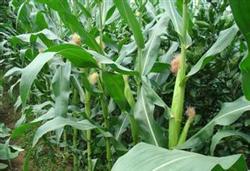
Want high yields from spring corn? Proper potassium fertilizer application is key
Spring corn grows slowly at the seedling stage, with sturdy plants and strong lodging resistance. Its yield per plant is relatively high, but it is susceptible to disease infection during hot, rainy seasons, which can affect spring corn yields. Mastering spring corn fertilization methods can help achieve high and stable yields. Apply organic fertilizer widely. Spring corn is a high-yield crop, and its yield level...
-
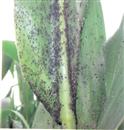
Spring Corn Aphid Control Methods and Key Points for Pesticide Application
The spring corn aphid belongs to the order Homoptera, family Aphididae, and mainly damages crops such as corn, sorghum, wheat, and foxtail millet, with adults and nymphs piercing and sucking plant sap. During the seedling stage, aphids gather on the undersides of leaves and in the heart leaves, causing damage. In mild cases, corn growth is poor; in severe cases, plant growth stagnates, and even seedlings die. In addition, it can transmit corn dwarf mosaic virus disease...
-
Spring planting fertilization tip: Effective potassium application boosts high yields in spring corn
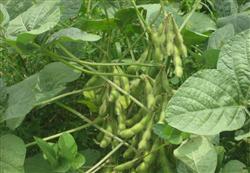
Delayed senescence (staying green and late-maturing) refers to soybeans that, when they should be maturing, still have green branches and leaves with vigorous growth and seeds that are not yet plump, though not shriveled pods or shriveled seeds. The main cause of delayed senescence is excessive application of nitrogen fertilizer or application too late, causing excessive vegetative growth, delaying maturity, and affecting yield. To prevent delayed senescence in soybeans, it is necessary to timely...
条件筛选