Which Diseases Can Fungicides Prevent and Control? A Detailed Guide to Their Scope of Application
Which diseases can fungicides prevent and control? What chemicals work well when mixed with fungicides? We also invite experienced readers to share their suggestions. As consumers pay more and more attention to food safety, highly toxic and high-residue chemicals in agricultural cultivation will gradually be replaced by environmentally friendly fungicides. Therefore, Zhongdi Network has compiled the diseases that fungicides can prevent and control...
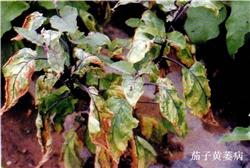 Which diseases can fungicides prevent and control? What chemicals work well when mixed with fungicides? We also invite experienced readers to share their suggestions.
As consumers pay more and more attention to food safety, highly toxic and high-residue chemicals in agricultural cultivation will gradually be replaced by environmentally friendly fungicides. Therefore, Zhongdi Network has compiled the diseases that fungicides can prevent and control and the chemical formulas, listed below for readers' reference.
1. DT fungicide can be used to prevent and control bacterial diseases and fungal diseases, such as bacterial angular leaf spot of cucumber and Verticillium wilt of eggplant.
2. Dimethachlon is a non-systemic broad-spectrum fungicide that can be used to prevent and control soybean sclerotinia rot, gray mold of tomato and cucumber, etc. Generally, a 40% wettable powder diluted 500 times is used for spraying.
3. Baijuntong is a mixed formulation of DT fungicide and fosetyl-aluminum, and can be used to prevent and control downy mildew, anthracnose, bacterial angular leaf spot, Fusarium wilt, soft rot and black spot of vegetables, etc.
4. Antimycin 120 (Nongkang 120, 120 Agricultural Antibiotic) is suitable for preventing and controlling powdery mildew, anthracnose and Fusarium wilt. To prevent and control soil-borne diseases such as Fusarium wilt of cucurbits and eggplant, a 2% aqueous solution diluted 130 to 200 times can be used for root drenching, 500 ml each time, once every 5 days.
5. Lürutong can be used to prevent and control bacterial diseases and fungal diseases, such as downy mildew, anthracnose, damping-off, Phytophthora blight and Fusarium wilt, etc. Generally, 12% Lürutong diluted 600 to 1000 times is used for spraying or root drenching.
6. Metalaxyl (also known as ridomil, Apron) can be used to prevent and control downy mildew of cucumber and Chinese cabbage, Phytophthora blight of cucumber and green pepper, late blight of potato, etc. Generally, at the early stage of disease onset, a 25% wettable powder diluted 600 to 800 times is used for spraying. For soil-borne diseases, 400 to 500 g of 25% wettable powder per mu can be mixed with water for soil treatment.
7. Previcur can prevent and control leaf diseases caused by Pythium, Phytophthora and downy mildew fungi. Drenching with 72.2% Previcur water-soluble liquid diluted 400 to 600 times can prevent and control vegetable Phytophthora blight and damping-off and Rhizoctonia rot at the seedling stage. Spraying with 72.2% water-soluble liquid diluted 600 to 1000 times at the early stage of disease onset can prevent cucumber downy mildew. Mixing this chemical with non-alkaline fungicides can improve the control effect.
8. Thiabendazole (also known as tiabendazole, thiabendazole, Tecto) can be translocated to the top of the crop but not to the roots, and is often used for fruit preservation. On vegetables, it can be used to prevent and control late blight and sclerotinia rot of celery, and gray mold of cabbage.
9. Sandofan can be used to prevent and control early blight, late blight and rot of tomato, downy mildew and Phytophthora blight of cucumber, Phytophthora fruit rot of eggplant, early blight and late blight of potato, etc. Generally, at the early stage of disease onset, a 64% wettable powder diluted 400 times is used for spraying.
10. Kasumin (also known as Chunlei oxychlorocopper) has good effects on preventing and controlling leaf spot, anthracnose, powdery mildew, early blight, soft rot, downy mildew and canker of many crops. Generally, at the early stage of disease onset, 47% Kasumin wettable powder diluted 600 to 800 times is used for spraying, for 2 to 3 consecutive sprays. Note that this chemical is prohibited on lotus root, Chinese cabbage and soybean.
11. Curzate is formulated from cymoxanil and mancozeb, and has a special effect on downy mildew of crops such as Chinese cabbage, cucumber, radish and cabbage, as well as late blight of crops such as tomato and potato. Generally, a 72% wettable powder diluted 600 to 800 times is used for spraying.
12. Sporgon is mainly used to prevent and control brown rot and brown spot of mushrooms and diseases of fruit trees such as citrus.
13. Procymidone (Sumilex) has a special effect on gray mold and sclerotinia rot of cucurbits, vegetables and grapes. Generally, a 50% wettable powder diluted 600 to 800 times is used for spraying, or a 30% granule is used for fumigation.
14. Shuangxiaoling kills pathogens through the enzyme-inhibiting action of copper ions. It can be used to prevent and control many fungal diseases and bacterial diseases, such as tomato late blight and Fusarium wilt of cucurbits.
15. Fosetyl-aluminum (also known as aluminum triethyl phosphonate, phosethyl-Al) has significant control effects on downy mildew and Phytophthora blight of many crops, with a validity period of more than 20 days. Generally, 40% fosetyl-aluminum diluted 250 to 300 times is used for spraying. Iprodione mainly plays a preventive role, such as against early blight of tomato and gray mold of cucumber and pea.
What Types of Fungicides Are There
What Should Be Noted When Using Fungicides