-
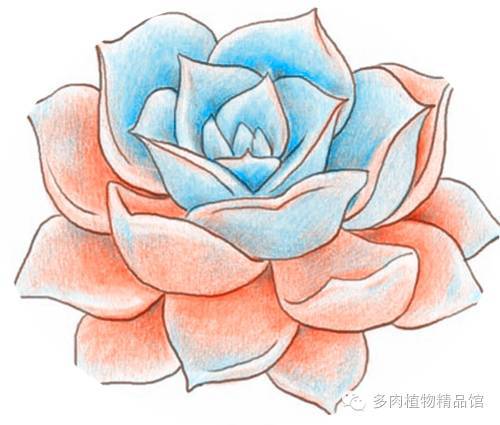
What causes a succulent to become a "stunted seedling"? Analysis of common causes
Text and images: Internet. When you notice that a certain succulent has shown no sign of growth for a long time (3 months or more), its leaves gradually wrinkle and shrink, and its color basically does not change, then it should be a "stunted seedling". This is usually because this succulent...
-
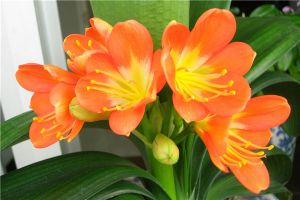
How to prevent Clivia from failing to bloom (stuck arrow)? A full analysis of practical methods
From January to March, if there are signs of the flower stalk shooting up, raise the temperature around the pot; you can place the pot on a hot brick, put a lamp under the pot, and so on. At the same time, apply some fertilizer, and also prevent the soil from caking. Having earthworms in the soil is also not okay, because it will cause the plant's roots to lose contact with the soil.
-
-
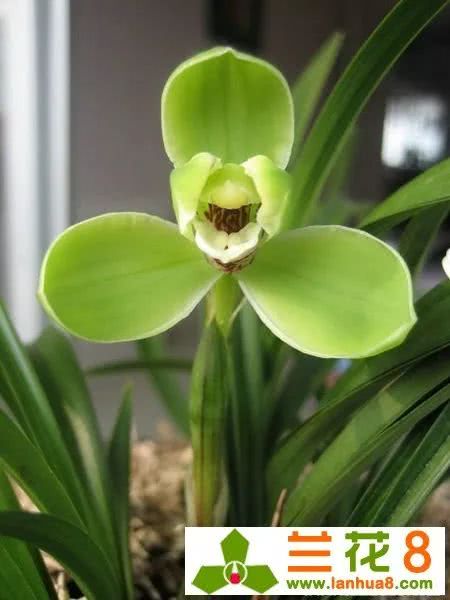
Orchid Petal Type Analysis: Detailed Explanation of Common Petal Type Classifications and Characteristics
Promote Chinese orchid culture, spread orchid knowledge. I. Plum Petal. Plum petal: the three outer petals have tight edges and rounded tips, the central column is strongly masculinized with a cupped shape and white tip; if the lip is relaxed and not curled, it is a plum petal. When the plum petal is about to bloom, due to masculinization, the three outer petals have white edges and the petals have white tips. The entire flower shape looks quite like a plum blossom in snow; the ancients' metaphor is indeed apt and vivid. Plum petals are further divided according to the degree of masculinization into hard-cupped plum petals and soft-cupped plum petals. Among hard-cupped ones, there are extremely hard-cupped and hard-cupped plum petals. Extremely hard-cupped plum petals, due to extremely strong masculinization, often have the petals adhering to the column, with a very small hard lip or with cheek-like structures and no lip; such flowers' outer petals are mostly flared and upturned, and the flower shape is extremely inelegant! We know that the strength of masculinization is greatly related to flower quality. The stronger the masculinization, the tighter and harder the central column, and the worse the flower quality! If such a flower shape has tender color and broad outer petals, it also has ornamental value, but most outer petals are flared and upturned, and have traditionally not been valued by orchid growers! The masculinization of hard-cupped plum petals is slightly weaker than that of extremely hard-cupped ones, mostly split-head closed-back or joined-shoulder closed-back hard silkworm-moth petals, and the lip is mostly a dragon-swallowing lip, small round lip, etc.; some flowers have slightly flared outer petals! The masculinization of soft-cupped plum petals is relatively moderate, mostly five-petal separated soft silkworm-moth petals, with the three outer petals rounded and tight, and the lip mostly able to spread broadly, mostly a Liu Hai lip or Ruyi lip; the central column is rounded and neat, making it a fine among plum petals! The overall form of a superior plum petal should closely resemble a plum blossom, and reaching such a standard is very rare! The leaves of plum petals feel relatively thick and hard, with strong uprightness or bow-like form, looking rather vigorous; the basal leaves are slightly spreading, the sheath is hard and extends obliquely at about 15 degrees, feeling prickly to the touch; when the sheath is not yet withered, one can see a white pointed tip at the sheath tip, about the size of a millet grain, crystal clear, greatly different from the leaf tip of ordinary flowers. When selecting wild-collected orchids, if you encounter sheath color bright and smooth, veins fine and sparse reaching the top, heavy sand and dense halo, color lighter below and darker above, with a green tip at the apex, large empty head, lower part of the flower bud tightly contracted, and the middle round and bulging like a peanut or soybean, it is mostly a plum petal! This requires everyone to observe more usually in order to judge quickly and accurately!
-
What are the medicinal values of Cymbidium goeringii? A detailed analysis
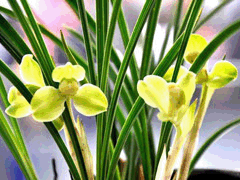
The medicinal value of Cymbidium goeringii
-
Analysis of Orchid Cultivation Techniques: The Method of Growing Orchids with Light
Orchid Cultivation Techniques: Growing Orchids with Light
-
A Complete Analysis of Autumn Care Methods and Key Points for Chinese Cymbidium
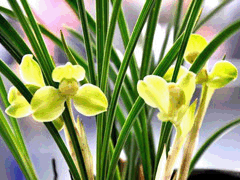
Autumn Care Methods and Key Points for Chinese Cymbidium
-
How fragrant are spring orchids from different regions? An analysis of the fragrance issue of Hubei spring orchids
The fragrance of spring orchids from different regions and the fragrance issue of Hubei spring orchids
-
What to Do When Aglaia odorata Leaves Dry Up? Cause Analysis and Solutions
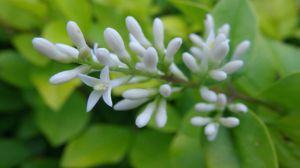
When Aglaia odorata is growing, its leaves may dry up. The causes are: first, too much or too little watering, so water only when the soil is dry and keep it moist but not soggy; second, improper fertilizing, so apply light fertilizer frequently; third, too strong light, so place it in a spot with diffused light; fourth, pests and diseases, so every 15 to 20 days sprinkle dry plant ash diluted 25 to 30 times onto the leaf surface.
-
Identification Methods and Stability Analysis of Ruidie (Multi-petal Butterfly Orchids)
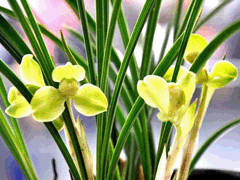
Identification and Stability of Ruidie (Multi-petal Butterfly Orchids)
条件筛选