A Complete Analysis of Autumn Care Methods and Key Points for Chinese Cymbidium
Autumn Care Methods and Key Points for Chinese Cymbidium
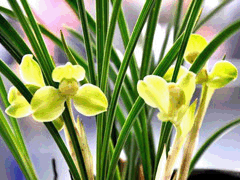 Autumn Care Methods and Key Points for Chinese Cymbidium
As the ranks of orchid enthusiasts grow day by day,orchidsimprovements in care methods along with theoretical discussion and appreciation theory are becoming increasingly active
. To this end, I have gathered some materials and combined them with my ownorchid growingpractice to offer some views for everyone to discuss and research.
1. To grow orchids well, the first thing to solve is the selection of seedlings:
It is now golden autumn, a good time to buy orchids and acquire plants. Nowadaysorchid plantsare traded at prices based on the number of shoots. For the same variety, a plant slightly smaller
with a slightly thinner pseudobulb, even with 5 or 6 leaves, will be 20% cheaper, while strong plants and new plants generally cost a bit more. In
fact, you get what you pay for. My experience is that it is better to spend more on strong plants, new plants, and front plants than to buy old
plants or weak plants. Buying strong plants and new plants not only ensures survival and blooming, but can also produce strong shoots in early spring of the second year, or even
double dragons. By early summer of the second year the new shoots can grow into mature plants, and if planted properly, they will send up shoots again in May to June, which can also mature
by autumn, and in September to October produce plants and flowers. In contrast, old and weak plants may not only bloom with poor form and appearance, but generally send up shoots in
late spring (May, June); these plants, possibly due to "insufficient milk," not only grow slowly but also fail to grow strong. By the end of the
second year, compared with those who bought strong plants, you have lost both time and shoots. It can thus be seen that when viewing orchids, one should not only look at the number of shoots in the clump
, but even more at whether the shoots are strong or weak, new or old.
Nowadays, experienced orchid enthusiasts are seeking out local native species and old pot plants. This is because plants that have been grown locally
are already accustomed to the local environment and climate. Although conditions at home may differ slightly after purchase, the overall environment and climate conditions are the same;
therefore, after purchase, care and rejuvenation are easier. In addition, buying plants from local orchid enthusiasts or those in Jiangsu and Zhejiang makes it easy to learn about the condition
of their orchids and their character, so one will not buy diseased plants or virus-infected plants. Plants from distant places have unclear origins and undergo hardships in transit; even well-known
and reputable orchid merchants cannot guarantee there will be no problems. For example, a batch ofCymbidium goeringiithat came in from overseas at the end of last year carried the "Baylais" virus.
At the time, they looked very robust, but when new shoots emerged in spring, the disease was exposed, causing orchid enthusiasts great distress.
2. To grow orchids well, one must recognize the condition of the orchids and understand their nature.
After purchasing orchid plants, keeping them alive and rejuvenating them is the second hurdle orchid enthusiasts face. I too have taken detours in this regard. At first
I one-sidedly interpreted the saying "dry orchids, wet chrysanthemums" and used a mix of mountain soil plus sand, gravel, and brick granules. It took many years to rejuvenate them, and although the orchid plants
grew acceptably, they were weaker than those grown by other enthusiasts, producing fewer plants and growing more slowly. Later, I saw a piece of
material from South China Normal University, and upon careful reflection, realized that orchids are moisture-loving and drought-tolerant plants. In the past, we one-sidedly understood orchid drought tolerance as meaning they
like dry, airy conditions. In fact, theorchid'sdrought-tolerant characteristics have indeed brought much confusion to new orchid enthusiasts. When slightly dry, the plants
do very well, but when wet, the leaf tips burn. This makes many enthusiasts feel orchids are hard to grow. Actually, orchid plants are plants that both love moisture and tolerate drought; they merely
require breathable potting soil. Let us look together at the structure of orchid roots and leaves.
Orchid roots, also called mycorrhizal roots, consist of three layers: the outer layer, middle layer, and inner layer, respectively called the velamen (protective layer), root
flesh, and vascular bundles. The vascular bundles mainly transport water and nutrients to the orchid plant; this water and nutrients come from the decomposition by root fungi
in the root flesh. The absorbed nutrients -- root fungi are a complex community -- but only under breathable conditions can they grow vigorously,
in a symbiotic relationship with orchid roots. Therefore, to grow orchids well, one must grow strong roots, and the key to growing strong roots is providing the orchid fungi with ventilated and moist
conditions. These conditions were difficult to master in the past when mountain soil was used. Since orchid plants are drought-tolerant, the potting soil being dry for a few days
does no great harm. From the experience of survival, the ancients developed the orchid-growing experience of "dry orchids, wet chrysanthemums" and "better dry than wet." In
fact, these conditions are not the ideal conditions required for orchid growth.
Now let us look at the structure and physiological characteristics of orchid leaves:
Orchid leaves, through thousands of years of evolution, have developed special structures for drought resistance. Their upper surface is composed of a waxy (also called leathery
) tissue with a tight structure that can both effectively prevent water loss and allow light to pass through its surface for
mesophyll photosynthesis. The lower surface is densely covered with stomata; the stomata are sunken, with kidney-shaped guard cells at the base. This structure gives orchid
leaves significantly different effective photosynthesis times under different humidity conditions. Under very high humidity (generally
around 90%), the stomata remain open, O2 and CO2 pass through with little resistance, and photosynthesis proceeds continuously; when humidity
drops, the stomata close accordingly, increasing the resistance to O2 and CO2 passage, and photosynthesis proceeds at lower efficiency;
when humidity is very low (below 50%, equivalent to the humidity at noon in mid-autumn), the stomata close completely, and the orchid plant only carries out the photosynthetic reactions needed to maintain its own respiratory
cycle. It can thus be seen that without providing a high-humidity air environment, orchid plants are mostly "on strike" during the day,
and orchid growth is relatively slow, to say nothing of rejuvenation, sending up shoots, or blooming. Therefore, to make orchids grow quickly, one must
provide conditions of moist, breathable potting soil and high air humidity.
3. Autumncultivationmanagement of orchids:
1. Climate characteristics of each autumn stage:
(1) Early autumn:
Counting from the Start of Autumn (August 8), by the lunar calendar this is the beginning of autumn. At this time the intense heat has not yet dissipated; daytime temperatures are still above 30°C, and at
night temperatures are also above 25°C. At this stage temperatures are on the high side, but with the warm, moist air currents brought by successive typhoons over the Pacific, the
temperature drops slightly, causing orchid plants that were in brief dormancy to send up flowers and shoots one after another, entering the second high-speed growth period of the year. For
the physiological needs of orchid growth at this stage, light is too strong and temperature too high, so the focus of management at this stage is shading
and cooling.
(2) Mid-autumn:
From late September, as dry, cold northern air strengthens and repeatedly pushes southward, the daily average temperature in the Shanghai area drops below
20 °C. Temperatures decline day by day with the southward advance of cold air, and humidity at this stage is relatively low. If no measures are taken, it is very easy for
new plants and small shoots to suffer dehydration damage and collapse. In olden times this damage was called "water caltrop dryness" (which happens to coincide with the water caltrop season in Jiangnan).
By late October, strong cold air occasionally moves south, and temperatures can momentarily drop below 5°C, while during the day under sunlight
they remain above 20°C. At this stage, temperatures between 10°C and 25°C are exactly the range for maximum photosynthetic rate in orchid plants, but the air
is relatively dry and cannot meet the requirements for orchid growth. Watering should be increased to raise humidity; in the later period, to prevent low-temperature stimulation at night,
protective measures should be taken to avoid orchid plants entering dormancy too early.
(3) Late autumn:
From late October to early December, by the lunar calendar this has already entered the period of early winter, but meteorologically, winter begins when the daily average temperature stays below
10°C for five consecutive days. In addition, orchids are generally still growing, so this still belongs to the orchid's second high-speed growth period.
At this stage, not only is the air dry, but nighttime temperatures are relatively low, with hidden frost forming in the early morning and fog often appearing in the morning. Therefore, humidity at night
is high while daytime humidity is low. At this stage, depending on the condition of the plants, either hardening measures or insulation measures should be adopted.
2. Autumn management measures:
(1) Main growth activities of orchids in autumn
Orchid growth in autumn is far more colorful than in early spring. First, new shoots sent up at the beginning of the year have already matured into plants, and underground
the 3rd and 4th roots have already grown. Above ground, orchid leaves have thickened and pseudobulbs have swollen. Strong orchid plants have already produced offspring in June, or even
at this time have developed flower buds. Robust plants from the previous year should also be sending up flowers at this time. New plants that sprouted in late spring (May, June), after experiencing
the brief dormancy of midsummer, now have orchid leaves growing rapidly and can mature into plants in August and September. Some new shoots from summer (June, July
) now begin to unfold leaves and grow roots, and can be expected to mature into plants in late autumn. At this time, the temperature (daily average) is already below 30°C,
and humidity is very high at 70 to 80%. Therefore, this is the period of the year that is easiest to manage and also richest in imaginative possibilities.
The management measures at this stage are roughly as follows:
(2) Shading to reduce light:
In late summer the sunlight is intense and temperatures are too high, so the summer shading measures can be continued. In fact, the purpose of shading is mainly
not to block sunlight but to lower the temperature. Sunlight is not the factor that reduces orchid growth; excessively high temperature is the main factor
that reduces orchid growth. Shading can be removed by early September.
(3) Watering to increase humidity, and fertilizing:
In early autumn temperatures are high and transpiration is great. If enclosed measures are not used, potting soil moisture is lost rather quickly. In addition, orchid plants have already
begun to sprout internally and need more water replenishment. Therefore, watering should be increased; if conditions permit, water twice a day, morning and evening, and during the day also
spray regularly to increase air humidity. In particular, measures should be taken to ensure humidity in the lower part of the potting soil. After more than half a year of
growth, the potting medium has formed certain water channels. Whenever watering occurs, a large amount of water rushes down along the gaps it reaches. From the out
side it looks as if water is rushing below and droplets are glistening above, as though it has been thoroughly watered, but in fact the middle and lower potting soil
has only been slightly moistened on the surface and will dry out after just one or two days, unable to meet the needs of orchid root growth. Orchids grown this way
have roots that grow sideways, while the original strong roots in the lower part dry out and die from prolonged lack of water, so the orchid plants grow thinner and thinner. Only by finding a way
to ensure humidity in the lower potting soil can the drive for orchid roots to extend downward be increased, and can the orchid plants be easily rejuvenated. At this time orchid plants will send up shoots
and grow leaves, with a relatively large demand for nutrients. At this time, fertilizers based mainly on nitrogen, phosphorus, and potassium should be applied in a timely manner to supplement the orchid's
deficiencies and ensure the needs of orchid growth. Here, let me say a few more words: whenever orchid plants send up shoots, grow roots, and initiate flowers, new growth points
form on the orchid plant body, and the orchid will continuously transport stored nutrients from within to the growth points. If reserves are insufficient,
driven by some growth mechanism, the orchid will transport all the nutrients from the old plant body into the new growth points to ensure
their development and sprouting. Therefore, in weaker orchid clumps, old leaves and old shoots will turn yellow and scorch. If in daily management one can pay attention to supplementing phosphorus and
potassium fertilizers, the premature physiological elimination of old plants can be relatively reduced.
(4) Withholding water to promote flowering:
In normally growing orchids, flower buds should develop in late summer and early autumn on robust plants from the previous year and the current year. If management is improper,
there may also be cases where, after many years of cultivation, flowers never appear. At this time, measures such as "withholding water to promote flowering" and "hormone promotion of flowering" can be used.
The method is to first leave the orchid pots unwatered for 3 to 4 days until the surface shows slight dehydration, then water thoroughly with monopotassium phosphate (KH2PO4
) at 800:1, then return to normal management. After two weeks, do it once more. With two such "withholding water to promote flowering" treatments, if it is a robust orchid
clump, it can send up flowers in August and September. Under special circumstances, to ensure the success rate of "flower promotion," a "flower-promoting hormone"
can be prepared. The name and formula of the flower-promoting hormone: mainly composed of bud-promoting hormone + phosphorus and potassium elements.
The bud-promoting hormone is composed of 6-BA (cytokinin), NAA or IAA (auxin), plus auxiliary elements.
Dripping it onto the inner side of the leaf sheath is to avoid nitrogen intrusion; flower buds are more likely to develop in a nitrogen-poor environment.
Dripped onto the inner side of the orchid leaf sheath, under the action of the hormone, dormant buds will activate and develop into flower buds. This method has already been
applied by large orchid growers in other regions and has achieved relatively good results.
4. Care of flower buds:
Flower buds are the essence of orchids. Often, one cultivates for many years before a single bud is produced, hence the saying, "A thousand days of growing for a moment of bloom."
Indeed, famous orchid varieties are not only rare in existence, but even catching a glimpse of their beauty is no easy feat. When encountering certain "lazy-blooming" varieties,
such as 'Guanyao Mei' among the Spring Orchids (Cymbidium goeringii) and 'Tiegu Su' among the Jian Orchids (Cymbidium ensifolium), even when grown into a full pot of vigorous plants, they struggle to produce flower
buds.
It is said that the renowned Yuyao orchid master Wang Shuping grew a pot of 'Guanyao Mei' for over fifty years and saw it bloom only twice. Today, the major orchid grower
Jin Dingxian grew a pot of 'Shiji Baoding' for nine years before it produced its "peerless famous bloom." A pot of 'Yaocao' in Yunnan went through many twists and turns over ten springs and autumns before finally displaying its magnificent beauty that astonished Yunnan and Sichuan. Therefore, when an orchid can produce buds and bloom, it is the best reward for the grower's hard work.
After ten years of spring and autumn, it finally reveals its magnificent beauty that overawes Yun and Chuan. So, for an orchid to bud and bloom is
the best reward for the hard work of orchid enthusiasts.
Bud emergence in orchids places great demands on the plant's nutrition. Generally, for a pot of 5 pseudobulbs of Spring Orchid, one flower bud is already enough. If
2 or 3 buds appear, thinning should follow these principles: First, keep the strong and remove the weak. Strong flower buds generally arise from strong pseudobulbs
and have already absorbed more nutrients by the time they emerge. During subsequent growth, they readily absorb ample nutrition, producing flowers of
superior quality with rich fragrance and high ornamental value. Conversely, with insufficient nutrients, the flowers may open with distorted petals and sepals, which is most regrettable. Second, keep the visible and remove the
hidden. When the orchid clump is dense, one should keep flower buds growing in positions easy to observe and appreciate, and remove those hidden among the foliage.
The former makes blooming, appreciation, and photography easier, while the latter may make it impossible to capture the best photographs (if necessary, the clump can be divided into separate pots to
resolve this issue).
For extremely rare varieties, when a clump produces both flower buds and autumn shoots, one should comprehensively consider the clump's vigor, flower viewing, and shoot increase.
If growing for appreciation, priority should be given to keeping the flowers. If growing for shoot increase and plant rejuvenation, decisions should be based on the timing
of shoot emergence (shoots before September -- definitely keep; before November -- keep with caution; after November -- let them remain buried below the potting medium to prevent sprouting.
Theoretically, blooming one spike and producing one autumn shoot means losing one back pseudobulb in spring). After orchids produce buds, watering must be
done with great care. The potting medium should not be too wet, as root rot easily leads to bud mildew under the action of pathogens. Therefore, each
watering should be slightly less than usual, about seventy to eighty percent of the normal amount. To avoid the lower potting medium drying out, half-height soaking can be used.
This ensures water replenishment to the lower potting medium without making the easily moistened upper portion too wet. For some flowers, if the potting medium is
moist, the petals will elongate or curl backward. At this time, in late autumn, the potting medium can be kept somewhat drier as protection, but not excessively dry. Maintaining
a 60-70% water retention rate is sufficient. When watering, spraying pesticides, or fertilizing, try not to spray directly onto the flower buds, to avoid water stains, fertilizer
residue, or chemical burns damaging the bud sheaths. Sometimes a plastic sleeve or tin foil can be made into a protective cover to protect the buds.
For colored flowers, different measures should be adopted to enhance coloration according to flower color.
Colored flowers are a major future trend in orchid appreciation. How to ensure that flower buds reproduce the original wild coloration upon blooming is a complex
and meticulous task. In addition to supplementing corresponding minerals and controlling the pH of the potting medium, measures such as shading and supplemental
lighting can be used to enhance coloration. According to reports:
Green flowers: Less sunlight; apply 0.2%-1% FeSO4 and 2% vinegar
White flowers: Less sunlight; apply 0.3%-0.5% limewater
Yellow flowers: More sunlight; apply 0.5% ammonium nitrate and urea; apply less potassium fertilizer
Red flowers: More sunlight; apply 0.2%-0.5% sulfur water
Pink flowers: More sunlight; apply 1%-3% superphosphate
Purple flowers: More sunlight; apply 0.3%-0.5% alum water
When necessary, for red, purple, and black flowers, supplemental lighting is beneficial. Orchid-purple lights can be used at night for supplemental lighting, with appropriate temperature increase. This
allows the vast majority of light energy to be used for increasing pigment.
V. Deciding Whether to Keep Autumn Shoots
Under normal circumstances, shoots will still emerge in mid-autumn. For rare varieties, being able to increase plant count is a good thing, but growth vigor
varies, and the impact on the entire pot of orchids also varies. Spring Orchids, when vigorous, complete the process of maturing into adult plants in the following three stages:
。
Stage One: From breaking through the soil to the leaf bud opening into a trumpet shape, about 20 days;
Stage Two: Root growth and height increase, about 40 days. At this time, no obvious height increase is visible above ground;
Stage Three: Rapid height increase stage, about 30 days. This stage accounts for about 40% of growth. When nutrient supply is difficult,
or the mother plant is not vigorous, about 120-150 days are needed.
In Stage One, orchid plants rely entirely on the mother plant for nutrition and growth. If from a vigorous clump, 6-7 leaves will emerge; otherwise, only
3-4 leaves, or even 2 leaves. When nutrient supply is insufficient, the effective growth period of Stage Two will be extended to 80-90 days
(not including overwintering days). At this time, the orchid grows only on the meager nutrients supplied by the mother plant and its own photosynthesis. Such
orchids are generally very weak and spindly. If produced in mid-autumn (September), they cannot mature into adult plants that year, growing only to about one inch in height before going dormant.
They must successfully overwinter, and then in the following spring, rely on their own photosynthesis to sprout and grow. Because this shoot absorbed excessive
nutrients from the mother plant in autumn, it will also affect the parent orchid's overwintering and shoot production the following year. Therefore, except for rare varieties, when encountering weak mid-autumn
shoots, it is better to thin them out.
Vigorous orchids are different. With sufficient reserves within the plant, after shoots emerge in September, new shoots can sprout by November. Although not
as robust as spring shoots, they can still reach over 10 cm in height. If temperature can be maintained to promote growth at this time, in April-May of the following year, more shoots will emerge
from the pseudobulbs. Although the parent generation may find it difficult to produce double shoots, in terms of total output, it is still worthwhile. Vigorous orchids, by late autumn, i.e., after mid-October,
will still produce shoots. At this time, one should not water heavily to promote their sprouting. Under slightly dry (dry but not parched) care, they should be encouraged
to grow underground. Sometimes they will develop into dragon roots. These shoots can also be called winter buds, lurking beneath the potting medium, and can be effectively
protected. Otherwise, once they sprout and open, the waxy layer on the surface of new shoot leaves is too thin, and they will face winter cold winds, frost, water stains,
and chemical solutions, making them prone to scorching and dieback.
VI. Conclusion:
Orchids are a premium class of flowers, and their appreciation and cultivation have a history of at least a thousand years. Orchid predecessors have left
us with rich experience and classic works. Since the introduction and popularization of granular potting medium methods for growing orchids in the 1990s, orchid
cultivation has overcome the difficulties of keeping plants alive and rejuvenating them. Coupled with the continuous publication of various orchid information and books, I believe that as long
as we strengthen our learning and exchange, we will certainly be able to grow and cultivate orchids well!