Orchid Petal Type Analysis: Detailed Explanation of Common Petal Type Classifications and Characteristics
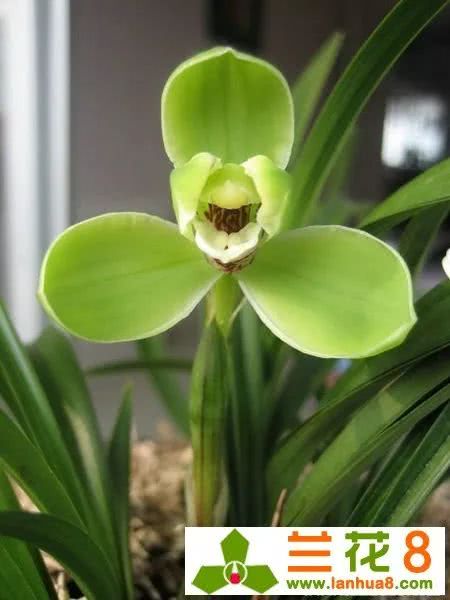
Promote Chinese orchid culture, spread orchid knowledge
I. Plum Petal
Plum petal: the three outer petals have tight edges and rounded tips, the central column is strongly masculinized with a cupped shape and white tip; if the lip is relaxed and not curled, it is a plum petal. When the plum petal is about to bloom, due to masculinization, the three outer petals have white edges and the petals have white tips. The entire flower shape looks quite like a plum blossom in snow; the ancients' metaphor is indeed apt and vivid. Plum petals are further divided according to the degree of masculinization into hard-cupped plum petals and soft-cupped plum petals. Among hard-cupped ones, there are extremely hard-cupped and hard-cupped plum petals. Extremely hard-cupped plum petals, due to extremely strong masculinization, often have the petals adhering to the column, with a very small hard lip or with cheek-like structures and no lip; such flowers' outer petals are mostly flared and upturned, and the flower shape is extremely inelegant! We know that the strength of masculinization is greatly related to flower quality. The stronger the masculinization, the tighter and harder the central column, and the worse the flower quality! If such a flower shape has tender color and broad outer petals, it also has ornamental value, but most outer petals are flared and upturned, and have traditionally not been valued by orchid growers! The masculinization of hard-cupped plum petals is slightly weaker than that of extremely hard-cupped ones, mostly split-head closed-back or joined-shoulder closed-back hard silkworm-moth petals, and the lip is mostly a dragon-swallowing lip, small round lip, etc.; some flowers have slightly flared outer petals! The masculinization of soft-cupped plum petals is relatively moderate, mostly five-petal separated soft silkworm-moth petals, with the three outer petals rounded and tight, and the lip mostly able to spread broadly, mostly a Liu Hai lip or Ruyi lip; the central column is rounded and neat, making it a fine among plum petals! The overall form of a superior plum petal should closely resemble a plum blossom, and reaching such a standard is very rare! The leaves of plum petals feel relatively thick and hard, with strong uprightness or bow-like form, looking rather vigorous; the basal leaves are slightly spreading, the sheath is hard and extends obliquely at about 15 degrees, feeling prickly to the touch; when the sheath is not yet withered, one can see a white pointed tip at the sheath tip, about the size of a millet grain, crystal clear, greatly different from the leaf tip of ordinary flowers. When selecting wild-collected orchids, if you encounter sheath color bright and smooth, veins fine and sparse reaching the top, heavy sand and dense halo, color lighter below and darker above, with a green tip at the apex, large empty head, lower part of the flower bud tightly contracted, and the middle round and bulging like a peanut or soybean, it is mostly a plum petal! This requires everyone to observe more usually in order to judge quickly and accurately!
II. Narcissus Petal
The three outer petals are relatively long, either round or pointed; if the petals are cupped and masculinized (at the very least with obvious white edges), and the lip droops or slightly curls backward, it is a narcissus petal. Within the narcissus category, based on the strength of masculinization and the length of the three outer petals, it is further divided into four major types: plum-type narcissus, lotus-type narcissus, narcissus petal, and fluttering-door narcissus. Plum-type narcissus is an intermediate type between plum petals and narcissus; Xi Shen Mei is a typical plum-type narcissus. In fact, as a supreme wonderful variety, Xi Shen's central column masculinization is very weak, with only white edges, and it is a typical palm-leaf-fan petal, but Xi Shen's outer petals are very short and round, even reaching the degree of lotus petals. For the defining standard of plum-type narcissus, one item (outer petals or central column) must reach the standard of plum petals, otherwise it is difficult to call it plum-type! The three outer petals of lotus-type narcissus have contracted bases and released corners, the petals are cupped with masculinized white tips, and the lip is mostly a broadly spread large flat lip slightly curled backward. The flower shape of lotus-type narcissus is elegant and refined, the central column is not tight, and the outer petals are broad, mostly loved by the broad community of orchid enthusiasts!
Long Zi is the representative of lotus-type narcissus! The outer petals of narcissus petals are relatively long or round-tipped or with pointed tips; the two petals are cupped with masculinization or obvious white edges, the petals are in a separated state and not adhering, and the lip droops or slightly curls backward, such as the famous Chunlan variety Wang Zi. Fluttering-door narcissus is a new favorite in recent years; its flower shape is completely different from the traditionally arched and embracing opening of plum-narcissus types! But its fluttering and upturning also follows rules, not seven-flared and eight-wrinkled. Fluttering-door narcissus mostly has cat-ear petals, with masculinized pollen masses in the middle of the petals! Many fluttering-door narcissus have large thick veins in the middle of the five petals, showing outward turning when emerging from the sheath, resembling the shape of a pomegranate. In fact, the large vein in the middle of these petals plays a great role in the future direction of the petals when the flower opens! This type of flower is most easily confused by beginners with ordinary flowers! Many people think that cat-ear petals are fluttering-door narcissus, but in fact the biggest difference between narcissus and ordinary flowers is whether there is masculinization on the petals! Most fluttering-door narcissus have red dots on the petals, and this is actually a concrete manifestation of masculinization! Beginners must observe carefully! Usually one should look more and learn more, so that when seeing the real thing one will not make a fool of oneself! Narcissus is a subtype of plum petals, and both belong to horticultural varieties with masculinization variation on the petals. The characteristics for identifying the leaves and flower buds of narcissus have similarities with plum petals. The leaf texture of narcissus is relatively soft and smooth, and the sheath is similar to that of plum petals; on the tip of the basal leaf sheath before it withers, a white tip can likewise be seen, only the basal leaves are less spreading than those of plum petals. Many narcissus, like plum petals, have green color on the close-fitting bud sheath, only the green color is slightly thinner. The close-fitting bud sheath of plum petals and narcissus is greatly related to flower quality. If the green close-fitting sheath is thick and petal-like, and very broad, then even if the petals are not broad at first opening, they will widen after full bloom, and the masculinization on the petals will be relatively heavy! If the green close-fitting sheath color is relatively light, then the masculinization on the two petals is also relatively weak. If the close-fitting bud sheath is relatively pointed and long, then after opening the petals will certainly also lengthen! As within, so without! In addition, when distinguishing narcissus from ordinary flowers, one only needs to look at whether there is masculinization on the petals! If there is, it is narcissus; if not, it is an ordinary flower, regardless of whether the three outer petals are broad or narrow! When distinguishing lotus-type narcissus from plum-type narcissus, the outer petals of plum-type narcissus are mostly round-tipped with long feet, the central column masculinization is relatively strong, and the lip is mostly able to spread broadly without curling, mostly a Liu Hai lip or Ruyi lip! The outer petals of lotus-type narcissus mostly have contracted bases and released feet, somewhat like lotus petals but slightly longer; the central column masculinization is slightly weaker than that of plum-type narcissus, mostly a Guanyin petal, and the lip is mostly a flat lip, spreading broadly and slightly curled backward! Or some orchid growers believe that it can also be distinguished by the red dots on the lip: the red dots on the lip of plum-type narcissus are bright and concentrated, gathering in the middle of the lip into a single round dot, not scattered; the red dots on the lip of lotus-type narcissus mostly appear in an inverted triangular arrangement! In this way, identification is clear at a glance! But it is not necessarily completely correct!
III. Lotus Petal
The three outer petals of lotus petals are broad, with contracted bases and released corners, and the petal tips are thickened; the ratio of length to width is at worst within 2:1. The two petals have no masculinization and are clam-shell shaped or short and round like a chime mouth; the lip is round and large, drooping or slightly curled backward. The lip of lotus petals is very strictly required: it must be a large round lip, large Ruyi lip, large flat lip, or large Liu Hai lip! The value of lotus petals lies in the broad central column and the rounded, neat, wealthy flower shape. Many orchid enthusiasts often confuse lotus petals with lotus-form flowers when distinguishing them. Now many lotus petals in orchid books and in pictures are actually lotus-form flowers, far inferior to lotus petals! A difference of one character, a world of difference! Identifying lotus petals and lotus-form flowers is mainly based on the following aspects. First, the worst length-to-width ratio is within 2:1 after one week of full bloom; the closer it is, the higher the grade. Second, the two petals of lotus petals cannot have pointed tips; those with pointed petal tips are absolutely not true lotus petals. The flower retention of true lotus petals is very good; even when declining, they still remain arched and embracing, do not deform, the petals do not lengthen, the petals always remain clam-shell shaped and closed without opening a skylight, and the lip is broad with bright and concentrated red dots on the lip! The leaf form of lotus petals is also very characteristic. The leaves of lotus petals are mostly broad, fish-belly shaped, semi-drooping or obliquely upright, with bluntly rounded leaf tips; the leaf sheath is broad and thick, tightly embracing the petiole and still not loose when the plant is old; the leaf texture is thick and smooth. An important feature on the leaves of lotus petals is that the basal leaves are broad, and the leaf tips are cupped in a spoon shape and closely adhere to the plant, still not separating when withered and yellow! The flower buds of lotus petals are short, round, and fat, with thick veins reaching the top, dense sand and halo on the bud sheath; the bud sheath is short and broad and fully wraps the flower bud, and the veins on the bud scales are broad and sparse between vein and vein! Although the bud sheath of lotus petals does not have the green color of plum petals and narcissus, it does have red sand, different from ordinary coarse flowers! From the lotus petals recorded in history and the true lotus petals selected and bred in recent years, there are very few; "one lotus is nowhere to be sought" precisely illustrates the difficulty of selecting and breeding lotus petals!
IV. Plain Heart
Plain heart actually exists in every category of Chinese orchids and cannot be listed separately as one type. Historically, plain ones have mostly been valued, and the highest grade of any petal type is plain heart! Plain hearts can be divided by petal shape into plum-petal plain, narcissus plain, lotus-petal plain, lotus-form plain, bamboo-petal plain, chicken-claw plain, plain butterfly plain, strange plain, and so on. Any flower in which the entire flower is one color, or regardless of the color of the outer petals, as long as the lip is pure and spotless, can be called plain! The selection and breeding of plain-heart Chunlan is very simple: as long as it is white sheath with green veins or green sheath with white veins, it is pure plain (green sheath with green veins is peach-cheek or bristle plain, definitely not pure plain). Some ancient orchid manuals also say that plains all come from white veins, which is also incorrect; now there are many red-sheath plains (also called colored-sheath plains) that do not come from white veins but produce pure plains! The outer sheaths of this type of plain heart are mostly bright, and the further inward, the more white sand, similar to the sand on the bud sheaths of green-sheath and white-sheath plain hearts. If the bud scales of a plain heart have green color, the flower bud has a large empty head, and the lower part is neatly contracted, it must be a plain plum or plain narcissus!