Symptoms and Pathogen Analysis of Chrysanthemum Black Spot Disease
Chrysanthemum black spot, also known as brown spot or leaf blight, occurs in all chrysanthemum-growing regions. Besides harming chrysanthemums, it can also infect wild chrysanthemum, sweet chrysanthemum, pyrethrum and other plants in the Asteraceae family. After infection, mildly affected plants develop scorched, dropping leaves, while severely affected plants may die completely. It seriously affects plant growth and ornamental value. Symptoms...
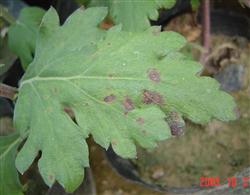
Chrysanthemum black spot, also known as brown spot or leaf blight, occurs in all chrysanthemum-growing regions. Besides harming chrysanthemums, it can also infect wild chrysanthemum, sweet chrysanthemum, pyrethrum and other plants in the Asteraceae family. After infection, mildly affected plants develop scorched, dropping leaves, while severely affected plants may die completely. It seriously affects plant growth and ornamental value.
Symptoms: The disease mainly affects the leaves. In the early stage, small brown spots appear on infected leaf surfaces, and the lesions gradually expand into circular, oval or irregular shapes, black to dark brown in color. The boundary between diseased and healthy tissue is distinct. In the late stage, inconspicuous tiny black dots appear on the lesions; these are the pycnidia of the pathogen. In severe cases, the lesions merge to form large patches. Eventually, the leaves turn black, die and hang from the stems. On infected plants, leaves die starting from the lower part and progressing upward in sequence.
Pathogen: The pathogen is the fungus Septoria chrysanthemella Sacc., belonging to the Deuteromycotina, Coelomycetes, Sphaeropsidales.
Disease cycle: The pathogen overwinters as mycelium and pycnidia on diseased plant residues. The following year, when temperatures are suitable, the pycnidia mature and produce conidia, which spread through wind and rain. The optimum temperature for pathogen development is 22-27°C, and symptoms appear approximately 15-30 days after infection. The disease can occur throughout the entire growing period of the plant. In hot, rainy seasons or when plants are planted too densely, the disease progresses rapidly. Different cultivars also show some variation in resistance to black spot. Susceptible cultivars include Zihudie, Xindabai, Huowu, Zilu Ningshuang, Xiezhahuang, Xiangbaili, Xishi Zuiwu and Guitianle. Cultivars with relatively strong resistance include Hushangyue, Yingchunwu, Qiuse, Yutao, Ziyan Feishuang and Zigui.
Control: ① Promptly remove diseased plants and leaves to eliminate sources of infection. Plants culled after planting should be pulled up and destroyed promptly to reduce infection sources for the following year. ② Strengthen cultivation management: Choose well-drained, well-ventilated and well-lit sites for planting chrysanthemums. Avoid continuous cropping. For potted plants, replace the soil every year. Fertilize rationally, paying attention to the ratio of nitrogen, phosphorus and potassium to promote vigorous growth and enhance disease resistance. Do not plant too densely, so that plants have sufficient ventilation and light. ③ Eliminate cultivars with poor resistance and low ornamental value as early as possible. ④ Chemical control: Before disease onset, spray 1:1:100 Bordeaux mixture to prevent infection. During the disease period, spray 75% chlorothalonil wettable powder at 500-800 times dilution, or 80% captafol wettable powder at 500-600 times dilution, or 50% thiophanate-methyl wettable powder at 800-1000 times dilution, once every 7-10 days, for 2-3 applications. Alternating chemicals gives better results.