Does Planting Eucalyptus Destroy the Land? An Analysis of Eucalyptus's Impact on Soil
1. Suitable Environment Eucalyptus prefers a warm climate but cannot tolerate damp heat; when the climate is too hot, its growth suffers. In Yunnan it is mainly distributed in zones at an altitude of 1,200-2,400 m. Its cold tolerance is not strong, and it can only withstand short periods of low temperatures around -7 degC. If exposed to -5 degC for 2-3 days, it will suffer varying degrees of cold damage, with mild cases affecting the twigs...
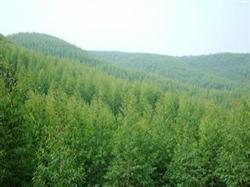 The reason fast-growing eucalyptus grows quickly is that it inevitably absorbs large amounts of water and nutrients from the soil through its root system to sustain the nutritional growth needs of its above-ground growth. To plant fast-growing eucalyptus in the south, the conditions that should be met are no frost or particularly low temperatures, and annual rainfall reaching a certain level to satisfy the plant's water needs. If no fertilizer is applied after planting, or if suitable conditions are not taken into consideration, soil properties will degrade and the balanced circulation of water will be affected. Therefore, before planning to plant, this should be carried out under the guidance of the local forestry department after demonstration and approval.