What is the difference between ramie and flax? A detailed analysis of the differences between the two
I. Leaf differences
Ramie leaves are alternate, with blades herbaceous, round-ovate or broadly ovate, very rarely ovate, about 6 to 15 cm long and about 4 to 11 cm wide, the leaf tip abruptly pointed, the base nearly truncate or broadly cuneate, the margin toothed above the base, the upper surface slightly rough and sparsely covered with short appressed hairs, and the lower surface densely covered with snow-white felted hairs.
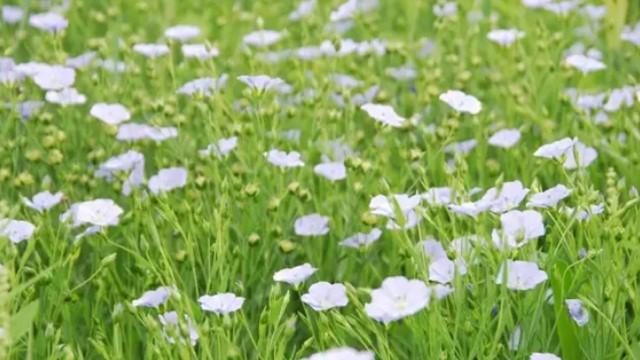
Flax leaves are alternate, with blades linear, linear-lanceolate or lanceolate, 2 to 4 cm long and 1 to 5 mm wide, the apex acute, the base gradually narrowed, without petioles, and the leaves rolled inward.
II. Flower differences
Ramie has axillary paniculate inflorescences, about 2 to 9 cm long, with the male flowers having 4 perianth segments, narrowly elliptic, about 1.5 mm long.
Flax flowers are solitary at the branch tips or in the upper leaf axils of the branches, forming loose cymose inflorescences, the flowers 15 to 20 mm in diameter, with 5 petals, obovate, blue or purple-blue in color, and rarely white or red.