A Full Analysis of Key Spring Corn Cultivation Techniques
Adapt to local conditions and select improved varieties. For plains and hilly areas, promote Yedan 13 and Xiyu No. 3, paired with Huayu No. 4, Zhongdan 32, Chenghai No. 1, and Yuanzheng 808; for intercropping in cotton fields, choose the short-stalked, short-growth-period Yedan 22, Yedan 51, and 9362; in suburban areas where fresh eating is the main purpose, waxy corn varieties such as Zhongnuo No. 1 can be planted; in western Hubei, promote...
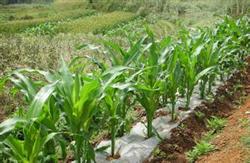
Adapt to local conditions and select improved varieties. For plains and hilly areas, promote Yedan 13 and Xiyu No. 3, paired with Huayu No. 4, Zhongdan 32, Chenghai No. 1, and Yuanzheng 808; for intercropping in cotton fields, choose the short-stalked, short-growth-period Yedan 22, Yedan 51, and 9362; in suburban areas where fresh eating is the main purpose, waxy corn varieties such as Zhongnuo No. 1 can be planted; in western Hubei, promote Eyu No. 4, 78211, Yedan 19, Eyu 6, and others.
Apply sufficient base fertilizer and skillfully apply topdressing. According to scientific experiment results, for a corn yield of more than 500 kg per mu, about 2500 kg of farmyard manure, 30 kg of ammonium bicarbonate, 40 kg of superphosphate, 8 kg of potassium fertilizer, and 1 kg of zinc sulfate need to be applied as base fertilizer; for topdressing, apply skillfully according to the seedlings. At the 5-6 leaf stage, apply the seedling-promoting fertilizer early, applying 4-5 kg of urea per mu, with heavier application to small and weak seedlings to promote balanced growth; when the 10-11 leaves have unfolded, apply a heavy ear-promoting fertilizer once, applying 40 kg of ammonium bicarbonate per mu, by making holes and fertilizing; at the tasseling stage, supplement with grain-promoting fertilizer, spraying 3-4 kg of urea per mu.
Standardize cultivation and plant reasonably. Corn planting systems include pure cropping and intercropping/relay intercropping. For pure cropping corn, the plot width is 120 cm, with two rows of corn planted in the middle of the plot, row spacing 40 mm, plant spacing 25 cm, and 4400 plants per mu; when intercropped with wheat and rapeseed, the plot width is 170 cm, with two rows of corn drilled (planted) in the middle of the reserved row, row spacing 40 cm, plant spacing 20-23 cm, and 3500 plants per mu; when intercropped with cotton, plant one row at the edge of the plot, about 1200 plants per mu. In plains and hilly areas, sow and raise seedlings in mid-March and transplant in early April; sow with plastic film mulching in late March, and in mountainous areas apply film mulching in mid-April; in areas with a high level of scientific farming, promote seedling raising in nutrient pots, transplant to the field at the 3-leaf stage, and then cover with plastic film.
Scientific management and cultivating strong seedlings. First, replant where seedlings are missing, raise reserve seedlings early, and transplant early as soon as missing seedlings are found. Second, prevent and control pests and diseases. At the seedling stage, use poisoned bait to control cutworms and insect pests; for example, at the trumpet stage, use carbofuran mixed with fine soil to make poisoned soil granules and apply them into the corn whorl, dropping 3-4 granules per plant, to control corn borers; in the later stage, apply jinggangmycin to control sheath blight and strip off the basal leaves. Third, earth up and mound the base. At the jointing stage, combine topdressing with hilling 10 cm of soil to promote the growth of aerial roots. Fourth, clear ditches and drain waterlogging. For paddy field corn, ditches should be opened for drainage to prevent waterlogging damage. Fifth, supplementary pollination. For corn intercropped with cotton, the planting density is low and the mutual pollination rate between plants is low, so artificial supplementary pollination should be carried out at the tasseling and silking stage to increase the seed-setting rate and achieve a high and abundant yield.